Thursday, May 28, 2020

Remembering Leslie Scalapino, Ten Years Later

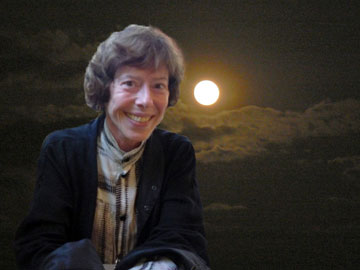
Today marks ten years since the passing of poet and publisher Leslie Scalapino, which makes it an excellent opportunity to both remember her and reflect upon the impact she's made — and continues to make — upon the word of contemporary poetry. Scalapino was an integral part of our archive since its inception, as her PennSound author page attests, and in the decade since her death, that collection of recordings has expanded considerably, both through new additions and the segmentation of older readings into individual tracks. One terrific place to start is her conversations with Charles Bernstein on LINEbreak in 1996 and Close Listening in 2007. We're also proud to be able to share video of her final reading in March 2010.

You can click here to read our PennSound Daily tribute to Scalapino, which includes the full text of her husband Tom's note on her passing. Because Jacket2 didn't exist when Scalapino died, we took the unorthodox step of publishing Lyn Hejinian's tribute to her dear friend here at PennSound, which you can read here. Finally, the Leslie Scalapino Memorial Lecture Series in Innovative Poetics continues her lifelong dedication to pushing the genre ever forward, and has hosted a remarkable array of poets and scholars over the past decade. 


Friday, May 22, 2020

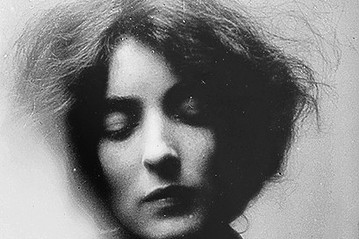
New at the EPC: Mina Loy

After several years of development, we are very happy to announce the launch of a new EPC author page for Mina Loy. There are many people to thank for this astounding collection, starting with Roger Conover, Loy's editor and literary executor, whose insightful notes accompany many of the poem, and Sandra Simonds, who selected the poems, other writings, and resources gathered here. Jack Krick handled the coding and site design, while Karla Kelsey and Ariel Resnikoff also had some input into the page.

The poems Simonds chose include "The Effectual Marriage," "Apology of Genius," "Brancusi's Golden Bird," "Gertrude Stein," and "Mass Production on 14th Street," along with the thirty-four-part sequence "Songs to Joannes," all of which are accompanied by extensive commentary (both general and line-by-line) from Conover. These are complemented by a survey of Loy holdings at sites including the Poetry Foundation and the Academy of American Poets, the drama The Sacred Prostitute, Loy's "Feminist Manifesto" and "Aphorisms on Futurism," examples of her visual work, and a handy compendium of writings about Loy from throughout the web, including the Loy feature from Jacket #5 (1998).

While you're relishing all of this wonderful poetry, we welcome you to pay a visit to PennSound's Mina Loy author page. While there's just one recording there, it's a terrific one: a ninety-minute conversation between Loy, Paul Blackburn, and Robert Vas Dias made just before her death in 1960, which is believed to be the only extant recording of her voice.


Thursday, May 21, 2020

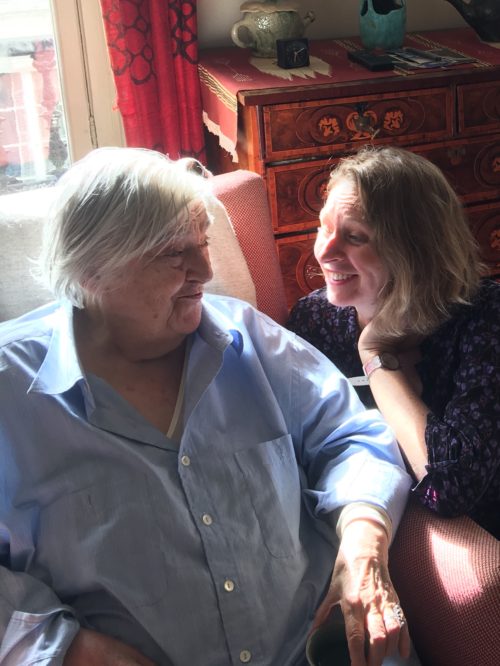
Congratulations to 2020 Griffin Poetry Prize Winner Etel Adnan

This week brought another critical acclaim for Lebanese-American poet and painter Etel Adnan, who — along with her translator Sarah Riggs (both shown at right) — has been awarded the 2020 Griffin International Poetry Prize for her 2019 Nightboat Books collection, Time. In their citation, the judges highlight some of the qualities of Adnan's recent work that speak beautifully to our current condition:
"I say that I’m not afraid / of dying because I haven't / yet had the experience / of death" writes Etel Adnan in the opening poem to Time. What is astonishing here is how she manages to give weariness its own relentless energy. We are pulled quickly through this collection – each poem, only a breath, a small measure of the time that Adnan is counting. Every breath is considered, measured, observant – perceiving even "a crack in the / texture of the day." If Adnan is correct and "writing comes from a dialogue / with time" then this is a conversation the world should be leaning into, listening to a writer who has earned every right to be listened to.
We're grateful to be able to share a modest collection of recordings on our Etel Adnan author page, starting with Adnan's 2006 appearance on episode #118 of Leonard Schwartz's program, Cross-Cultural Poetics, titled "Forms of Violence." Via phone from Paris, she "reads from her book In the Heart of A Heart Of Another Country (City Lights), and meditates on her mother city of Beirut and American violence, inner and outer." Next, from 2010, we have a Serpentine Gallery reading showcasing The Arab Apocalypse and a 2012 reading commemorating the release of Homage to Etel Adnan (Post-Apollo), which was held at The Green Arcade Books Ideas Goods and co-sponsored by The Poetry Center and Small Press Traffic. Adnan returned to the Serpentine Sackler Gallery in London for a conversation with poet Robert Grenier a few weeks later. This chat between two hybrid artists was the inaugural event for the exhibition, "Etel Adnan: the Weight of the World."

We recently added a terrific and lengthy discussion between Adnan and Jennifer Scappettone, recorded September 23–24, 2017, which has been segmented into individual tracks by theme, including "Home Life and School in Beirut," "Education in Philosophy and Beginnings in Painting," "English-Language Poetry and US Politics from the Vietnam War through Today," and "Cultural Identity, Multilingualism, and Translation." You can listen to any of the aforementioned recordings by clicking here.


Monday, May 18, 2020

Happy 95th Birthday to Robin Blaser!

We start off this new week by marking what would have been the 95th birthday of poet Robin Blaser (1925–2009). Our own Charles Bernstein, in his afterword to The Holy Forest: Collected Poems of Robin Blaser, begins by noting that "Robin Blaser's poems are companions on a journey of life, a journey whose goal is not getting someplace else, but, rather, being where you are and who you are — where you is always in the plural." You can see that focus in action by browsing through the four decades' worth of recordings archived on PennSound's Robin Blaser author page.

The earliest document there is a 1965 reading in Vancouver, BC, which features "The Moth Poem" and "The Translator: a Tale." From the following decade, we have recordings from the University of British Columbia in 1970 and the San Francisco Poetry Center in 1976, along with the original raw audio for The Astonishment Tapes, recorded in Vancouver in the spring of 1974 and edited for eventual publication by Miriam Nichols under the title The Astonishment Tapes: Talks on Poetry and Autobiography with Robin Blaser and Friends (University of Alabama, 2015). Next, there's a 1986 appearance at the Portland Poetry Festival and Blaser's 1987 appearance at SUNY-Buffalo to deliver that year's Charles Olson Memorial Lectures, which concluded with a March 29th reading from his own work. Blaser would return to Buffalo for readings and lectures in 1991, 1993, and 1996, which are also available on his author page. 

Other 90s-era recordings include a 1994 set at the Albany Writers Institute, 1995 readings at the University of British Columbia and the Kootenay School of Writing (where he'd also read in 1997), a 1997 appearance on the BBC Radio 3 program Night Waves hosted by Patrick Wright, and a lecture on Dante Alighieri delivered at Universita d'Annuzio that same year. The final years of Blaser's life are documented via a 2003 reading at Vancouver's Cultural Centre, a reading and talk at Woodland Pattern in 2004, and a 2008 conversation with Robert Hass at UC Berkeley, courtesy of Cloud House Poetry Archives, along with a trio of appearances on Cross-Cultural Poetics in 2003, 2004 and 2007 (a transcription of the first interview was published by Jacket2 in 2015). Last but certainly not least, Blaser's poem "A Bird in the House," was the subject of PoemTalk #113, featuring Kristin Prevallet, Jed Rasula, and Brian Teare, You can listen to all of the recordings mentioned above by clicking here.


Friday, May 15, 2020

Charles Bernstein Reads "Poetry Month Will Come a Little Late This Year"

"Poetry's freedom, which to say poetry's essential contribution to American culture, is grounded in its aversion of conformity and in its resistance to the restrictions of market-driven popularity. Indeed, contemporary American poetry thrives through its small scale and radical differences of form. There is no one sort of American poetry and certainly no right sort — this is what makes aesthetic invention so necessary." Thus begins "Poetry Month Will Come a Little Late This Year," a commentary published on the University of Chicago Press blog last month as a sequel of sorts to Charles Bernstein's "Against National Poetry Month As Such," his "contrarian and spirited take on the April ritual of poetry month" first published nearly two decades ago. "Curious whether he still shares the same opinion," Chicago's editors "reached out to Bernstein for his current perspective" and were very happy to share the results with their readers.

Now, thanks to the fine folks at Yale's Beinecke Library, you can watch Bernstein read his essay as part of their new YouTube series. Recorded at home in isolation on May 4th, this new work is reminiscent of "Some of These Daze," his collaboration with Mimi Gross written in the aftermath of September 11th, as both a document of these surreal months of isolation — "Like a memorial except we're all alive. Or we imagine we're alive even though we died weeks ago." — and an incisive commentary upon them. It's well worth your time, whether you're reading or watching.


Wednesday, May 13, 2020

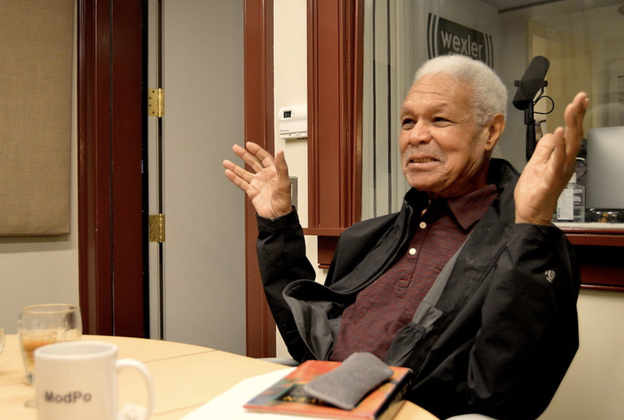
PennSound Podcast #70: Al Young

The latest episode in the PennSound Podcast Series went live yesterday and it's one you won't want to miss out on. This special program features Al Young in conversation with Al Filreis, William J. Harris, and Tyrone Williams, and was recorded at our own Wexler Studio in conjunction with Young's visit to the Kelly Writers House to give a reading on November 15, 2018.

Filreis describes the session as follows in his write-up for Jacket2: "The conversation covered the relationship between Young’s poetry and the Black Arts Movement, the role of music and jazz in his writing, and other figures with whom he was acquainted, such as poets Ishmael Reed and Bob Kaufman. Young spoke of his time at Stanford, where he met Harris; of having resided in various parts of the country; and of the role of writing about lived experiences beyond writing about writing." Young also reads some of his poetry, including "A Dance for Militant Dilettantes," "Yes, the Secret Mind Whispers" (which pays tribute to Kaufman), and "January." You can listen to the show by clicking here. On Young's PennSound author page you'll find his aforementioned UPenn reading from 2018, along with a 2006 reading in San Francisco and a 1990 reading at Palo Alto's Printer's Ink. Click here to listen to those sets.


Monday, May 11, 2020

Maggie O'Sullivan Reads Herself and Tom Raworth, 2019

Here's a pair of newly-added videos from Maggie O'Sullivan to start off the new week, which come from "King's Underground: Eric Mottram and Spheres of Contexts," an event hosted by King's College London Archives last November 22nd and 23rd.

The first recording is O'Sullivan reading Tom Raworth's poem "Gaslight," a poem that takes its name from the classic George Cukor film, and which you can also hear Raworth read on his own PennSound author page

In the second video, she reads "(via John Clare (1793–1864) (1) and (2)," poems which, as she explains in a linked post from Jerry Rothenberg's Poems and Poetics blog, "were made around the late 1970s/early 1980s in homage to Clare. They are included in ALTO (2009)." Her note, which accompanies the complete texts of both poems, continues: "John Clare was one of the poets I began reading in the early 1970s. Of vital sustenance and continuing inspiration to me, are his unfettered, courageous uncompromiSingings."

You can watch both of these new videos by clicking here.


Friday, May 8, 2020

Congratulations to Jackson Poetry Prize Winner Ed Roberson

This week is bookended with great honors for deserving poets, with news that Ed Roberson has been awarded the Jackson Poetry Prize, "which celebrates an American poet of exceptional talent and comes with a purse of $70,000," by Poets & Writers. The award panel, which included Nikky Finney, Anne Waldman, and Robert Wrigley released an extensive citation praising Roberson for his long and influential career, which begins as follows:
It is a great privilege honoring Ed Roberson as the recipient of the Jackson Prize for 2020. This is an extraordinary time to be awarding this significant prize in poetry, a momentous time in our recent history, a time of panic, fear, uncertainty and inner turmoil, and devastating tragedy where people are separated from one another, cannot even touch or bury loved ones, and yet are bound together inextricably by their vulnerability as humans in the vast web — an interconnected Indra's net — of co-arising cause and effect with chaos and  outrageous failings as well. Where is the language for the experience of such magnitude, of experiencing a pandemic  of Biblical proportions? And as if  that’s not enough, all the other woes that conjure up the Sixth Extinction, Mayan End Time prophecy, or a prophetic Chinese rune from a cracked tortoise shell are with us. Poets are also diviners. What will the paradigm shifts be? Is there still time to balance the inequities and the ravage of the Anthropocene on this planet's body and social construct ? We may be looking into an Abyss or a Reckoning for our  Fallen Age.
Poetry such as Ed Roberson's troubles these  meditations, these issues, these apocalyptic queries in innovative expressive ways. He is both scholar and jazz-like innovator. A recent book of his is entitled To Seek The Earth Before The End of the World.  Roberson also embeds and laments the suffering African Americans have endured and continue to endure in an unjust ever exposed imbalanced society, with its unresolved  incipient racism. He writes  in a way that is so empathetically profound and heart rending, that one can only cry out again against the insane unhealed wounds of this nation! Isn't it time to change the frequency of inequity once and for all?
Whether you're a long-time fan of Roberson's work or are just getting acquainted with him, you'll find a three-decade survey of his poetry on his PennSound author page, which begins with a pair of Segue Series readings from 1993 and 1999, an Eco-Panel at the Bowery Poetry Club in 2006 (which also included Jill Magi, Laura Elrick, Karen Anderson and Brenda Iijima). There's also a 2010 appearance on Cross Cultural Poetics, and two recordings that come to us courtesy of Aldon Nielsen's Heatstrings archives: a 2011 reading and presentation of the Stephen Henderson Award for Literature by the African American Literature and Culture Society, and a 2016 reading at Penn State University. The single track "Scattered Images," recorded with the Ways & Means Trio (and taken from their 2006 album, Fire of Dream) closes out the collection. Click here to start browsing.


Tuesday, May 5, 2020

In Memoriam: Michael McClure (1932–2020)

We have late-breaking news from the Bay Area this evening that poet Michael McClure has passed away at the age of 87. 

As renowned for his good looks as his poetry, McClure was a pivotal figure in San Francisco's postwar literary scene, taking part in the watershed Six Gallery reading in 1955 that launched Allen Ginsberg to stratospheric heights — Gary Snyder, who will turn 90 in just a few days, is the last living participant in that historic event. As the 50s gave way to the 60s McClure adapted to the changing times, participating in 1967's Human Be-In and collaborating with the likes of Janis Joplin, the Doors, and the Band. As Dennis Hopper famously opined, "without the roar of McClure, there would have been no 60s."

PennSound's Michael McClure author page starts with the documentary film Rebel Roar: the Sound of Michael McClure, which "explores the poetry and thoughts of one of the original Beat poets ... through readings and candid discussion of his work." There are numerous albums presented in their entirety, including two career-spanning discs of readings from the Rockdrill series (a complementary group of short Optic Nerve videos is presented at the bottom of the page), and several musical collaborations with the likes of Terry Riley and Ray Manzarek. There's also McClure's episode (shared with Brother Antonius) from Richard O. Moore's USA: Poetry series, a series of Olson Memorial Lectures delivered at SUNY-Buffalo in 1980, a 1983 reading at SFSU with Robert Duncan, and a Wednesdays at 4 Plus reading (also from SUNY-Buffalo) dating from 1998. Just this past January, we published PoemTalk episode #144 on McClure's Ghost Tantras, which you can hear here.

We send our condolences to McClure's generations of fans, as well as his friends and family in the poetry world. You can browse through our archives by clicking here.


Congratulations to Pulitzer Prize Winner Anne Boyer

Monday was a very exciting day for poet Anne Boyer, who was awarded the 2020 Pulitzer Prize in Nonfiction for The Undying: Pain, Vulnerability, Mortality, Medicine, Art, Time, Dreams, Data, Exhaustion, Cancer, and Care. Tracing Boyer's battle with aggressive breast cancer, the book is "a twenty-first century Illness as Metaphor, as well as a harrowing memoir of survival [that] explores the experience of illness as mediated by digital screens, weaving in ancient Roman dream diarists, cancer hoaxers and fetishists, cancer vloggers, corporate lies, John Donne, pro-pain 'dolorists,' the ecological costs of chemotherapy, and the many little murders of capitalism."

In a post celebrating Boyer and Jericho Brown (this year's Pulitzer winner in poetry), Harriet quoted from their 2019 interview between the author and Shoshana Olidort, where she explains her motivations in writing the book:
I had to write the book for two reasons. The first one was gratitude for all that kept me alive and made life worth living, and the second was vengeance against all that diminishes life, the arrangement of a racist, misogynist, capitalist world that sickens people, profits from their illnesses, and then blames them for their own deaths. I'm probably better at writing than I am at anything else, and so it is that writing a book was some of what I could do in return for my life, or at least it is what I could do toward the most good. I am, however, not very skilled at being happy about publishing or publicity, and I've never quite understood why — life-long shyness, maybe; a standard-issue egalitarian impulse; a consistently affirmed hypothesis, too, that public success is a precinct of haters and sycophants that should be visited as little as possible in a well-lived life.
On PennSound's Anne Boyer author page, we're proud to be able to host a half-dozen full-length readings by the poet spanning the years 2012–2018, including 2013 sets at Zinc Bar (for the Segue Series) and St. Bonaventure, and several Bay Area readings courtesy of Andrew Kenower's A Voice Box series. The most recent recording is from Stanford University in 2018, with, interestingly enough, Olidort providing the introduction. We send our heartiest congratulations to Boyer for this well-deserved win.


Friday, May 1, 2020

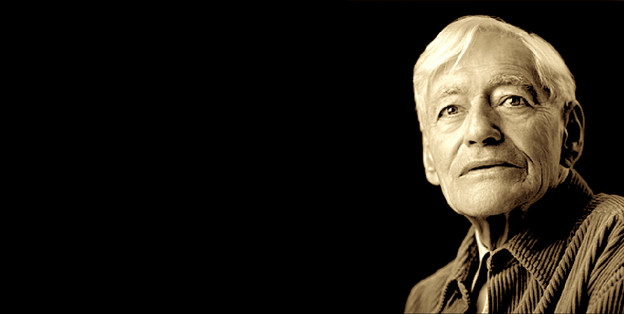
Remembering Lewis MacAdams and Peter Ganick

We wanted to take a moment to mention two important figures in the world of contemporary poetry that we lost during the month of April: Lewis MacAdams (shown at right) and Peter Ganick. While we don't have enough materials from either to merit individual PennSound author pages, we nevertheless wanted to draw your attention to the resources related to both within our archives.

MacAdams died on April 21st at the age of 75. A polymath with a long and fruitful career, he was hailed in his Los Angeles Times obituary as a "a poet and crusader for restoring the concrete Los Angeles River to a more natural state and co-founder of one of the most influential conservation organizations in California." A former director of the Poetry Center at San Francisco State and a prolific journalist in addition to his work as a poet and critic (cf. 2001's Birth of the Cool: Beat, Bebop, and the American Avant-Garde) he was best known outside of literary circles for his work as the head of Friends of the Los Angeles River (FoLAR), which worked tirelessly to rehabilitate the "51-mile flood control channel hemmed by freeways, power lines and railroad yards." We have but one recording of MacAdams on our site: a June 30, 1977 lecture, "Politics and Poetry," delivered as part of the Bob Perelman-organized Talks series at 1220 Folsom Street, which you can find here. Over at Jacket2 we have a pair of reviews of MacAdams' most iconic work, The River from Jacket Magazine: Dale Smith reviewed the first two installments in issue #7, while Patrick James Dunagen reviewed the complete three-volume edition in issue #35.

Ganick died on April 16th at the age of 73. Remembered as "a prolific experimental writer and artist" in his obituary, he was also the founder of Potes&Poets, a beloved press that championed adventurous and groundbreaking writing from the earliest days of Language Poetry and beyond. A brief sampling of authors published by Potes&Poets includes Bruce Andrews, Charles Bernstein, Cid Corman, Tina DarraghRachel Blau DuPlessis, Andrew Levy, Gil Ott, Stephen Ratcliffe, Kit Robinson, Leslie Scalapino, Ron Silliman, and Hannah Weiner. You can listen to two Segue Series readings by Ganick — from May 20, 1989 and March 28, 1992 — on our Ear Inn homepage. Ganick also has a page at the Electronic Poetry Center, along with an EPC page for Potes&Poets Press.

We send our deepest condolences to the friends, families, colleagues, and fans of both MacAdams and Ganick. You can the links above to listen to their work.