Showing posts with label Wexler Studio. Show all posts

Wednesday, June 11, 2025

Ken Taylor: New Author Page and Wexner Studio Session

Today we're proud to unveil a new author page for Ken Taylor, Chicago-based poet and founder of selva oscura press. It's anchored by a career-spanning session at our own Wexner Studio at the Kelly Writers House this past March. 

Running just over thirty-six minutes, Taylor's set consists of twenty-one titles in total, split between self-portrait of joseph cornell (Pressed Wafer, 2006), variations in the dream of X (Black Square Editions, 2024), and 57 wyomings (Black Square Editions, forthcoming), including "how to draw seven circles," "have you ever extravagantly adored?," "the captain has turned off," and "first the trees, now this." These tracks are joined by Taylor's brief contribution to one of the annual parties/readings at the home of Alan Golding as part of the Louisville Conference on Literature and Culture Since 1900.

Click here to start exploring all of the aforementioned readings.

Friday, May 2, 2025

George Quasha reads 'surface retention," 2025

We always take great delight in announcing the latest installment in Chris Funkhouser's ongoing project to document the work of his prolific friend and neighbor, George Quasha, and if you're a PennSound Daily regular, you've followed this endeavor through periodic releases that trace all the way back to 2017. This latest session is especially exciting in that it was recorded at the Wexler Studio at our own Kelly Writers House on March 26th of this year during a mini-residency featuring both Quasha and Funkhouser. The one hour, forty minute recording — which documents Quasha's surface retention in its entirety — was engineered by Zach Carduner and edited by Funkhouser.

You'll find this new track and many more recordings on PennSound's George Quasha author page, along with lengthy selections from many of his books including syntactic sentience, laryngeal uterus of the wordstrange beauty by stranger attraction, waking from myself, gnostalgia for the present, not even rabbits go down this holedowsing axishearing otherthe ghost in betweenverbal paradiseglossodelia attract: preverbsthe daimon of moment: preverbsscorned beauty comes up behind: preverbsthings done for themselves: preverbsand polypoikilos: matrix in variance: preverbs, among others. Click here to start listening.

Wednesday, March 5, 2025

Spending "Ash Wednesday" with T. S. Eliot

With Christians worldwide marking Ash Wednesday today, we thought it might be worthwhile to revisit T. S. Eliot's iconic poem of the same name, which is available on PennSound two ways: a recording by the poet himself, and a rendition by John Richetti made for our PennSound Classics page.

In a 2014 essay for The Guardian, Roz Kaveney identifies the poem as one of "the first fruits of T. S. Eliot's conversion [to Anglicanism]" and acknowledges that "we think of ["Ash Wednesday"], not wholly inaccurately, as an essentially liturgical piece ... Yet that is not all that is going on here." "For a religious poem," Kaveney continues, "'Ash Wednesday' has a distinctly secular aspect some of the time. Even more than 'The Waste Land,' it is heavily intertextual; you can read its allusions as metonymous, that is to say as bringing into his text the whole of the texts that they echo." Much of the poem is shaped by Eliot's stagnant marriage to Vivienne, the poem's dedicatee, producing "moments of nightmare" full of guilt, disorder, and sinfulness. "It's interesting that there is so much talk of fertility here and it is always gardens and never children," Kaveney notes, hypothesizing that Eliot was sublimating his desire for a daughter within the poem: "There is something deeply sad, but also dishonest, in this replacement of what he perhaps really desired with an etiolated and inauthentic religious vision; Eliot at his best speaks more honestly than that, even when he is being cryptic."

As for that "call to spiritual awareness" in the poem's latter half, Kaveney observes that "There's something worrying, if logical, about Eliot's vision of himself as a preacher calling the world to order — it was after all, the original family business, running revivals was why his ancestors moved to the Midwest. The problem is that the organic society he shows us is so totally a decoration, people walking and talking in a landscape, and a piper playing plaintive tunes; in the later sections of 'Ash Wednesday,' the quotations of liturgy are progressively stronger than the bits that are Eliot." The critic concludes, "This is a poem – the same can be said of Dante – in which the visions of hell are stronger than the visions of heaven, in which the original evocation of the heavenly ... is much more effective than the later parts; Eliot is trying urgently to convince us, and sacrificing much to that attempt, and yet he falls short of what he is trying to do."

As noted above, our archives include a recording of Eliot reading the poem in three segments, each containing two parts, which was made at the Speech Lab at Columbia University in 1933, the first of several sessions over two years that would yield documents of the majority of Eliot's most iconic poems. You can listen to that recording here on PennSound's T. S. Eliot author page. We also have a recording made by John Richetti for PennSound Classics at our own Wexler Studios in May 2022 as part of a set of twenty-nine poems by Eliot. Listen to that performance by clicking here.

Wednesday, February 19, 2025

Kate Colby: Wexler Studio Session, 2024

Today we're highlighting a newly posted session from Boston-born poet Kate Colby, recorded in our own Wexler Studio at the Kelly Writers House on October 17th of last year. The session contains twenty-two titles altogether, including "Looker," "Gem," "Unmentionables," "Autoclave," "The Rest," "Easter Eggs," "Product Placement," "Drive," "Thinkging," "Theory of Anything," "Prop Girl," "Aminxed," and "No Time Present."

These new recordings can be found on PennSound's Kate Colby author page, along with two previous Wexler Studio sessions recorded in 2016 and 2018, a 2019 reading at the Kelly Writers House, and an assortment of readings from other venues spanning 2011 to 2019. There are also links to a half-dozen PoemTalk episodes she's participated in. Taken together, they present a fair representation of the breadth of Colby's complete poetic output. Click here to listen along.

Monday, January 8, 2024

A New Disability Poetics Symposium, 2018

Today we're highlighting A New Disability Poetics Symposium, which was recorded at the LGBT Center at UPenn on October 18, 2018. This ambitious, multi-part gathering was organized by Jennifer BartlettAriel Resnikoff, Adam Sax, and Orchid Tierney, in collaboration with Knar Gavin, Declan Gould, Davy Knittle, and Michael Northen.

The proceedings began with the panel "Larry Eigner's Disability Poetics," moderated by Charles Bernstein, with talks by George Hart, Michael Davidson, and Jennifer Bartlett. That's followed by "Disability and Performance," moderated by Declan Gould, with contributions by torin a. greathouse and Camisha Jones; and "Poetic Experiment and Disability," moderated by Orchid Tierney, with panelists Sharon Mesmer and Gaia Thomas.

These talks are complemented by a number of readings, the first taking place as part of the symposium itself, with sets by Bartlett, Jim Ferris, Ona Gritz, Anne Kaier, Dan Simpson, and Brian Teare. There's a second set recorded at our own Wexler Studios with Kaier, Simpson, Ferris, Gritz, and Michael Northen reading their work. Finally, poet Kathi Wolfe was unable to take part in the symposium, but made home recordings of the pieces she would have read at the event, which we've made available to listeners as well. To start listening, click here.

Thursday, April 20, 2023

William Fuller: New Author Page

Today we're highlighting our most recently created author page for William Fuller. Fuller is a classic example of the "poet with a day job" phenomenon, having released eight celebrated books of poetry over the last thirty years while spending much of the same time working in the financial services industry at the Northern Trust Corporation of Chicago.

Fuller joined us in the Wexler Studios on March 16th of this year to record a career-spanning set of thirty-three poems running just over fifty minutes, starting with 2003's Sadly and continuing through Watchword (2006), Hallucination (2011), Quorum (2013), Playtime (2015), and his latest, Daybreak (2020), before concluding with a selection from the forthcoming Signal Flow. Titles include "The Later Chapters," "Deceased Makers," "Hope for Happiness," "Agricultural Barometer," "The Circuit," "Evening Dies Insane," "Bolero," "Old Fuller Burying Ground," "Nottamun Town," "Writing Policy," "Tracate," "The Waterfall," "Windowpane," "Willow Willow," "Galaxy," and "Other Sky." Savannah Sparks engineered this session, which was edited by Zach Carduner.

You can listen to these new recordings, along with a classic Segue Series set from 1987, on PennSound's brand-new William Fuller author page. Click here to start browsing.

Friday, October 7, 2022

Wuhan Poets at the Kelly Writers House, 2010

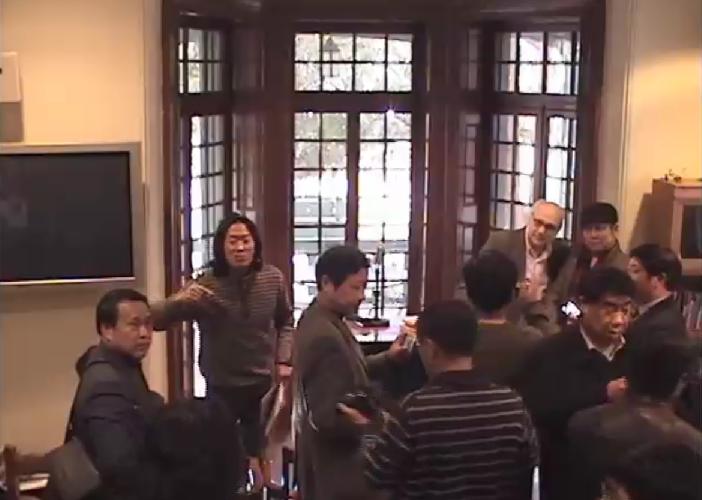
Today we're highlighting a very special event held at our own Kelly Writers House on December 9, 2010, which brought together two groups of poets — one from Wuhan, the other from Philadelphia — for a cross-cultural dialogue. This program was co-sponsored by UPenn's Center for Programs in Contemporary Writing and the Chinese / American Association for Poetry and Poetics

The Chinese delegation included Liang Biwen, Liu Yishan, Chen Ying-Song, Tiang He, Wang Xinmin, Ke Yumin, Hu Xiang and Liu An, while Philadelphia was represented by Bob Perelman, Sarah Dowling, Michelle Taransky, Charles Bernstein, Greg Djanikian and Yanrong (2010's CAAP Scholar-in-Residence). Work from each poet was shared bilingually, with the local poets reading English-language translations, as well as having their own work read in translation by the visiting Chinese poets, and KWH has put together a program with the full texts of everything read.

Writing about the event the following day, Al Filreis noted that "[f]or nearly all of [the Wuhan poets], this was the first visit to the U.S. Getting visas, dealing with protocols, was a major business, as you can imagine — much of it, on our end, handled nobly by Charles Bernstein, who, with Marjorie Perloff, chairs our Chinese/American Association of Poetry and Poetics." Ron Silliman blogged about the event as well, drawing readers' attention to an earlier Writers Without Borders event featuring Zhimin Li (a CAAP board member). You can listen to and watch footage from this groundbreaking event by clicking here. On the same page you'll also find a set of brief Wexler Studio sessions with nine poets recorded in 2017, which serves as a follow-up of sorts to the earlier event.

Friday, September 23, 2022

Sophia Naz on PennSound

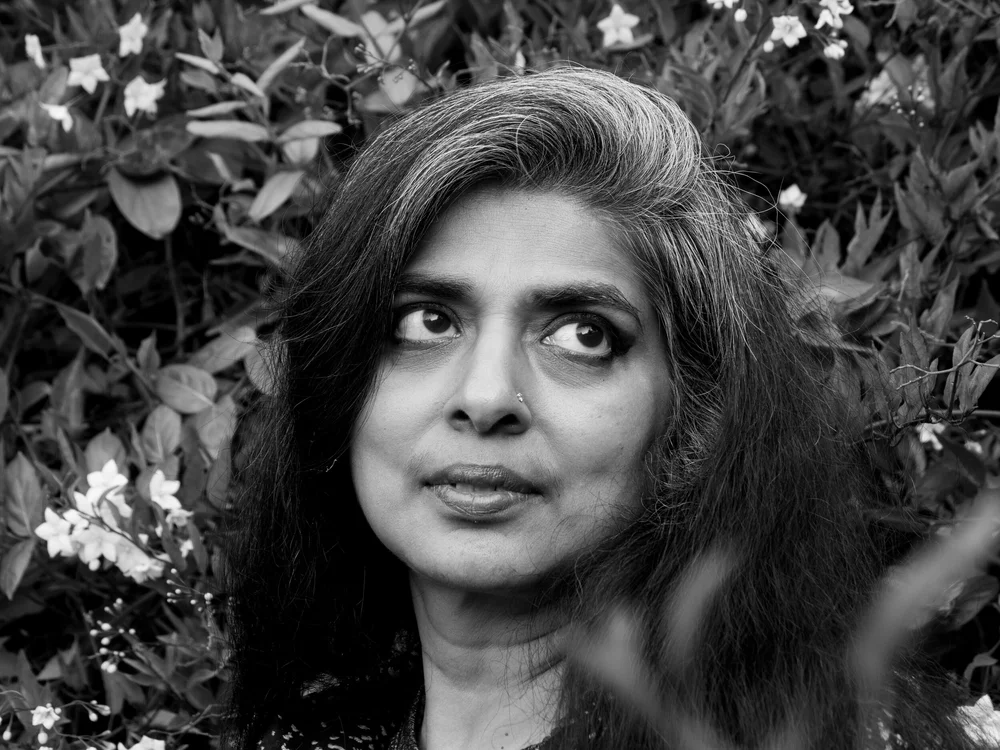
We close out this week by taking a look at our holdings from bilingual poet, essayist, author, editor and translator Sophia Naz. Naz has published four poetry collections in total — Peripheries (Cyberhex 2015), Pointillism (Copper Coin 2017), Date Palms (City Press 2017), and Open Zero (Yoda Press 2021) — as well as a biography of her mother, titled Shehnaz; A Tragic True Tale of Royalty, Glamour and Heartbreak  (Penguin Random House 2019). On her PennSound author page you'll find a pair of sessions recorded at the Kelly Writers House's Wexler Studios in 2019 and 2021.

Naz's April 3, 2019 session consists of sixteen titles in total, including "Black Butterflies," "Eye of the Labyrinth," "The Heart of the Matter," "Habeas Corpus," "If You Spoke, Firefly," "Odysseys of an Onion Moon," "Chappan Churi," "Ode to a Scar," "In the Margins," "Atomic Nocta," and "The Department of Wronged Rights." Jumping forward to September 8, 2021, Naz's second session for PennSound included five short poems: "The Lesson," "Thumbnail," "Split Ends," "Nakhuda," and "The Dance." 

You can listen in to both sets of recordings on PennSound's Sophia Naz author page.

Monday, March 28, 2022

PennSound podcast #73: Emily Abendroth and Jeff T. Johnson

Today we released the latest episode in the PennSound Podcast Series, program #73 in total, in which features Emily Abendroth and Jeff T. Johnson in conversation regarding Johnson’s Trouble Songs: A Musicological Poetics (punctum books, 2018) and Abendroth’s Sousveillance Pageant (Radiator Press, 2021).

As Knar Gavin notes in their write-up of the new episode, their dialogue is an "exchange [of] perspectives on how modular, nonlinear writing can open into enactive relationships that press readers and listeners alike beyond individual experience toward 'critical empathy' and its relational tactics and strategies for living in common amidst social struggles that require collective reflection and navigation." Gavin continues:
"Where are our comrades?" Abendroth asks, inviting reflection on how textual gestures might ignite collective forms of reckoning. Likewise, Johnson compels reflection on how "trouble songs" — and perhaps trouble itself — might be written through listening and listened to through writing. These are just a few provocations that emerge in this afternoon conversation, recorded in the Wexler Studio at the Kelly Writers House during the winter of 2021. 

You can listen in to this new episode by clicking here. You can browse the complete archives of the PennSound Podcast Series here.

Thursday, March 10, 2022

Sophia Naz: Wexler Studio Session, 2021

Today we're highlighting a recently added set by poet Sophia Naz that was recorded especially for PennSound at the Wexler Studios at our own Kelly Writers House on September 8, 2021. In this session Naz reads five short poems: "The Lesson," "Thumbnail," "Split Ends," "Nakhuda," and "The Dance." You can listen to these poems by clicking here.

This 2021 Wexler Studios session is a lovely complement to an earlier set of poems recorded in the same facilities a few years earlier. Dating from April 3, 2019, this session sees Naz read a total of sixteen poems in a twenty-nine minute set, including "Black Butterflies," "The Heart of the Matter," "Habeas Corpus," "Odysseys of an Onion Moon," "Ode to a Scar," "Twenty-Six Soldiers of Lead," "Atomic Nocta," and "The Department of Wronged Rights." You can listen in to both of these sessions on PennSound's Sophia Naz author page.

Monday, August 30, 2021

Fatemeh Shams on PennSound

We're kicking off this week by highlighting the work of Persian poet, translator, and scholar Fatemeh Shams, who is also an Assistant Professor of Near Eastern Languages and Civilizations at the University of Pennsylvania.

On March 2, 2017 Shams and translator Dick Davis took part in a lunchtime event at our own Kelly Writers House on Persian Literature in Translation, which is available on her author page in video and audio form. Later that day, the two stepped into the Wexler Studio for a bilingual reading, with Shams reading in Farsi and Davis sharing his translations in English. In total, the pair read ten poems including "Mashhad," "Three Years Later," "Never to Fall Asleep," "Ash and Mist," "In Search of a Homeland," "Home," and "Persecution."

These earlier recordings are joined by "Poetry Is for Breathing: A Reading Against Islamophobia" an event that took place at the Kelly Writers House on April 17, 2019 with sets by Shams, Aditya Bahl (poet, translator, and a current Johns Hopkins Ph.D. candidate), and Husnaa Hashim (2017-2018 Youth Poet Laureate of Philadelphia), with Orchid Tierney serving as host. Shams' poem, "When They Broke Down the Door," was also the subject of PoemTalk Podcast #119, with a panel that included Firoozeh Kashani-Sabet, Leonard Schwartz, and Mahyar Entezari joining host Al Filreis for the show. You can listen to all of the aforementioned recordings by clicking here.

Wednesday, May 13, 2020

PennSound Podcast #70: Al Young

The latest episode in the PennSound Podcast Series went live yesterday and it's one you won't want to miss out on. This special program features Al Young in conversation with Al Filreis, William J. Harris, and Tyrone Williams, and was recorded at our own Wexler Studio in conjunction with Young's visit to the Kelly Writers House to give a reading on November 15, 2018.

Filreis describes the session as follows in his write-up for Jacket2: "The conversation covered the relationship between Young’s poetry and the Black Arts Movement, the role of music and jazz in his writing, and other figures with whom he was acquainted, such as poets Ishmael Reed and Bob Kaufman. Young spoke of his time at Stanford, where he met Harris; of having resided in various parts of the country; and of the role of writing about lived experiences beyond writing about writing." Young also reads some of his poetry, including "A Dance for Militant Dilettantes," "Yes, the Secret Mind Whispers" (which pays tribute to Kaufman), and "January." You can listen to the show by clicking here. On Young's PennSound author page you'll find his aforementioned UPenn reading from 2018, along with a 2006 reading in San Francisco and a 1990 reading at Palo Alto's Printer's Ink. Click here to listen to those sets.


Wednesday, March 4, 2020

PennSound Podcast #69: Rodney Koeneke and Davy Knittle

We've just released a new episode in the PennSound Podcast Series, our 69th episode overall. Nick Plante has all the info you need to know about this show over at Jacket2:
In September 2018 Davy Knittle hosted poet Rodney Koeneke in the Wexler Studio to discuss his book, Body & Glass (Wave Books, 2018). Their conversation touches on Koeneke's writing process and use of pronouns as a "distancing technique," the role of poetry — particularly experimental forms — in America today, and how joy might emerge from work about loss. In the podcast, the two also examine the traditions that poetry assembles for itself, drawing comparisons between modernists like Joyce and contemporary poets. Koeneke recorded readings for PennSound as well. 
That session showcases poems from Body and Glass as well as Koeneke's 2014's book Etruria (also published by Wave Books). Running twenty-six minutes, it includes the poems "Larry's House of Brakes," "in the backlands of the provence," "tarnish the coppice, punk autumn," "the new sobriety," "scott walker sings," "humber, severn, mersey, thames, and ouse," "another hapless functionary," "he continually puts autumn in his writing," and nineteen more titles. You can listen to that recording and many more, going back as far as 2004, by clicking here. To listen in on their conversation, click here. You can browse the full archive of PennSound Podcasts by clicking here.


Friday, January 10, 2020

PennSound Podcast #67: "Taking Up Space: Sarah Rose Etter"

In the latest episode in the PennSound Podcast series, Sarah Rose Etter joined Jacket2 editor Julia Bloch in the Wexler Studio last September for a short reading from and discussion of her debut poetic novel, The Book of X, which appeared in 2019 from Two Dollar Radio. Etter and Bloch talked about the impact of open poetics and visual art upon Etter’s prose style, the feminist politics of speculative narrative, the process of fact-checking menstrual blood output, and the etymology of the book’s governing image — among other things. 

Sarah Rose Etter is the author of Tongue Party, selected by Deb Olin Unferth as the winner of the Caketrain Press award, and The Book of X, her first novel. Her work has appeared or is forthcoming in The Cut, Electric Literature, Guernica, VICE, New York Tyrant, Juked, Night Block, The Black Warrior Review, Salt Hill Journal, The Collagist, and elsewhere. She has been awarded residences at Disquiet International program in Portugal and the Gullkistan Writing Residency in Iceland.

Friday, December 20, 2019

Angela Carr: New Wexler Studio Session, 2018

This week we're highlighting a trio of newly posted recordings made in our own Wexler Studio at the Kelly Writers House during the fall semester. Today we're closing things out with a short set by Angela Carr recorded on October 18, 2018.

Carr's set consists of four poems in total: "Other Signs," "First Signs," an excerpt from Signs of Interest and Currency, and an unnamed poem starting "When I board the train ahead of Iris..." These recordings are our sole holdings by Carr, which is why you'll find them on our Singles page, along with many other stellar recordings from poets we don't have enough material from to create proper author pages. You can listen in by clicking here, and you can browse through our Singles page by clicking here.


Wednesday, December 18, 2019

Kate Colby: New Wexler Studio Session, 2018

This week we're highlighting a trio of newly posted recordings made in our own Wexler Studio at the Kelly Writers House. Today, we're focusing on an extensive session with Kate Colby made on October 25, 2018.

Colby's set includes twenty-six poems in just over twenty-three minutes. They include "Green Flash," "Nature," "The Lesson," "Vessel," "Too Late," "Beauty," "Senescence," "Survivor," "Artificial Light," "Catch of the Day," "Aftermath," "Air Lock," "Tartarus," "Cold Comfort," "How I Look in the Mirror," "Shackleton, "Ars Poetica," and "A Diamond Is Forever."

These new recordings can be found on PennSound's Kate Colby author page, along with a career-spanning Wexler Studio Session from 2016 (covering selections from six collections: Unbecoming Behavior, Beauport, Blue Hole, Fruitlands, Return of the Native, and The Arrangements) and a half-dozen other full-length readings from 2011 to the present. You can listen in by clicking here.


Monday, December 16, 2019

erica kaufman: New Wexler Studio Session, 2018

This week we're highlighting a trio of newly posted recordings made in our own Wexler Studio at the Kelly Writers House. We start today with a new set by erica kaufman recorded on November 5, 2018.

In total, kaufman recorded seven poems for this twenty-two minute session, starting with the long poem "Bad Habit (for CAConrad)," followed by "Instant Classic on Contingence." The remainder of kaufman's set consists of selections from her project "Post Classic," starting with "an invocation" and then continuing with four more installments from the series.

You can hear these new poems on PennSound's erica kaufman author page, which is also home to a diverse array of recordings by the poet spanning the past fifteen years, from readings to interviews, panel talks, podcasts, and much, much more. Click here to start browsing.


Monday, July 8, 2019

John Richetti Reads English Renaissance Verse and Auden, 2019

Golden-throated UPenn emeritus professor John Richetti returned to the Wexler Studio at the Kelly Writers House this April two record two new sets of material spanning the breadth of his interests within the field of English literature.

First, we have a broad selection of English Renaissance Verse, including poems by Edmund Spenser (including Cantos I and II from The Faerie Queen and "Epithalamion"), Sir Philip Sidney ("Leave Me, O Love," "With How Sad Steps," "What Tongue Can Her Perfections Tell?," and "Come Sleepe, O Sleepe," among others), Sir Walter Raleigh ("The Passionate Man's Pilgrimage," "What Is Our Life," "The Lie," "Of Spenser's Faery Queen"), Sir Thomas Wyatt ("They Flee From Me," "My Lute Awake," and "Forget Not Yet," among others), Henry Howard, Earl of Surrey (including "When Youth Had Led," "When Raging Love," and selections from Poems of Love and Charity), Robert Southwell ("The Burning Babe"), and Thomas Campion ("My Sweetest Lesbia," "When to Her Lute," "Though You Are Young," "When Then Is Love but Mourning," and "There Is a Garden in Her Face"), along with Fulke Greville, John Skelton, Michael Drayton, Sir Edward Dyer, and George Gascoine. In total, there are more than four dozen poems in this set, which you can listen to here.

Richetti also recorded a sprawling collection of more than three dozen poems by W.H. Auden during the same visit, including "Spain," "September 1, 1939," "Epitaph on a Tyrant," "In Memory of W.B. Yeats," "The Secret Agent," "This Lunar Beauty," "The Witnesses," "Danse Macabre," "Musée des Beaux Arts," "In Memory of Sigmund Freud," "The Fall of Rome," and "The Geography of the House." These poems can be found here.

We're grateful, as always, for John Richetti's time and dedication to the PennSound project. You can find many more recordings he's made for us over the past fourteen years on the PennSound Classics homepage.


Wednesday, January 9, 2019

A New Disability Poetics Symposium

Today we're highlight a tremendous new addition to the PennSound archive: A New Disability Poetics Symposium, which was recorded at the LGBT Center at UPenn on October 18, 2018. This ambitious, multi-part gathering was organized by Jennifer Bartlett, Ariel Resnikoff, Adam Sax, and Orchid Tierney, in collaboration with Knar Gavin, Declan Gould, Davy Knittle, and Michael Northen.


The proceedings began with the panel "Larry Eigner's Disability Poetics," moderated by Charles Bernstein, with talks by George Hart, Michael Davidson, and Jennifer Bartlett. That's followed by "Disability and Performance," moderated by Declan Gould, with contributions by torin a. greathouse and Camisha Jones; and "Poetic Experiment and Disability," moderated by Orchid Tierney, with panelists Sharon Mesmer and Gaia Thomas.

These talks are complemented by a number of readings, the first taking place as part of the symposium itself, with sets by Bartlett, Jim Ferris, Ona Gritz, Anne Kaier, Dan Simpson, and Brian Teare. There's a second set recorded at our own Wexler Studios with Kaier, Simpson, Ferris, Gritz, and Michael Northen reading their work. Finally, poet Kathi Wolfe was unable to take part in the symposium, but made home recordings of the pieces she would have read at the event, which we've made available to listeners as well.

Given both the significance of Disability Studies and the growing attention it's receiving from more mainstream audiences, this is a particularly important event, and one that we are very proud to be able to share with a wider audience. To start listening, click here.

Wednesday, December 19, 2018

Rachel Zolf: Wexler Studio Session, 2018

We recently added a new Wexler Studio session with poet Rachel Zolf, who stopped by last May to record a selection of new work.  In total there are sixteen pieces, all short vignettes running from sixteen to fifty-three seconds, which are identified by their opening lines. Titles include "Ingredients of a winning visual identity...," "Trapped in this high performance culture...," "You know the drill...," "Reading and gleaning from the same German root...," "Albino Lucille...," and "What's the use of Jews writing limericks..." 

You can listen in by clicking here, and don't forget to browse through nearly thirteen years' worth of recordings of every stripe imaginable, which you can find on PennSound's Rachel Zolf author page.