Thursday, September 30, 2021

Congratulations to MacArthur Foundation Fellows Hanif Abdurraqib, Don Mee Choi

This week brought very auspicious news for a pair of poets that you can find in the PennSound archives: both Hanif Abdurraqib and Don Mee Choi (along with Reginald Dwayne Betts) were awarded fellowships from the MacArthur Foundation (commonly referred to as "genius grants") for their life's work.

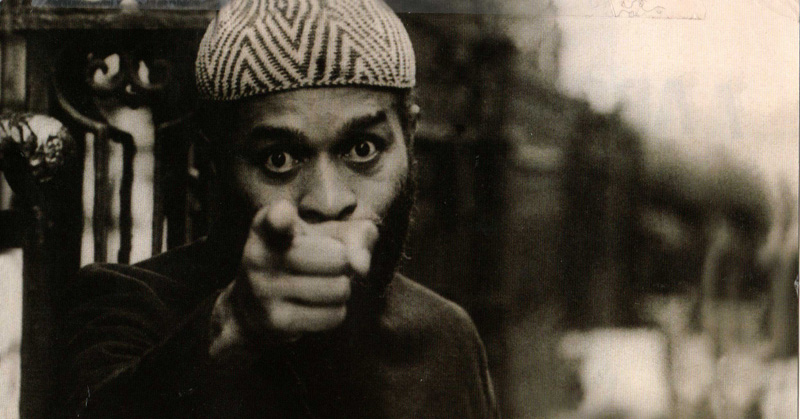
Hanif Abdurraqib was hailed as "a music critic, essayist, and poet using the lens of popular music to examine the broader culture that produces and consumes it." "With an intimate and welcoming writing style that establishes an immediate connection with readers," they continue, "he blends autobiography, social history, and keen insights into specific technical and emotional aspects of a song, an album, or a performance." "Omnivorous in his influences and prolific in his output," they conclude, "Abdurraqib is forging a new form of cultural criticism, one that is informed by lived experience and offers incisive social and artistic critiques." 

Our recently-constructed author page for Abdurraqib,  is anchored by his virtual reading at our own Kelly Writers House last spring. Video footage from that event is available, along with segmented MP3 audio that you can stream or download. In the first half, Abdurraqib reads the ten-part poem "All the TV Shows Are About Cops," which is split into individual tracks. The Q&A session that followed has also been split into thematic segments, such as "on the writing process," "on making an office space," "tips for aspiring cultural critics," "on being influenced by his favorite books," and "on sneakers." These new tracks join an old favorite, a January 2019 reading of "USAvsCuba," taken from his debut collection The Crown Ain't Worth Much (Button Poetry). 

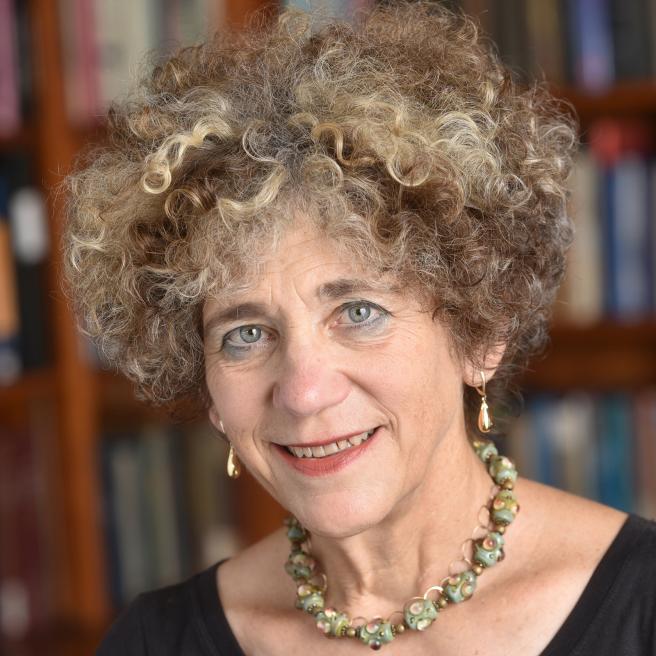
Don Mee Choi was a perennial presence in our PennSound Daily entries last fall as she won the National Book Award for her latest collection, DMZ Colony (Wave Books) so it's no surprise to see her return to these pages for an even greater honor. The MacArthur committee singled her out as "a poet and translator grappling with the effects of military violence and U.S. imperial legacies on the Korean Peninsula." "In her three volumes of poetry and numerous essays," they continue, "she explores themes of dislocation, fractured identities, trauma, and memory, while amplifying civilian voices that have been obscured by the history and looming threat of war in her homeland." In closing, they observe how "Choi’s intertwined practices as poet and translator bear witness to otherwise unspeakable histories and expand the range of expressive possibilities for writers from diasporic and multilingual backgrounds."

While we don't have a PennSound author page for Don Mee Choi, you can hear her reading her work as part of Poetry Politic and as part of the 2012 MLA Offsite Reading

We congratulate both Abdurraqib and Choi for this life-changing honor. Click the links above to listen to the aforementioned recordings.

Tuesday, September 28, 2021

Happy 90th Birthday to Marjorie Perloff

We couldn't let the day go by without sending our heartiest birthday greetings to the one and only Marjorie Perloff, who reaches the major milestone of 90 today! 

Perloff has been a good friend to the Kelly Writers House, PennSound, and Jacket2 over the years as is evidenced by her PennSound author page, which is home to a wide array of talks, interviews, and readings from 1991 to the present. If you're looking for a starting point amidst so many wonderful recordings, we might humbly suggest Charles Bernstein's three-part 2009 Close Listening program, which features a half-hour reading from Perloff's memoir Vienna Paradox and two full segments containing a wide-ranging biographical conversation.
Another wonderful resource we're glad to point our listeners towards is "Marjorie Perloff: A Celebration," a 2012 Jacket2 feature co-edited by Al Filreis and J. Gordon Faylor. Here's how they introduce the feature:
This feature celebrates the life and work of Marjorie Perloff at almost exactly the moment she receives the honor of induction into the American Philosophical Society, headquartered in Philadelphia, which happens to be — some blocks west of that venerable institution — home base for Jacket2. APS election is something like what in L.A., Perloff's own home, is called "a lifetime achievement award." So it seemed time for us to bring together not just friends but also critical admirers at various distances to write brief retrospective reviews of her work over the years.
Inside, you'll find contributions from Jerome McGann, Joan Retallack, Richard Sieburth, Maggie O'Sullivan, Charles Bernstein, Caroline Bergvall, Johanna Drucker, and Jean-Michel Rabaté, among others. You can start browsing the table of contents by clicking here. We wish Perloff the loveliest of days and many happy returns!

Monday, September 27, 2021

PoemTalk #164: on Leslie Scalapino's "'Can't' is 'Night'"

Today we release episode #164 in the PoemTalk Podcast series, which focuses on a three-page excerpt from Leslie Scalapino's poem "'Can't' is 'Night,'" chosen by the poet for It’s Go in Horizontal: Selected Poems, 1974-2006. Joining host Al Filreis for this program is a panel that includes Knar Gavin, Anna Vitale, and Sophia DuRose.

After noting that the recording being discussed comes from a 2007 Close Listening program, Filreis' Jacket2 blog post announcing the new episode observes that "It requires close listening indeed, and a somewhat distinct encounter of seeing the poem as text." He continues, "Scalapino does have a remarkable talent for sounding out words she has put in quotation marks. Crucially, she sounds out linebreaks too: listen for the break between 'character' and 'night' in 'separation of character and / night.' After all, 'night exists at day — but is not the same night so / night is not-existing.'" 

You can listen to this latest program and read more about the show here. PoemTalk is a joint production of PennSound and the Poetry Foundation, aided by the generous support of Nathan and Elizabeth Leight. You can browse the full PoemTalk archives, spanning more than a decade, by clicking here.

Friday, September 24, 2021

Ted Joans on PennSound

We close out this week by taking a look at our holdings from legendary poet Ted Joans.

First, thanks to the S Press Collection, we have Joans' Jazz Poems, tape #72 in the series, which was recorded in Germany in November 1979 and released the following year. Running nearly seventy minutes, this album sees Joans run through fourteen poems in total — "The Truth," "Jazz Is My Religion," "Bed," "Ouagadougou Ouagadougou," "I Am The Lover," "Nine Month Blues," "Africa," and "Long Gone Lover Blues" among them — with laid-back accompaniment from a combo that included Uli Espenlaub on keys, Andreas Leep on bass, Dietrich Rauschtenberger behind the drums, and Ralf Falk guitar. Jazz Poems is a substantial addition to our collection of Joans recordings, and a welcome one given his influence upon multiple generations of poets.

For those interested in learning more about Joans, there's no better place to start than Wow! Ted Joans Lives!, the 2010 documentary by Kurt Hemmer and Tom Knoff that we've been proud to share with our listeners for the past five years. Envisoned as "a visual and aural collage," the film "examin[es] the life and works of the legendary, tri-continental poet Ted Joans, who was born in Cairo, Illinois on 4 July 1928 and went on to become one of the significant poets of his generation performing his work in the United States, Europe, and Africa." Hemmer and Knoff continue, "The film has the sound of jazz and the flavor of surrealism. As Ted Joans declared, 'Jazz is my religion and Surrealism is my point of view.'" You'll find the complete award-winning documentary here, along with a short clip of Joans reading in Amsterdam in 1964 — taken from Louis van Gasteren's film, Jazz & Poetry — and the aforementioned S Press cassette.

Tuesday, September 21, 2021

Apply to Be Philadelphia's Next Poet Laureate

The City of Philadelphia is currently accepting applications for its next Poet Laureate! 

The Free Library of Philadelphia — which administers the program with guidance from "a governing committee composed of local poets, educators, arts-organization professionals, and Free Library staff members" — has information on how you can apply on their website. Per their invitation, they're looking for candidates who "will demonstrate a commitment to the power of poetry to inspire people throughout Philadelphia's neighborhoods," and over the course of their two year term (running from 2022–2023), they will "mentor two Youth Poet Laureates ... and engage with the city through readings, events, and a signature project of their choosing."

Candidates must be current residents of Philadelphia and will need to meet other eligibility requirements. The deadline for applying is by 5:00PM on Friday, October 15, 2021. The application form can be found here, and those in need of more information can write PoetLaureate@freelibrary.org.

Monday, September 20, 2021

Rachel Zolf: 'No One's Witness: A Monstrous Poetics' Launch at KWH

This new week starts off with a brand new recording from our own Kelly Writers House: the September 9, 2021 launch event for Rachel Zolf's new book, No One's Witness: A Monstrous Poetics.  Here's our preview blurb for the event from the KWH calendar:
In No One's Witness, Zolf activates the last three lines of a poem by Jewish Nazi holocaust survivor Paul Celan—"No one / bears witness for the / witness"—to theorize the poetics and im/possibility of witnessing. Drawing on black studies, continental philosophy, queer theory, experimental poetics, and work by several writers and artists, Zolf asks what it means to witness from the excessive, incalculable position of No One. In a fragmentary and recursive style that enacts the monstrous speech it pursues, No One's Witness demonstrates the necessity of confronting the Nazi holocaust in relation to transatlantic slavery and its afterlives. Thinking along with black feminist theory's notions of entangled swarm, field, plenum, chorus, No One's Witness interrogates the limits and thresholds of witnessing.

Judith Butler says No One's Witness "shows in brilliant and moving ways how language must change to come close to registering the living aftermath of destruction," and John Keene has described the book as "a critical-theoretical intervention and a lyric prose artifact that will appeal not only to theorists and critics, but also to poets, professors, and students."
For this special event, Airea D. Matthews served as host and interlocutor for the conversation that followed the reading. UPenn undergrad Sofia Sears also makes a guest appearance reading their poetry. Click here to start listening to this event on PennSound's Rachel Zolf author page, where you'll also find a wide array of readings, talks, and performances spanning the last fifteen years.

Friday, September 17, 2021

Congratulations to National Book Award Long-Listers Gander, Kearney, Nguyen

Well, it looks as if this week on PennSound Daily is all about bestowing congratulations, with a trio of PennSound poets having been announced this week as being on the long-list for this year's National Book Award in Poetry. That includes one repeat nominee, Forrest Gander, and a pair of exciting poets getting the nod for the first time: Douglas Kearney and Hoa Nguyen.

Gander is nominated for Twice Alive, which "addresses the exigencies of our historical moment and the intimacies, personal and environmental, that bind us to others and to the world." "Drawing from his training in geology and his immersion in Sangam literary traditions," the summary contines, "Gander invests these poems with an emotional intensity that illuminates our deep-tangled interrelations." PennSound's Forrest Gander author page is home to readings and interviews from 1992 to the present year.

Kearney is nominated for Sho, which "eschew[s] performative typography [and] aims to hit crooked licks with straight-seeming sticks." This collection "navigat[es] the complex penetrability of language, while espous[ing] Black vernacular strategies" and "examining histories and current events through the lyric, brand new dances, and other performances," creating "a genius work of literary precision, wordplay, farce, and critical irony." PennSound's relatively-new Douglas Kearney author page is where you can find a handful of readings from 2005 to the present, along with an illuminating appearance on Charles Bernstein's Close Listening program from 2018.

Last but certainly not least, Nguyen is nominated for A Thousand Times You Lose Your Treasure, "a poetic meditation on historical, personal, and cultural pressures pre- and post-'Fall-of-Saigon' with verse biography on the poet's mother, Diệp Anh Nguyá»…n, a stunt motorcyclist in an all-women Vietnamese circus troupe." This haunting collection "sings of language and loss; dialogues with time, myth and place; and communes with past and future ghosts." Our Hoa Nguyen author page houses a quartet of readings spanning the years 2010 to 2017.

We send our heartiest congratulations to these three poets and the other seven on this year's long-list. Like many of our listeners, we'll be excitedly waiting to see who makes the final list and eventually is awarded the prize.


Wednesday, September 15, 2021

Congratulations to Canadian Jewish Literature Award Winner Gary Barwin

Our week continues with another great honor for a poet we're proud to have as part of the PennSound archives. This time, we send our heartiest congratulations to Gary Barwin — a fine experimental poet and a talented fiction writer to boot — whose novel, Nothing the Same, Everything Haunted: The Ballad of Motl the Cowboy (Random House Canada), was just named a winner of the 2021 Canadian Jewish Literary Awards in Fiction.

In their citation, the judges hail Nothing the Same, Everything Haunted: The Ballad of Motl the Cowboy as "a work of unbounded imagination following a wannabe cowboy, Motl, as he and his mother flee Vilna and the Nazis massacre of the Jews." They continue: "The phantasmagoria of ensuing events, characters and horror are met by Motl with an equally bizarre set of puns and humorous absurdity in the face of tragedy. This original and moving exploration of genocide and persecution is filled with heartbreak and the enduring quest for hope in the face of horror of the Shoah." In conclusion, they find Barwin's "integration of tragedy and humour, in the Jewish tradition," to be "masterful."

You can read more about the Canadian Jewish Literature Award and Barwin's book here. PennSound's Gary Barwin author page — which is home to recordings spanning more than a quarter century, including a compact and useful "Selected Works 1994 – 2012," broken down by performance and text type — can be found here.

Monday, September 13, 2021

Johanna Drucker Wins AIGA's Steven Heller Prize for Cultural Commentary

We start this week sending well-earned congratulations to Johanna Drucker who was recently announced as a winner of AIGA's Steven Heller Prize for Cultural Commentary. The American Institute of Graphic Arts, which has awarded the prize since 2017, presents it to individuals "who best exemplify the tradition of prolific writing and boundless curiosity established by Steven Heller — who has contributed and inspired engaging commentary about design and culture for the past three decades." The Heller Prize "celebrates critical thinking about design and the profession, and encourages development in the next generation of design voices through a variety of media (i.e., curators, podcasters, filmmakers)."

Drucker's citation honors "her prolific yet unpredictable work as a leading scholar of graphic design, print culture, and book history as well as her impact through graphic design history textbooks to shape students and welcome the next generation of designers" and certainly, given the scope of Drucker's artistry, it is richly deserved.

For those eager to learn more about Drucker, we point you in the direction of her PennSound author page, which is home to a wide variety of recordings — including talks, performances, and interviews — from the mid-1980s to the present. Click here to start browsing.

Friday, September 10, 2021

Lila Zemborain Reads from Her 9/11 Poem, 'Rasgado/Torn'

Tomorrow our nation will mark the 20th anniversary of the September 11th terror attacks. To mark the occasion, Charles Bernstein has posted a new video, made especially for PennSound, from Argentinian poet and critic Lila Zemborain. 

Together with Lorenzo Bueno, Zemborain reads from Rasgado/Torn (Buenos Aires: Tse-Tse, 2006), a poetic diary written one year after 9/11. This reading, presented by Rebel Road, was recorded in New York on August 25, 2021. Bueno, Zemborain's son, is also the translator of the book, which also featured additional translation by Rosa Alcala. 


Poet and critic Lila Zemborain (Argentina) is the Director of Creative Writing in Spanish at NYU. She is the author of several poetry collections: Abrete sésamo debajo agua (1993); Usted (1998); Guardianes del secreto (2002), translated into English as Guardians of the Secret (2009/2015); Malvas orquídeas del mar (2004), translated into English as Mauve Sea-orchids (2007); Rasgado (2006), translated into French as Déchiré (2013); El rumor de los bordes (2011); Diario de la hamaca paraguaya (2014); Materia blanda (2014); and the chapbooks Ardores (1989) and Pampa (2001). We thank her for sharing this video with us and our listeners.

Wednesday, September 8, 2021

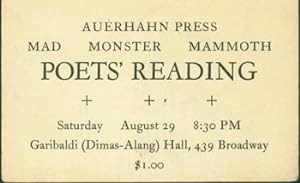
Mad Mammoth Monster Poetry Readings: Ginsberg, Lamantia, McClure, Meltzer, Welch, Wieners, Whalen

Today we're proud to announce newly added recordings from the Mad Mammoth Monster Poetry Readings, which were convened by Auerhann Press in San Francisco on August 29, 1963. They include brief but very exciting sets by a total of seven noteworthy Bay Area poets, many of whom had been published by the press. Because we have no context clues to establish the reading order we're presenting these tracks in alphabetical order. Clicking on each poet's name will take you directly to their poem(s).

First up we have Allen Ginsberg, who read "Patna-Benares Express" and "May 22 [1962] Calcutta," followed by Philip Lamantia, who read "Rest in Peace, Al Capone" and "All Hail Pope John XXIII." Michael McClure read from Dark Brown and Ghost Tantras, while David Meltzer read several short pieces: "Baby's Hands," "Rain Poems," "Nerve Root Poem," "Two Poems to My Wife," and "Poem for Lew Welch." For his own set, Welch  read from Hermit Poems, while John Wieners read "A Poem for Cocksuckers" and "A Poem for the Old Man." Finally, we have Philip Whalen bringing our new recordings to a close with an excerpt from "The Art of Literature."

It's a fascinating snapshot of the Bay Area's poetry scene at that time as the late Beat Generation heyday slowly started to give way to the burgeoning Summer of Love ethos. To listen to any of the individual poets listed above, just click their names to be taken to their PennSound author pages.


Monday, September 6, 2021

Spend Labor Day with Berrigan and Waldman's "Memorial Day"

Today at PennSound we're marking the Labor Day holiday and the unofficial end of summer by thinking back to the holiday that started the summer off: Memorial Day. Specifically, we're thinking of Ted Berrigan and Anne Waldman's collaborative masterpiece, "Memorial Day," and our recording of their May 5, 1971 reading of the work in its entirety at the Saint Mark's Poetry Project.

This recording is notable not only because "Memorial Day" is a landmark collaboration between two of the New York School's finest poets, but also due to its seeming rarity. Berrigan and Waldman were rumored to have only read the poem together and in its entirety once — in fact, "Memorial Day" was composed specifically for their joint reading in the spring of 1971 — and while the event was recorded, it would seem that the tape had been missing for several decades, presumably lost forever.

My brief Jacket2 essay from 2010, "Recovering 'Memorial Day,'"  is both a rumination on the poem itself and a retelling of its being lost and found again in the reel-to-reel tape collection of Robert Creeley. To listen to the recording directly, you can click here. Subsequently, video footage of a 1973 reading of the poem by Berrigan and Waldman has been located, and you can watch that here.

Friday, September 3, 2021

John Richetti reads Robert Frost, 2021

Beloved UPenn professor emeritus John Richetti is back with a new set of recordings made just for PennSound. This time around, Richetti is lending his stentorian tones to the works of Robert Frost, with a session encompassing forty-three titles in total, recorded at home over two days this August. Here's the introduction he wrote for this new batch of tracks:

Robert Frost (1874–1963) became the most widely known American poet during his long lifetime, although the poems most familiar to the public during his later years, especially "The Road Not Taken," presented a somewhat misleading view of him as a benign rural sage who offered simple, folksy consolations drawn from Nature. But in fact his poetry uses the closely-observed natural world to evoke situations and images that explore moral and philosophical issues with rigorous clarity. As the critic, Lionel Trilling observed Frost's poetic universe is in fact "terrifying." His often disturbing poetic insights are delivered in a straightforward, conversational style that uses traditional metrical organization as well as rhyme.

Frost was born in San Francisco and worked as a New Hampshire farmer only briefly before deciding to move to England in 1912 to pursue a career as a poet. He published there his first book, A Boy's Will (1913) and came to know the American expatriate poet, Ezra Pound, as well as many other prominent writers while in England, including William Butler Yeats, who remarked to Pound that Frost's first book "is the best poetry written in America for a long time." Upon his return to the United States, he bought a farm in New Hampshire. In 1917 he settled in Amherst, Massachusetts and for a number of years taught at Amherst College, the beginning of a life-long affiliation with the school.

All the poems in this selection are drawn from the Library of America edition of his works, Robert Frost: Collected Poems, Prose, & Plays, ed. Richard Poirier and Mark Richardson.

Numerous previous sessions with Richetti are available on PennSound Classics, spanning more than a decade. They include his prodigious "111 Favorite Poems for Memorizing," "The PennSound Anthology of Restoration & 18th-Century Poetry," and his audio anthology of English Renaissance Verse. Richetti has additionally recorded selections from Matthew Arnold, W.H. Auden, William Blake, Elizabeth Barrett Browning, Robert Browning, Lord Byron, Samuel Taylor Coleridge, Emily Dickinson, John Donne, John Dryden, George Herbert, Ben Jonson, John Keats, Andrew Marvell, John Milton, Edgar Allan Poe, William Shakespeare, Percy Bysshe Shelley, Algernon Charles Swinburne, Alfred Lord Tennyson, Walt Whitman, William Wordsworth, and William Butler Yeats. These lovingly-made recordings, rendered in Richetti's distinctive tenor, are a tremendous resource for the classroom or for any lover of poetry.

With the exception of the aforementioned anthologies, PennSound Classics is divided by author, so you can see Richetti's ample contributions alongside those of many other poets and scholars. To start browsing, click here. You can go directly to Richetti's Frost recordings by clicking here.

Wednesday, September 1, 2021

Gregory Corso Reads at the Fantasy Records Studios, 1969

Today we're highlighting a very exciting new addition to the site from legendary Beat poet Gregory Corso: tracks from a 1969 recording session at Fantasy Records' San Francisco studios on Natoma Street.

In total there were eight tracks recorded for this session, ostensibly for a planned album release that never materialized — you'll recall that Fantasy also released records by Allen Ginsberg, Lawrence Ferlinghetti, and Kenneth Rexroth, among others. They include "In the Fleeting Hand of Time," "Vision of Rotterdam," "The Last Warmth of Arnold," "Mexican Impressions," "Botticelli Spring," "Sun — A Spontaneous Poem," "Ode to Coit Tower," and, perhaps most exciting of all, "I Am 25."

We launched our Gregory Corso author page in June 2017, with assistance from Raymond Foye. There, you'll find five full readings plus one individual poem recorded between the 1970s and 1990s. The earliest recording is an April 1971 reading at Duke University, which is followed by an August 1985 appearance at the San Francisco Art Institute as part of their "Art of Poetry" series. Jumping forward to the 90s, there's a March 1991 Brooklyn College reading notable for the appearance of Corso's iconic late poem "The Whole Mess ... Almost" and for the half-hour candid conversation recorded in the car on the way home. From December 1992, there's a stellar reading in New York City also featuring Herbert Huncke, John Wieners, and Allen Ginsberg, and finally, from March 1993, we have a half-hour reading from Rutgers University including "I Met This Guy Who Died," "Earliest Memory," "Youthful Religious Experiences," and "Friends," among other poems.

Click here to start listening to this new Fantasy Records session on PennSound's Gregory Corso author page.