Friday, July 28, 2023

Happy Birthday to John Ashbery

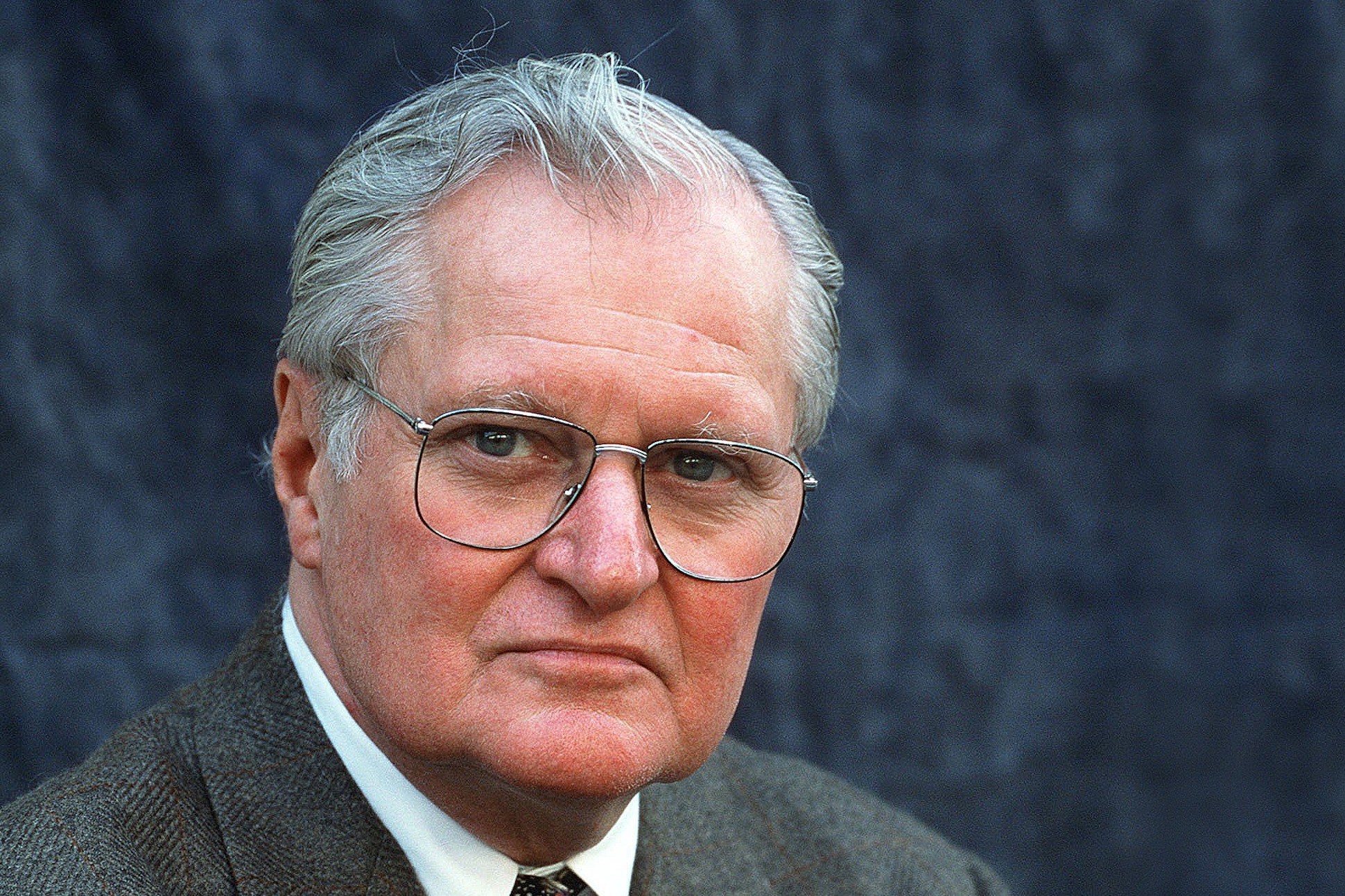
New York School legend John Ashbery, who was born on this date 96 years ago. Certainly, Ashbery's place in poetry's pantheon is well-established, and you get a sense of this by trying to take in the immense scale of PennSound's Ashbery author page, which is home to nearly a thousand individual MP3 files, along with countless videos and other resources that run the gamut from a 1951 student presentation of his play Everyman in Cambridge to home recordings made not long before his death. While the breadth and depth of our archive pays tribute to Ashbery's talents, I also like to think that it serves as an indication of his (and his spouse, David Kermani's) dedication to the PennSound project, and I truly believe that their support helped shape the development of our site in immeasurable ways. 

We first got permission to share Ashbery's work in October 2007, not long after I came on as PennSound's managing editor, and just as PennSound Daily was starting. The site looked a little different then than it does now, just like we all did. That Ashbery and Kermani would take an interest in what we were doing isn't necessarily surprising — our collection of recordings serves as an extension of the excellent work that the Flowchart Foundation's Ashbery Resource Center has done cataloguing and sharing the poet's work, and of course Kermani famously went so far as earning a master's degree in library science to properly archive his husband's papers —but I don't think any of us would have guessed just how fervent their support would be. Our Ashbery page started with a shopping bag of cassettes, and a few recordings we already had on hand, and there would be many more shopping bags over the years. Charles or Al would be in New York and run into John and David and another dozen or so tapes would be handed off. Some were high quality studio recordings of iconic poems, and some were amazingly ephemeral: readings at obscure venues, radio conversations, discussions of artists or composers, etc. Kermani's curator's eye and forethought ensured that the much-in-demand poet secured rights to share recordings through our site. In one case, he went so far as negotiating that a big podcast appearance — via The New Yorker or The New York Review of Books, I believe — be embargoed for just one week before it went up on our site.

We're tremendously grateful for that enthusiasm, because it helped us assemble a big, beautiful archive for a beloved and influential poet, but also because it opened doors for us that otherwise might have remained locked. In 2007, PennSound was two years old (or four, if you start counting from our soft launch), and while we already had some venerable names in our author index — Stein, Williams, Pound, Olson, and Oppen, for example — Ashbery was one of the bigger contemporary voices at that early stage in our development, and back then, when discussions with poets and/or their estates often began with a lengthy layperson's explanation of how the site worked, his presence on the site seemed to help reassure the skeptical that their recordings would be safe with us. While it might seem inconsequential in the face of a thousand MP3 files, the respect rightly afforded Ashbery and its effects upon our fledgling archive can't be overstated, and when I was reminded today that it was the late, great poet's birthday my first thought, even after all these years, was to be grateful. 

If you'd like to browse some of those aforementioned recordings, here's the place to start.

Thursday, July 27, 2023

In Memoriam: Keith Waldrop (1932–2023)

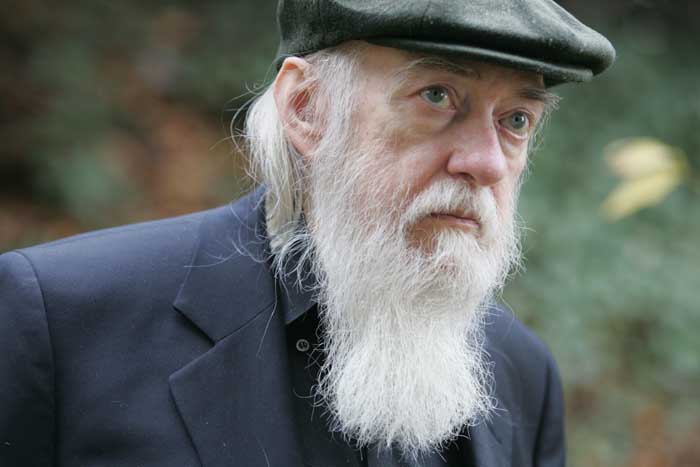
We at PennSound are sad to share the news that poet, translator, and publisher Keith Waldrop has passed away at the age of 90. Given his fruitful career that's spanned seven decades, one might be surprised to learn that Waldrop originally intended to be a physician, but after meeting future wife Rosmarie during military service in Germany he changed his life plans. 

Starting with 1968's A Windmill Near Cavalry, Waldrop would publish more than a dozen collections, including Transcendental Studies: A Trilogy, which won the 2009 National Book Award for Poetry. Waldrop began to distinguish himself as a translator of French poets — including Anne-Marie AlbiachEdmund JabésClaude Royet-Journoud, and Jacques Roubaud — in the mid-1980s, with his much-lauded 2006 translation of Charles Baudelaire's Les Fleurs du Mal serving as a high point for his craft. Finally, one cannot overlook the influence of Burning Deck, the journal and press founded by the Waldrops in 1961, which would publish germinal works from writers including Lyn HejinianLisa JarnotElizabeth Willis, Peter and Michael GizziBarbara GuestPaul AusterHarry MathewsTina Darragh, Robert Coover, Walter Abish, John Hawkes, and Dallas Wiebe.

For those wanting to learn more about Waldrop or connect with his work, Charles Bernstein's two-part 2009 Close Listening program (which includes Waldrop reading a career-spanning selection of poems) is a great place to start. Other recordings of note you'll find on PennSound's Waldrop author page include a trio of early Segue Series readings from the Ear Inn, a 2006 session of Baudelaire translations produced by Steve Evans, Burning Deck's 40th Anniversary Celebration, and a joint reading by the Waldrops at the Kelly Writers House from 2009. We send our most sincere condolences to Rosmarie, as well as the worldwide network of writers and readers that will take this death very hard.

Monday, July 24, 2023

Henry Hills, 'Plagiarism,' 1981

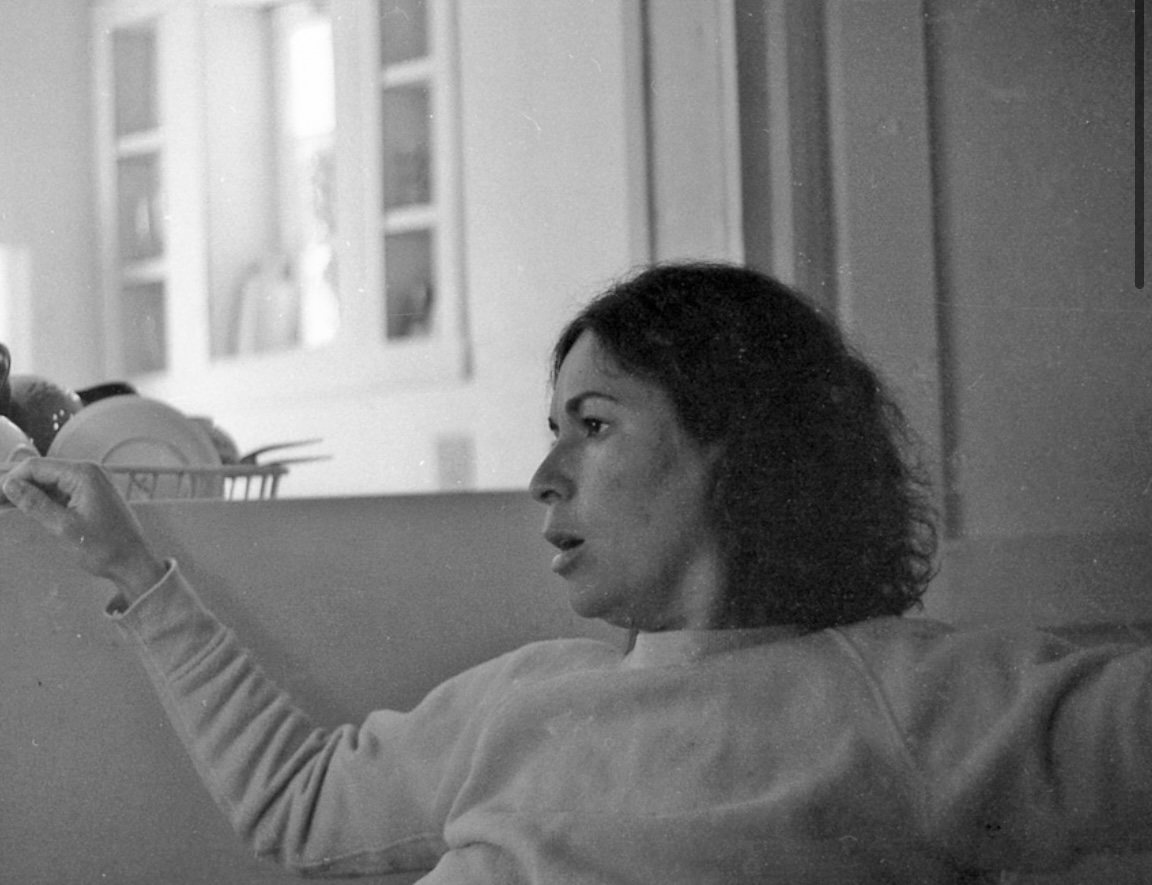
Today we're revisiting an iconic film from Henry Hills that was recently re-uploaded to the site in a newly-remastered version. Filmed in 1981, Plagiarism features Hannah Weiner, Charles Bernstein, Bruce Andrews, and James Sherry reading from Weiner's notebooks that would eventually be published as Little Books/Indians (Roof Books, 1980). Hills offers these notes on the film:

Begins jokingly proclaiming, "I'll make my Ernie Gehr film," a major preoccupation of my generation in the late 70s/early 80s, & then this very raw other thing proceeds to unfold, raw because I only had enough money (a loan from Abby Child) to do 4 shoots never having done sync & using outdated film stock from Rafik & an unfamiliar, undependable camera & trying to keep everything together & everything going wrong, yet determined to make concrete the ideas I had been abstractly developing over several years with whatever I got back from the lab no matter & so abandoning all caution to open a new area, I decided who could possibly talk better than poets? Edited in Times Square.

Fans of Hill's Money (1985) will recognize many familiar techniques at play here, with rapid-fire cuts creating a dense, rhythmic collage of sights and sounds punctuated by pregnant pauses, bursts of noise, and enigmatic, orphaned fragments of speech. It would be a mistake to judge it solely in its relationship to Money, however, since the two films differ radically in scope and spirit: while the latter is an expansive survey of the city and its scenes (including poets, dancers, and musicians), the feel here is much more intimate, between the smaller cast and the more limited visual vocabulary. At the same time it's fascinating to see hallmarks of Hills' style in a raw early state, particularly given the influence of the considerable technical challenges that Hills enumerates above. You can watch Plagiarism by clicking here.


Friday, July 21, 2023

Jeanne Heuving: New Author Page

Our latest PennSound author page is for Washington State-based poet and critic Jeanne Heuving, best known perhaps as the author of The Transmutation of Love and Avant-Garde Poetics and editor of Nathaniel Mackey, Destination Out: Essays on his Work and (with Tyrone WilliamsInciting Poetics: Thinking and Writing Poetry

On Heuving's author page you'll find a broad survey of her work over the last two decades, starting with a pair of appearances on Cross Cultural Poetics from 2004 and 2008 (she returned for a third appearance in 2017). A number of conference papers and panel discussions follow, as well as several readings, both long and short. The most recent recording is a June 2021 Zoom discussion with Paul Nelson on Mackey's Destination Out. Click here to start listening.

Wednesday, July 19, 2023

William Butler Yeats on PennSound

Today we're taking a closer look at the recordings collected on our William Butler Yeats author page, which includes readings by the poet himself as well as renditions by a number of skilled poets and performers.

First and foremost, there are eight tracks of the poet himself, taken from various sources and recorded between 1931 and 1937. "The Lake Isle of Innisfree" is best represented here, with three separate renditions (from 1932, 1936, and 1937) plus a brief track of Yeats discussing the poem in 1932. Other tracks include two stanzas from "Coole and Ballylee," "The Fiddler of Dooney," and "The Song of the Old Mother," plus a six-and-a-half minute track from 1936 in which Yeats discusses modern poetry.

You'll also find three readings by John Trimmer — of "The Wild Swans at Coole," "Leda and the Swan," and "Sailing to Byzantium" — as well as excerpts from a pair of titles read by Naomi Replansky, along with an extensive survey of Yeats poetry read by UPenn professor emeritus John Richetti. This Wexler Studio session from 2017 includes forty-two titles in total, among them "The Lake Isle of Innisfree," "September 1913," "Easter 1916," "Sailing to Byzantium," "Leda and the Swan," and "Crazy Jane Talks with the Bishop," along with many more. Finally, you'll find a link to PoemTalk Podcast #66 from 2013, in which Taije Silverman, Max McKenna, and John Timpane joined Al Filreis to discuss "The Lake Isle of Innisfree."

Tuesday, July 18, 2023

Bob Perelman's play 'The Alps" Performed at KWH, 2010

Today we turn the time machine back to April 13, 2010 for a staging of Bob Perelman's play, The Alps, produced by Sarah Arkebauer and Michelle Taransky at our own Kelly Writers House.

First produced in San Francisco at Studio Eremos in 1980 (alongside Kit Robinson's Collateral), and published in Hills #9 in 1983, the play is described in the original program as "a psychological fairy tale of desire, fame, love, and power. A 98-pound weakling of a narrator eventually tames the overdeveloped plot, which includes the rise and fall of a literary pedant, a student with no use for books, scenes of pastoral love, Freud's problematic sex life, and cameos by father time and the man on the street." While the original staging featured poet/actors including Alan Bernheimer, Robinson Carla Harryman, and Stephen Rodefer, for this production, the cast consists of Jason Zuzga (Time), Violette Carb (Teacher), Katie Price (Pedestrian), Sarah Dowling (Narrator), Rivka Fogel (Woman), Max McKenna (Man), Marshall Bright (Student) and Chris Milione (Freud), along with Julia Bloch and Fogel as a chorus of Devils.

Listeners eager to read the text of the play should be sure to check out The Kenning Anthology of Poets Theater: 1945-1985, where The Alps appears alongside contributions from Jack Spicer, John Ashbery, James Schuyler, Robert Duncan, Ron Padgett, Bruce Andrews, Kathy Acker and many, many more.

Friday, July 14, 2023

I See Words: The Life and Work of Hannah Weiner, 2022

Today we're highlighting a very exciting event that took place last year at New York Artists Space, honoring the life and work of Hannah Weiner

Billed as I See Words: The Life and Work of Hannah Weiner, the June 18, 2022 event was described thusly: "In conjunction with the exhibition Attention Line, Artists Space and Zoeglossia present an afternoon celebration of Hannah Weiner's work and life. The event will include a multi-voice reading of Weiner's Clairvoyant Journal as well as a panel of thinkers and artists who were close to Weiner's visionary poetry practice."

Introduced by curator Jennifer Bartlett, the day started with screening of Hannah Weiner: A Film by Phill Niblock, 1974, recently revised to add closed captioning. That was followed by an ensemble reading from Clairvoyant Journal by Darcie Dennigan, Farnoosh Fathi, and James Sherry. Next up there was a panel discussion moderated by Lee Ann Brown with Susan Bee, Judith Goldman, Declan Gould, and Phill Niblock, before Charles Bernstein (Weiner's literary executor) brought the event to an end with closing remarks.

You can view a video recording of the complete proceedings on PennSound's Hannah Weiner author page, which is also home to a startling array of readings, performances, interviews, and more from the first stirrings of the poet's career in the late 1960s right up to her premature death in 1997, as well as a number of posthumous tributes. Click here to start exploring.

Wednesday, July 12, 2023

Tony Towle on PennSound

Today we're checking out our PennSound author page for Tony Towle, a mainstay of the New York School's second generation whose debut collection North won the inaugural Frank O'Hara Prize in 1975.

Our Towle author page was first created in 2009 and greatly augmented when the poet shared recordings of seven readings with us. In the intervening years we've made even more additions. In total there are 18 recordings spanning from an undated recording from his St. Mark's days through to a 2012 appearance for the Readings in Contemporary Poetry series at Dia Art Foundation. You'll find pairs of readings from Doctor Generosity's, Chumley's, the Ear Inn, and the St. Mark's Poetry Project, as well as two appearances on Public Access Poetry. Other recordings come from the Katonah Public Library; Washington, DC's Folio Bookstore; San Francisco's New Langton Arts Center, SoHo's Blue Mountain Gallery, WKCR-FM, and the Prose Pros series in NYC. 

The majority of these recordings have been segmented, meaning you can easily skip around to individual titles without having to navigate the entire recording. Click here to start exploring.

Tuesday, July 11, 2023

Talking About David Antin, 2018

Lete
We wrap up this week by highlighting another wonderful poetry-centric program hosted by New York's Artists Space. This time around we're remembering "Talking About David Antin," which featured Eleanor Antin, Charles Bernstein, Julien Bismuth, and Ellen Zweig, and which took place at the site on March 27, 2018.

Artists Space Director Jay Sanders provided introductory comments for the two-hour event, which featured individual talks by the aforementioned friends and colleagues, followed by a half-hour collaborative Q&A session.  As the venue's blurb for the event notes, "David Antin's influential work as a poet and artist led him to develop the hybridized format of 'talk poems' in the 1970s, whereby he would compose literary texts in an improvised, conversational manner in a public setting." Those assembled offer up "performances and interventions" that pay tribute to his prodigious, "multidimensional literary and artistic output."

You can enjoy video and audio versions of this event on PennSound's David Antin author page, which is home to forty years' worth of recordings highlighting his formidable talents, which are sorely missed.

Saturday, July 8, 2023

Robert and Bobbie Creeley Perform "Listen" (1972)

Our PennSound author page for Robert Creeley (edited by Steve McLaughlin) can be daunting for listeners to navigate, given that it has well over a thousand individual files spanning a half-century. Today we're highlighting one of the more interesting tracks you'll find there: Listen, a radio play performed by the poet and his then-wife, Bobbie Creeley. Originally broadcast by West Germany's Westdeutscher Rundfunk on December 1, 1971 (in a translation by Klaus Reichert), it was later released by Black Sparrow in 1972, both in book and cassette formats, the latter serving as the source for PennSound's recording.

In text-form, Listen is comprised of an extended back-and-forth between two narrators: a HE and a SHE. While listeners are likely to read the dialogue through the frame of the Creeleys' marriage — and here their words embody a broad range of nupital emotions, from acrimony to romance, new love and old love — the two occupy a number of varied discursive relationships, from mother to child, suitor to quarry, interrogator to interrogator, writer to actress. In his essay, "Meaning: I Hear You" (linked on Creeley's page), Kyle Schlesinger notes, "it quickly becomes evident that this conversation can't converge. It isn't quite like two ships passing in the night, but more like a submarine passing below the Mayflower; two vessels vacillating between irreconcilable pasts. Where the constitution of one was once affirmed by its ability to address the other, they now share shards of a language they can never reinhabit together." This disjointed effect is augmented by HE's extended meta-notations on the performance at hand — some of the radio play's most enjoyable moments — which range from suggestions as to sound effects to be (but not to be) added later, to questions (posed to the audience-as-producer) regarding how much of a given song should be shared with the listeners (another delight: Bob Creeley's tender and vulnerable croon).

Schlesinger concludes his essay by noting, "It is here, in the atmosphere of Listen that the reader watches it all through a transparent revolving door; "listening out" for the signal, "listening in" on another conversation as it continues to turn. Tune in. Turn on. You hear." This eliptical effect is one of the radio play's most lasting sensations — in the abrupt aftermath of Creeley's final words, listeners will most certainly want to push "play" again to take another spin. Click here to start listening.

Thursday, July 6, 2023

Remembering Kenneth Koch

Kenneth Koch, New York School titan and an inventive proselytizer for poetry, passed away on July 6, 2002. Twenty-one years later, we're remembering him by taking a look at the recordings housed on PennSound's Kenneth Koch author page.

While we only have one full-length reading from Koch in our archives, it's a great one from the early years of our own Kelly Writers House. Recorded on April 15, 1998, Koch's set is largely focused on his iconic One-Thousand Avant-Garde Plays, showcasing a number of songs taken from individual plays, followed by a selection of plays themselves, before closing with a strong late poem, "One Train." Additionally, we have a few discrete tracks, including "The Boiling Water" and "The Circus," as well as a five minute set at the St. Mark's Poetry Project from 1996.

Those audio recordings are joined by some pretty interesting videos. First, we have a pair of collaborations with filmmaker Rudy Burckhardt, featuring his New York School compatriot Kenneth Koch that you can see on our PennSound Cinema  page for filmmaker and photographer. The earlier of the two, The Apple (1967), features a lyric and spoken interlude written by Koch, which was set to music by Tony Ackerman and Brad Burg, and sung by Kim Brody. In stop-motion and live action, it traces the sprawling adventures of its titular fruit. Running just one minute and fifty-four seconds, the film is nevertheless the subject of a marvelous essay by Daniel Kane — "Whimsy, the Avant-Garde and Rudy Burckhardt's and Kenneth Koch's The Apple" — in which he praises it for "the ways in which ideas of temporality, spontaneity, childishness, and parody are expressed within this tiny little film work," thus "revealing the latent and hilarious power of the whimsical affect."

The latter film, On Aesthetics (1999) has a sense of finality about it, coming during Burckhardt's last year and not long before Koch developed leukemia that would ultimately take his life. Running nine minutes and taking its name from the last poem in Koch's 1994 collection One TrainOn Aesthetics — charmingly presented by "KoBu Productions" — features the poet's voice-over reciting the various micropoems contained under that title, from "Aesthetics of the Man in the Moon" and "Aesthetics of Creating Light" to "Aesthetics of Being with Child" and "Aesthetics of Echo," while Burckhardt's camera eye finds appropriate accompanying images, whether literary or abstract.

Finally, there's a link to Niels Plenge, Lars Movin, and Thomas Thurah's 2001 documentary Something Wonderful May Happen. Largely focused on Koch and John Ashbery, the two surviving members of the core quartet, the film features insightful commentary from our own Charles Bernstein and David Lehman.

Tuesday, July 4, 2023

For the Fourth: "Pyrography" by John Ashbery

Today, as many across the US will gather for fireworks displays, I'm reminded of a classic post from Locus Solus: the New York School of Poets about John Ashbery's "Pyrography," which was commissioned by the US Department of the Interior for "America 1976: A Bicentennial Exhibition." Andrew Epstein calls the poem "a capacious, moving, elusive tribute to what Emerson (and Stanley Cavell) call 'this new yet ever unapproachable America' — its history, its myths, its contradictions and enduring mysteries." 

While "highly self-conscious about being asked to play Whitman," Ashbery channels the good gray poet's ethos through his own idiosyncratic style, offering both rhapsodic rhetoric ("This is America calling: / The mirroring of state to state, / Of voice to voice on the wires, / The force of colloquial greetings like golden / Pollen sinking on the afternoon breeze.") and a democratic embrace of the everyday, the humble; on "unimportant details." Epstein concludes, "'Pyrography" insists that the story of the United States is found not in monuments or textbooks but in the everyday, our everyday: 'maybe the feeble lakes and swamps / Of the back country will get plugged into the circuit / And not just the major events but the whole incredible / Mass of everything happening simultaneously and pairing off / Channeling itself into history.'" 

You can read Epstein's full post here. On PennSound's John Ashbery author page you'll find two recordings of "Pyrography": one from a May 1976 reading at Harvard's Sanders Theater, sponsored by the Woodbury Poetry Room, and the other from a year later at Oregon State University, which is unfortunately incomplete. Our featured image above is Pyrography: Poem and Portrait of John Ashbery II (1977) by Larry Rivers.

Saturday, July 1, 2023

Melvin B. Tolson on PennSound

Today we're taking a look at the recordings you can find on PennSound's Melvin B. Tolson author page.

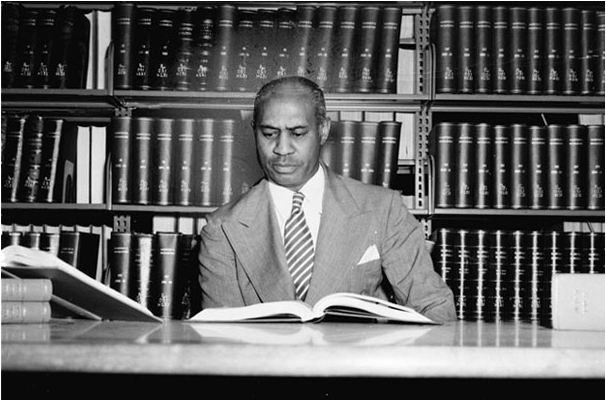
The heart of this collection is a two-part career-spanning reading at Washington, D.C.'s Coolidge Auditorium, on October 18, 1965 — an event held in coordination with the Library of Congress — which serves as a fitting tribute to the influential poet, politician, and pedagogue, who'd pass away less than one year later. After a lavish introduction, Tolson starts with his debut collection, Rendezvous with America and hits many of the high points of his prestigious career, including his magnum opusDark Symphony, and Libretto for the Republic of Liberia, written during his time as that nation's poet laureate. Running just short of eighty minutes, Tolson's reading includes the poems "Sometimes," "The Gallows," "If You Should Lie to Me," "The Primer for Today," "The Dictionary of the Wolf," "Harlem Gallery," "The Birth of John Henry," "Ballad on Old Satchmo," and "The Sea Turtle and the Shark," among others, with commentary provided along the way.

This retrospective performance is nicely complemented by a second recording of excerpts from Dark Symphony, for which, unfortunately, we have no information regarding its recording date and location. Nevertheless we're grateful to be Tolson's estate and the Library of Congress for the opportunity to present these materials to our listeners. Click here to visit PennSound's Melvin B. Tolson author page.