Wednesday, December 30, 2020

In Memoriam: Jean Valentine (1934–2020)

Perhaps it's fitting that this year that's been so thoroughly shaped by loss ends with us remembering poet Jean Valentine, who passed away yesterday at the age of 86. Valentine's life in poetry was auspicious from beginning to end, starting with her 1964 debut, Dream Barker, which was chosen by Dudley Fitts for the Yale Series of Younger Poets. Her 2004 volume Door in the Mountain: New and Collected Poems, 1965-2003 won the National Book Award for Poetry, she served as New York State's poet laureate from 2008–2010, and was awarded Yale's Bollingen Prize for American Poetry in 2017.

While we don't have a PennSound author page for Valentine, we do have one recording from her in our Singles database. Recorded on April 6, 2010, when Valentine read with Cindy Savett at our own Kelly Writers House. Bob Perelman provided introductions for the evening; here's what he had to say about Valentine:

I think her poems have at their core a tenderness toward existence and attention to the rhythms of our life on earth, of birth and death and renewal, of time sometimes standing still for a time and allowing us to be attuned to everything happening in the always-present. The poems seem to me to be like beautiful translucent doors swinging easily in the wind without trying to keep anything in or out. The sound of the swinging like the sound of the lightness we wish to feel — the wind's lightness perhaps — and as if the body could open all its own doors, letting the world pass through it to become the world, to become everyone in it.

I think it is most boundaries that separate us from each other — one condition of being we think entirely different from another — though Jean Valentine's poems in a sense are poems celebrating an erasure of all that keeps us separate from each other, and from one life, and the next, and the next after. Perhaps that's why her poetry is also as fluid as it is, something like a clear lake on which we may float for a time, as if we were little boats gliding across it, buoyed by the generous force of its uplifting.

Valentine's half-hour set was mostly comprised of new poems that would appear in Break the Glass, published that fall by Copper Canyon. She finished the reading with a few favorite poems from her previous collection, Little Boat (Wesleyan, 2007). You can listen in by clicking here. We send our condolences to Valentines family, friends, and her many fans throughout the world.

Monday, December 28, 2020

PoemTalk #155: on Lorenzo Thomas' "Souvenir of the Manassah Ball"

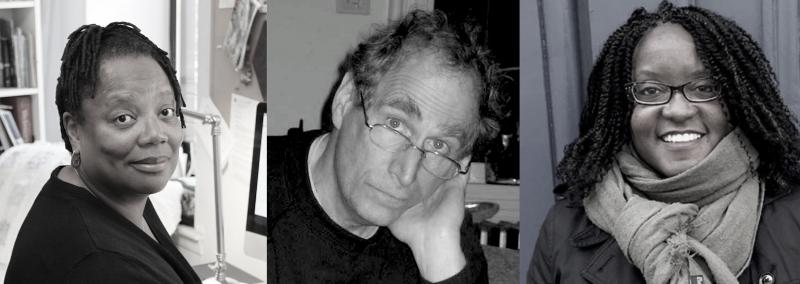
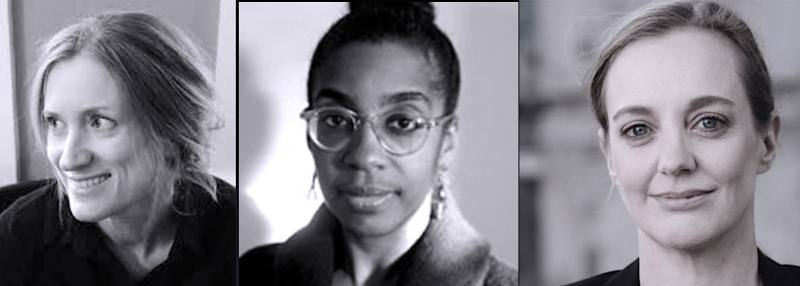
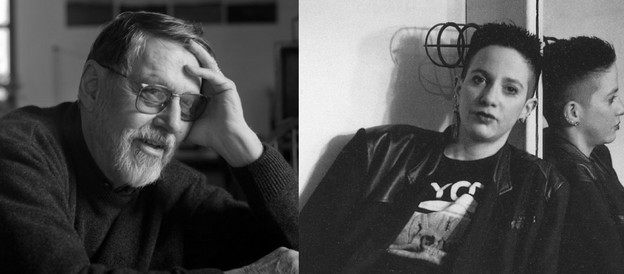
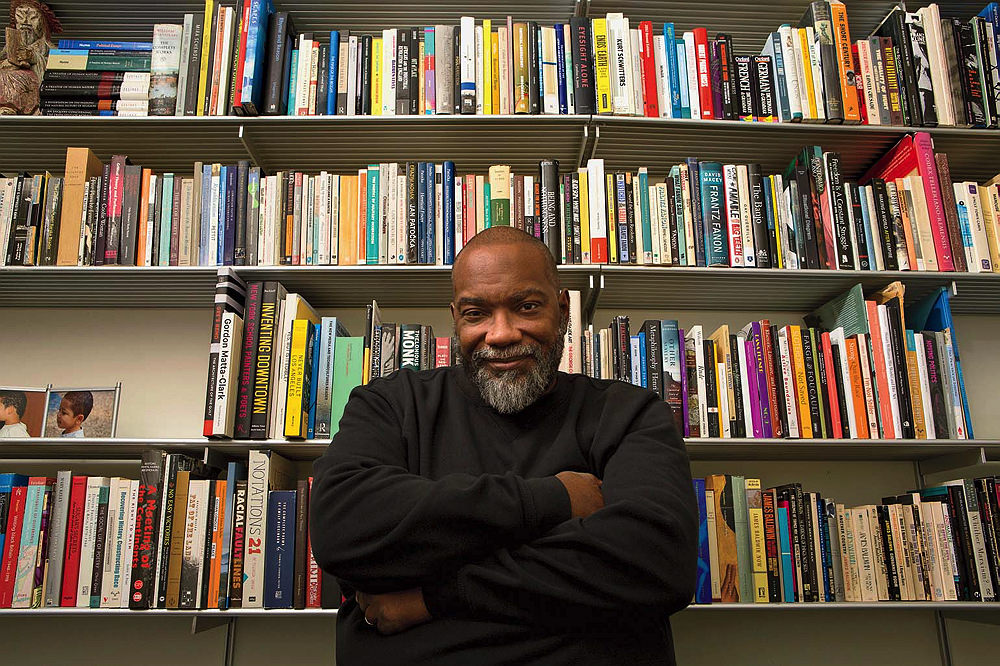
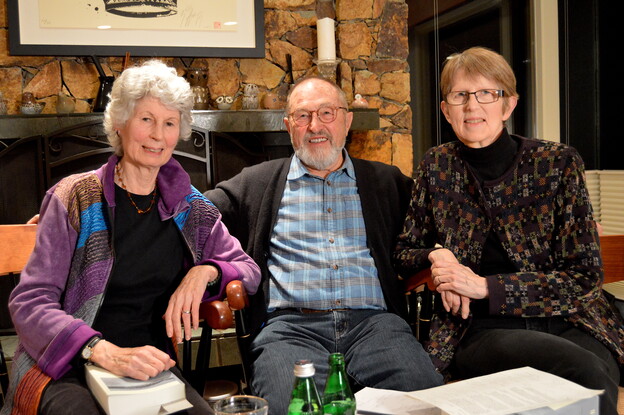
Last week we released the newest episode in the PoemTalk Podcast series — its 155th program in total — which addresses Lorenzo Thomas' poem "Souvenir of the Manassah Ball," a poem written in 1990 or 1991, which the author read at SUNY-Buffalo on November 13, 1991. For this show, host Al Filreis brought together a stellar panel that included (from left to right) Erica Hunt, Bob Perelman, and Tonya Foster in "a virtual version of the Wexler Studio of the Kelly Writers House" to discuss Thomas' poem.

After some introductory information Filreis' PoemTalk blog post announcing the new episode confesses that "We think this PoemTalk conversation will be especially helpful to those who are reading this poem for the first time: we collaboratively identify all or most of the cultural and historical references (Lochinvar of Walter Scott, the fashion for 'Pantomime Quiz' as another name for Charades, Lear's Cordelia, etc.) and we are able to figure out why so many pairs of dancers appear, despite this couple's pariah status (it is because they themselves reflect a thousand times in the chandelier above them)." He continues, "the group identifies the racist hatred that animates some or likely all the couple's detractors," before asking, "the poem of course counters such violent hatred, but can it (or the speaker) be said to be ideological?"

You can read more about this latest show, read Thomas' poem, and listen to the podcast here. The full PoemTalk archives, spanning more than a decade, can be found here.

Wednesday, December 23, 2020

John Richetti reads Clement Clarke Moore's "A Visit from St. Nicholas"

As we close out the year, we have one more gift to pass along to our listeners from our friend John Richetti: a recording of Clement Clarke Moore's beloved Christmas poem, "A Visit from St. Nicholas," made specially this month to be added to his growing anthology, "114 Favorite Poems, Good for Memorizing."

More frequently known by its opening phrase, "'Twas the night before Christmas ...," "A Visit from St. Nicholas" was first published in Troy, New York's Sentinel on this day in 1823 with no attribution. It became wildly popular, reprinted far and wide, and its author — a professor of literature and divinity at New York City's General Theological Seminary of the Episcopal Church, who initially sought to downplay his connection to the poem — would finally be credited in 1837, with Moore including it in a collection of his verse in 1844.

Click here to listen to Richetti's performance of the poem. You can read along on the Poetry Foundation's copy of the poem here. Many more recordings made by Richetti form the backbone of our PennSound Classics page, which is organized by author name. To start browsing, click here.


Monday, December 21, 2020

Spending Midwinter Day with Bernadette Mayer

At 5:02AM EST, we officially made the transition from autumn into winter, and the day that lies ahead of us will be the year's darkest. The winter solstice has long been a source of cultural inspiration and poetic inspiration as well, with one of the most notable recent manifestations being Bernadette Mayer's iconic Midwinter Day, which celebrates its forty-first birthday this year. While not published until 1982, Mayer famously wrote the book — hailed by Alice Notley as "an epic poem about a daily routine ... sedate, mundane, yet marvelous" — in its entirety while marking the the winter solstice at 100 Main Street in Lennox, Massachusetts on December 22, 1978. 

While celebrating Mayer and Midwinter Day today is an annual PennSound tradition, it takes on special significance after this very trying year. As Megan Burns notes in her Jacket Magazine essay on the book: "A long held tradition on Midwinter's Day was to let the hearth fire burn all night, literally keeping a light alive through the longest night of winter as a source of both heat and a symbol of inspiration to come out the other side of the long night closer to spring and rebirth. It is fitting that a poem about surviving death and the intimacy of the family would be centered around this particular day that traditionally has focused on both. The hearth is the center of the home where the family gathers, where the food is cooked and where warmth is provided. Metaphorically, the poem Midwinter Day stands in for the hearth gathering the family into its folds, detailing the preparation of food and sleep and taking care of the family's memories and dreams."

Mayer read a lengthy excerpt from the book at a Segue Series reading at the Ear Inn on May 26th of the following year, which you can listen to on her PennSound author page along with a wide array of audio and video recordings from the late 1960s to the present. 

Friday, December 18, 2020

Phill Niblock on PennSound

We are honored that PennSound has been able to host work by composer and Experimental Intermedia Foundation director Phill Niblock very close to our project's inception. We close out this week by highlighting the three films by Niblock available on his PennSound author page, which were upgraded to higher-resolution videos when we created the page in 2013.

The most recent addition is Evidence, starring Erica Hunt. Shot in 1983, the eighteen-minute relishes negative space, beginning with stark white Helvetica lettering on a black background that persists for more than a minute before fading in the film's sole visual: the poet's face, silhouetted to near-featurelessness by a white television screen. Seen in profile, Hunt's speaking gestures are heightened — subtle shudders and nods, along with the frenetic moiré of her mouth — serving as an apt accompaniment to the narrative.

This one-third/two-third profile motif also appears in Niblock's mid-70s portrait of Hannah Weiner, where the poet's speedy delivery of her clairvoyant writings weaves in and out of live reading segments juxtaposed with domestic scenes. Meanwhile, in Niblock's 1973 portrait of Armand Schwerner, the poet contends with the wind as he reads (or more accurately, preaches) from his Tablets pacing back and forth in a bright orange jacket on a hilltop, the Verrazano-Narrows bridge behind him.

You'll find all three of these marvelous poetic portraits on our Phill Niblock page, and don't forget to check out PennSound Cinema, home to a stunning array of essential filmic materials.


Wednesday, December 16, 2020

New at PennSound: the Berkeley Art Museum/Pacific Film Archive Reading Series

The latest series to join the PennSound archives is the Berkeley Art Museum/Pacific Film Archive's reading series, which is curated by Cole Solinger. We're proud to be able to present three recordings from the fall of 2019 before the series was interrupted by the pandemic, with each event featuring three readers.

First up, from September 8th, we have a reading by Trisha Low, Elaine Kahn, and Tatiana Luboviski-Acosta. That's followed on September 29th by Ocean Escalanti, Vasiliki Kitsigianis Ioannou, and Jheyda McGarrell, and finally, from October 13th, we have the trio of Eric Dolan, Tongo Eisen-Martin, and Fego Navarro to close out the series.

We're grateful to Solinger for sharing these recordings with us, and look forward to future events in the series. For now, you can enjoy the three readings mentioned above by clicking here.


Monday, December 14, 2020

Rachel Blau DuPlessis Reads from 'Late Work' and 'Around the Day in 80 Worlds'

There's no reason whatsoever to break our recent string of birthday greetings here on PennSound Daily, especially when December 14th is the birthday of poet Rachel Blau DuPlessis and we've got a recent addition to the site to announce as we celebrate her today. 

Recorded in October, as part of a Zoom reading series curated by Don Yorty, this video showcases poetry from two of DuPlessis' recent books, starting with selections from Late Work (Black Square Editions, 2020) and Around the Day in 80 Worlds (BlazeVOX [books], 2018). The first two titles read here — "Late Work" and "Mackle, Shard, and Trace" — come from the former, followed by section 69 of the latter. 

Of course, this is just one of many, many wonderful recordings you'll find on PennSound's Rachel Blau DuPlessis author page, which hosts nearly forty years' worth of readings, lectures, interviews, panels, class discussions, and much more, including the vast majority of her magnum opus, Drafts, written between 1986 and 2012, and the projects that came before and after it. Indeed, there's something about being able to take in the complex grandeur of the Drafts project in this manner that gives you a different sense of its architecture — especially when a number of the longer poems in the series have been segmented into their individual sections — and while Rachel's verbal playfulness and charm is well evident on the page, they truly shine in performance. Beyond a greater appreciation of her own poetry, one really gets a sense of what a marvelous commentator and teacher DuPlessis is, and not just through formal talks on her own diverse scholarly interests, but also via more spontaneous recordings like her countless appearances on PoemTalk and special events at our Kelly Writers House. Taken as a whole, these recordings show just how vital a force DuPlessis has been over the past four decades, and what a valuable member of Philadelphia's poetry scene she's been as well. Therefore we send her birthday greetings today with great admiration and hopes for many happy returns.

Friday, December 11, 2020

Happy 89th Birthday to Jerome Rothenberg!

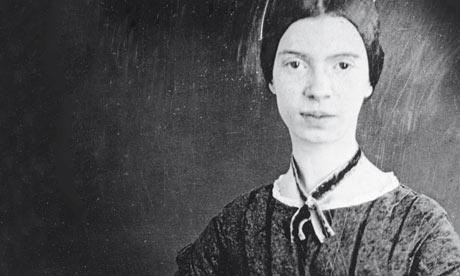
In our last post, we shared birthday greetings for a legendary poet, Emily Dickinson. Today, we'll do one better and salute a living legend: the one and only Jerry Rothenberg, who turns 89 on December 11th.

Our PennSound author page for Rothenberg, collecting recordings from 1969 to the present, is a wonderful way to interact with the Rothenberg's considerable legacy. There's a comprehensive survey of his own diverse poetic modes, spread across numerous recordings, from album releases via S Press and Optic Nerve's Rockdrill series to myriad readings and even some of his musical collaborations. There are a number of recordings related to his editorial and translation projects, including launch readings celebrating several different volumes in the Poems for the Millennium series and milestone events for Technicians of the Sacred (both its 40th and 50th anniversaries). There are lectures, class recordings, and interviews with Rothenberg, as well as commentaries on his own work, including several PoemTalk episodes. With nearly 300 MP3s alone — counting individual tracks and complete recordings — not to mention videos, it's a fittingly encyclopedic tribute to Rothenberg's influence, as well as a useful resource for all sorts of classroom settings. Listeners will also enjoy Rothenberg's ongoing Jacket2 commentary series, "Poems and Poetics," which we've been honored to host for the past eight years.

Pick any recording at random and you'll understand instantly why Rothenberg is so universally beloved: for someone who's published output might fill several shelves, he's truly at his best in a live environment. Having worked at PennSound for so long, I've been to a lot of poetry readings and have listened to many more beyond that, and for my money, there's no one as captivating, no voice as powerful, no poet who entertains as well as he moves us and teaches us. I cherish the three times I've seen Jerry read in person — at our own Kelly Writers House in 2008, at Xavier University here in Cincinnati in 2011, and at the University of Michigan in 2013 (all of which are available on PennSound) — and as he adds another year to a long and fruitful life, let's all hope there will be many more happy and healthy birthdays to come, because I won't be satisfied until I get to see him read at least one more time.


Thursday, December 10, 2020

Happy 190th Birthday to Emily Dickinson!

This December 10th marks 190 years since the birth of one of the United States' most singular voices, Emily Dickinson. For most of PennSound's history a treasure trove of Dickinson materials was scattered throughout our site, but several years ago we pulled together a proper PennSound author page for the poet, gathering selected resources from throughout our archives.

It should come as no surprise that Susan Howe would be prominently featured, and here you'll find complete talks on the poet from 1984 (from the New York Talk series) and 1990 (from SUNY-Buffalo) in addition to several smaller excerpts from larger talks pertaining to the poet. There's also a link to PoemTalk #32, which discusses Howe's interpretation of Dickinson's "My Life had stood -- a Loaded Gun."

Full series of lectures on Dickinson are also available from Robert Duncan and Robert Creeley, both at the New College and dating from 1981 and 1985, respectively. Among other substantial contributions, there's also the 1979 Dickinson Birthday Celebration at the St. Mark's Poetry Project (featuring Jan Heller Levi, Charles Bernstein, Susan Leites, Charles Doria, Virginia Terrace, Barbara Guest, Madeleine Keller and Vicki Hudspith, Armand Schwerner, Karen Edwards, Jackson Mac LowMaureen Owen, and Howe) and Rae Armantrout's 2000 presentation on Dickinson from "Nine Contemporary Poets Read Themselves Through Modernism."

You'll also find performances of individual Dickinson poems from John Richetti and Jeffery Robinson as well as brief excerpts of radio interviews — with John Ashbery, Guest, and Elizabeth Bishop — pertaining to the poet.

Our hope is that this page, which brings together disparate resources already available in our archives, will be a useful tool for teachers, students, and casual readers, as well as serious scholars. Click here to start exploring.

Monday, December 7, 2020

"Teaching Without a Text": Jacob Edmond on Kamau Brathwaite

We're starting off this week with an exciting new essay by Jacob Edmond, the editor of PennSound's Kamau Brathwaite author page. Published in the journal archipelagos, "Teaching without a Text: Close Listening to Kamau Brathwaite’s Digital Audio Archive" begins with a simple, reciprocal proposition: "new media technologies — from the tape recorder to the computer — enabled Kamau Brathwaite's revolutionary poetic approach; digital technologies likewise enable us to study and teach his groundbreaking work in new ways." 

Edmond makes the argument that "that teaching and studying Brathwaite should begin with the audible word not the written text and that digital audio archives and platforms can play a key role in enabling this approach," noting that "digital audio archives such as PennSound and the Poetry Archive allow students and scholars to approach Brathwaite's work by listening closely to a wide range of sound recordings." He concludes: "This essay demonstrates the utility of this close listening approach by taking advantage of the digital platform of archipelagos journal to interweave its text with Brathwaite's recorded voice. It not only demonstrates the value of approaching Brathwaite's work through digital sound recordings but also argues for a larger overturning of critical, pedagogical, and essayistic conventions in literary studies through a methodological turn away from the page."

We're always excited to see PennSound recordings being put to good use, and even more thrilled that the MP3 files are integrated within the body of the essay itself, allowing a seamless reading and listening experience. PennSound co-founder Al Filreis discusses Edmond's essay on his Jacket2 commentary page, highlighting a passage that discusses Brathwaite's poem "Negus," which he and Edmond, along with Amber Rose Johnson and Huda Fakhreddine, discussed in episode #149 of the PoemTalk podcast series. You can listen to that program here, browse our Brathwaite author page here, and read Edmond's essay here.

Thursday, December 3, 2020

Tim Dlugos: 30 Years After

December 3rd marks the 30th anniversary of the passing of poet Tim Dlugos, who lived A Fast Life (as the title of his collected poems attests) that was unfairly cut short by AIDS at the age of 40. Dlugos is justifiably celebrated for his bravery and candor in documenting his deteriorating health in iconic poems like "G-9" — named for Roosevelt Hospital's AIDS ward, where he'd been an inpatient on several occasions— from which Dlugos read excerpts on ABC's Good Morning America just weeks before his final admission. Nevertheless, this is but one facet of Dlugos' poetics, where we also find charming pop sensibilities, tender expressions of love, unflinching dispatches from queer culture, an eye for formal experimentations, and a wicked sense of humor.

We've already marked one milestone for Dlugos in 2020 — on what would have been his 70th birthday in August — and after writing that post, I found myself lamenting that we didn't have a lot of recordings to be able to share. Soon thereafter, I reached out to Christopher Wiss and David Trinidad and was ecstatic when David was able to send three recordings our way. While we hope to be able to announce even more additions to our Tim Dlugos author page in time, we will celebrate him today with these three terrific readings.

The earliest of these recordings is a 1974 from Mass Transit Bookstore in Washington, D.C., where he read alongside John Ashbery (Trinidad notes that you can hear Ashbery in the background reacting to Dlugos' poems). Dlugos notes that he's only going to read one poem "from the book" (High There, his debut chapbook published by Some of Us Press in 1973) in this nearly forty-minute set, which includes a number of early favorites like "American Baseball" and "Gilligan's Island," along with "Great Art," "So Far," "Flaming Angel," "Poem for Jeanne," "Dream Series," "President Truman," and "As It Is." This recording also includes a number of unpublished early poems ("Sexual Postures," "Gypsy," and "The Eyes of Our Hearts") as well as a shorter draft version of "Stanzas for Martina" (written for Tina Darragh) than what was eventually published.

An undated home recording made by Dlugos in D.C. appears to be from not long thereafter. Running twenty-six minutes, this set begins with a bold proclamation, "from high above DuPont Circle in Washington, D.C. to your machines, this is Tim Dlugos . . . and this is 'John Tongue,'" before launching into the poem of the same name. He also reads "Poppers," "Great Books of the 1950s," and "Some," along with some titles from the previous recording ("As It Is," "American Baseball," "Stanzas for Martina"). This tape also includes a few unpublished pieces: "Dream With You In It," excerpts from a January 1975 dream journal similar to "Dream Series," and a piece from the series Music (for Maurice Sendak) based on Rachmaninoff's second symphony.

Last, but certainly not least, we have Dlugos' 1984 reading with Dennis Cooper at Venice, CA's beloved Beyond Baroque. This forty-minute set consists of ten poems in total, starting with "Pretty Convincing," and moving on to "Close," "Sonnet ["Stevie Nicks walks into the Parisian weather"]," "The Nineteenth Century is 183 Years Old," "Octavian," "Not Stravinsky," "Green Acres," "Summer, South Brooklyn," and "The Morning," before concluding with the long poem "Cape and Islands." When sending the recordings along, Trinidad reminisced, "I was there; it was a spectacular reading," and I agree with him wholeheartedly. You will too.

These three recordings join those already in the PennSound archives, including his 1977 appearance on Public Access Poetry and a segmented 1978 Segue Series reading from the Ear Inn where Dlugos reads "Sonnet for Eileen Myles," "Je Suis Ein Americano," and "A Day for Don and Vladimir," along with several of the perennial favorites listed above.  

Once more, we thank Christopher Wiss for his kindness in letting us share these recordings, and David Trinidad for sharing them with us. Dlugos' New York Diary — like the indispensable A Fast Life (Nightboat Books), edited by Trinidad — will be released next month by Sibling Rivalry Press. You can listen to the aforementioned recordings by clicking here.

Wednesday, December 2, 2020

Happy 111th Birthday to Helen Adam!

December 2nd would have been the 111th birthday of Helen Adam, the beloved Scottish eccentric who found a home in San Francisco's thriving midcentury poetry scene. While we don't have an extensive archive of her work, we're nevertheless glad to have a set of essential recordings that give listeners a clear sense of what made Adam so special.

Chief among these is her magnum opus, San Francisco's Burning, a lyric drama co-written with Adam's sister Pat, which was produced by Charles Ruas for the Audio Experimental Theatre and first broadcast on New York City's WBAI FM on July 17th, 1977. In addition to the two Adam sisters, the radio play's cast also included Marilyn Hacker, Robert Hershon, and Barbara Wise in major roles. To give listeners some context for this iconic piece, we're very glad to be able to share Kristin Prevallet's "Notes on San Francisco's Burning" from A Helen Adam Reader (2007), which features some charming anecdotes about the drama's production, including this recollection from musical director Rob Wynne regarding the "structured chaos" of the recording process: "It took a few months to pull it all together, often ending up after a session at Helen & Pat's apartment, surrounded by her collection of agates and stones, in which she saw images and stories. She always served celery filled with peanut butter, a bizarre but oddly delicious combination." 

Aside from San Francisco's Burning, Adam is perhaps best known for her rollicking performance of "Cheerless Junkie's Song" from Ron Mann's 1981 film, Poetry in Motion, which is presented here, along with PoemTalk #93, in which host Al Filreis leads a discussion of the poem with panelists Corina Copp, Laura Sims, and Richard Deming. Finally, we have Adam's late-70s appearance on Susan Howe's Pacifica FM radio show, where she discusses her life and work with Howe and Ruas. This recording has been broken into MP3s for individual poems (including "Ballad of the Hawthorn Bower," "In and Out of the Horn-Beam Maze," "At the Window," "The Fair Young Wife," and "A Walk in the Wind") as well as different thematic segments of the interview (such as "On her childhood in Scotland;" "On Allen Ginsberg, Jack Spicer, Open Space, and the atmosphere of San Francisco;" and "On gothic romances, magic, and the relationship between love and death"). Listeners will also enjoy browsing "A Helen Adam Sampler," Prevallet's brief selection of poems that forms the centerpiece of Adam's EPC author page. You can find links to all of these resources on PennSound's Helen Adam author page.

Tuesday, December 1, 2020

In Memoriam: Miguel Algarín (1941–2020)

We have sad news to start off this week: Miguel Algarín, poet, professor, editor, and co-founder of the Nuyorican Poets Café has passed away at the age of seventy-nine. The Nuyorican Poets Café confirmed the news with a tweet last night: "With heavy hearts, we bid farewell to poet & visionary Miguel Algarín, founder of the Nuyorican Poets Cafe.  Miguel was a brilliant poet, an influential professor and leader, and a supportive mentor who inspired and guided generations of artists." In a follow-up tweet, they added, "The literary world owes Miguel a debt of gratitude. He will be greatly missed."

Remezcla posted a lovely tribute to Algarín earlier today, which, among other things, talks about his formative years and the founding of the Nuyorican Poets Café, along with its lasting influence:
Born in Santurce, Puerto Rico on September 11, 1941, his family moved to New York’s Lower East Side in 1950. Algarín has described his upbringing as very culturally minded which set him for a similar path of his own. He studied English, earning various degrees including a PhD in comparative literature, and later becoming a professor of the language, lecturing in Brooklyn University, NYU, and Rutgers where he became emeritus professor.

By 1975, his home had become a meeting ground for writers to share their works and thoughts. Expanding to a formal space, Algarín — along with Miguel Piñero, Pedro Pietri, and others — founded the Nuyorican Poets Café, becoming ground zero for a literary movement. During its history, the Nuyorican Poets Café has been a haven for poetry, prose, theater, visual arts, and music, as their weekly jam sessions attest. Algarín broadcasted a radio program from the Café and compiled various anthologies of Puerto Rican literature, founding the publishing house Nuyorican Press as well as Arte Public Press.
We only have one recording of Algarín in our collection, but it's a good one: his July 13, 1978 appearance on the St. Mark's Poetry Project-affiliated series Public Access Poetry, where he read alongside Regina Beck. You can watch that episode by clicking here. We send our sincerest condolences to Algarín's family, friends, and his many fans.

Wednesday, November 25, 2020

PoemTalk #154: on Elizabeth Willis' "The Similitude of This Great Flower"

Today we release the newest episode in the PoemTalk Podcast series, its 154th program in total, which focus on "The Similitude of This Great Flower" by Elizabeth Willis. For this show, host Al Filreis brought together a panel consisting of (from left to right) Kate Colby, Simone White, and Angela Carr over Zoom to discuss Willis' poem.

Filreis starts his PoemTalk blog post announcing the new episode in an evocative fashion: "'You promised to go on' indicates mere survival in the end." He continues, "The compressed and converged idioms of the previous sentences — there's a fly on the wall looking through a keyhole 'trying to read the wall'! — have a comic, almost punny multivalent quality, but whatever that indicative writing on the wall is, at least 'It says we haven't died.' We’re alive indeed and that’s grimly good — and, the group agrees, such witness to survival is owing to the writing as writing. We 'go on' through the resistant act of writing, yes, but also in the writing, in the materiality of those words. The poem is a small machine for going on."

You can read more about this latest show, read Willis' poem, and listen to the podcast here. The full PoemTalk archives, spanning more than a decade, can be found here.

Monday, November 23, 2020

PennSound Presents Poems of Thanks and Thanksgiving

With the US celebrating Thanksgiving this week, it's time to revisit a perennial PennSound Daily tradition that started way back in 2010: a mini-mix of poems of thanks and thanksgiving — some old, some new — taken from the PennSound archives.

In a classic recording of "Thanksgiving" [MP3] from the St. Mark's Poetry Project, Joe Brainard wonders "what, if anything Thanksgiving Day really means to me." Emptying his mind of thoughts, he comes up with these free associations: "first is turkey, second is cranberry sauce and third is pilgrims."

"I want to give my thanks to everyone for everything," the late John Giorno tells us in "Thanx 4 Nothing" [MP3], "and as a token of my appreciation, / I want to offer back to you all my good and bad habits / as magnificent priceless jewels, / wish-fulfilling gems satisfying everything you need and want, / thank you, thank you, thank you, / thanks." The rolicking poem that ensues offers both genuine sensory delights ("may all the chocolate I've ever eaten / come back rushing through your bloodstream / and make you feel happy.") and sarcastic praise ("America, thanks for the neglect, / I did it without you, / let us celebrate poetic justice, / you and I never were, / never tried to do anything, / and never succeeded").

"Can beauty save us?" wonders Maggie Nelson in "Thanksgiving" [MP3], a standout poem from her marvelous collection, Something Bright, Then Holes, which revels in the holiday's darker edges and simplest truths: "After dinner / I sit the cutest little boy on my knee / and read him a book about the history of cod // absentmindedly explaining overfishing, / the slave trade. People for rum? he asks, / incredulously. Yes, I nod. People for rum."

Yusef Komunyakaa gratefully recounts a number of near-misses in Vietnam — "the tree / between me & a sniper's bullet [...] the dud / hand grenade tossed at my feet / outside Chu Lai" — in "Thanks" [MP3], from a 1998 reading at the Kelly Writers House.

Finally, we turn our attention to the suite of poems that concludes Mark Van Doren's Folkways album, Collected and New Poems — "When The World Ends" / "Epitaph" / "Farewell and Thanksgiving" [MP3] — the last of which offers gratitude to the muse for her constant indulgence.

To keep you in the Thanksgiving spirit, don't forget this 2009 PennSound Podcast (assembled by Al Filreis and Jenny Lesser) which offers "marvelous expressions of gratitude, due honor, personal appreciation [and] friendship" from the likes of Amiri BarakaTed BerriganRobert CreeleyJerome RothenbergLouis Zukofsky and William Carlos Williams.

Friday, November 20, 2020

Kathy Acker: SUNY-Buffalo Talk and Creeley Interview, 1979

Here's a fascinating document from our archives that certainly merits your attention. On December 12–13, 1979, Kathy Acker was a guest of Robert Creeley's at SUNY-Buffalo. Over those two days she read from her own work, delivered a talk on French novelists, and was interviewed by Creeley. Both events have been segmented, and are available on our Kathy Acker author page.

After introductory comments by Creeley, Acker begins with "Tangier," a long chapter (the recording is forty-six minutes long) from Blood and Guts in High School about meeting Jean Genet in Tangiers. She and Creeley then talk briefly about Erica Jong before the first day's event ends. 

The second day begins with Acker offering introductory comments on the pair of French novelists "whose work I'm absolutely fascinated with" that she'll be discussing in this session: Pierre Guyotat and Laure (the pen name of Colette Peignot). "You can't get these books in this country. Don't even try," Acker warns, however she explains that "I wanted to present what I'm doing with their work to you" — even though her translations are rough first drafts and "my French is very bad," ("I knew it enough to know I didn't know it," she later tells the audience) — because of how captivated she became with these authors on a recent trip to France. Specifically, this interest ties into language: both her experience of their language and mediation inherent to encountering a foreign language of which one only has a basic knowledge, but also concerns that have followed her for much longer: "It seemed to me that more and more — I've lived in New York for the last seven years — [that] language is almost impossible now. It's as if ... to have a language, to be able to really speak to someone, seems to be almost like total freedom, in my mind."

She then reads brief translations from each author's work: an excerpt from Guyotat's novel, Eden, Eden, Eden, followed by a piece by Laure about her childhood.  A half-hour lecture on the two authors comes next, with a discussion session of about the same length wrapping up the event. That conversation has been segmented into five thematic parts: "on self-expression," "on self-reflection," "on subjectivity and perception," "on the writer's perspective," and "on the divided self." You can listen in by clicking here

Wednesday, November 18, 2020

Congratulations to National Book Award Winner Don Mee Choi

We have been very excitedly following news of this year's National Book Award nominations — particularly PennSound poets Mei-mei Berssenbrugge and Don Mee Choi as they made it from the longlist to the group of five finalists. In ceremonies held earlier this evening it was announced that Choi's DMZ Colony had been selected by judges Layli Long Soldier, Rigoberto González, John Hennessy, Diana Khoi Nguyen, and Elizabeth Willis as this year's winner.

In their citation, the judges hailed DMZ Colony as an "urgent" text that "captures the migratory latticework of those transformed by war and colonization." "Homelands present and past share one sky where birds fly," they continue, "but 'during the Korean War cranes had no place to land.'" They conclude: "Devastating and vigilant, this bricolage of survivor accounts, drawings, photographs, and hand-written texts unearth the truth between fact and the critical imagination. We are all 'victims of History,' so Choi compels us to witness, and to resist."

While we don't have a PennSound author page for Don Mee Choi, you can also hear her reading her work as part of Poetry Politic and as part of the 2012 MLA Offsite Reading. We congratulate Choi and Wave Books for this well-deserved honor.


Monday, November 16, 2020

In Memoriam: Lewis Warsh (1944–2020)

We start this new week off with sad news to report that broke overnight: poet and publisher Lewis Warsh, a much-beloved member of the New York School's second generation has passed away just a few days after his 76th birthday.

It's hard to underestimate the impact that Warsh has had upon the field of contemporary poetry through the work of his two presses: Angel Hair (co-founded with Anne Waldman) and United Artists (co-founded with Bernadette Mayer), which continues to release books to this day. Both projects served as essential extensions of the thriving socio-poetic scene, centered around the St. Mark's Poetry Project, that just as easily could have found its nexus in Waldman and Warsh's Lower East Side apartment, as evidenced by the latter's well-known "New York Diary 1967." United Artists in particular shows us the evolution of that scene beyond its vibrant first flourish, as marked by a series of departures — the death of Frank O'Hara, Ted Berrigan's departure to Iowa and Chicago, and Warsh and Mayer's move to Western Massachusetts, chief among them.

Of course, it would be a mistake to overlook Warsh's prolific output as both poet and novelist as well, and that's where humbly direct our listeners towards our Lewis Warsh author page, where you'll find a variety of recordings spanning six decades, starting with "Halloween" (an excerpt from "New York Diary 1967") from Tape Poems (edited by Eduardo Costa and John Perreault) and a 1972 reading in Oakland. Other interesting selections include Warsh's contribution to a 2006 Barbara Guest Day Tribute, a two-disc album of Warsh's long-poem The Origin of the World released by Deerhead Records and Ugly Duckling Presse in 2006, and Warsh and Mayer's appearance on Public Access Poetry in 1978. Click here to start browsing. Those eager to learn more about Angel Hair and its history will want to start with the retrospective feature on the press published in Jacket #16 in 2002, and Laura Sims' 2016 Jacket2 commentary series "Reports from the Archives" also showcases a number of publications from the press.

We send our deepest sympathies to Warsh's family, his friends, and his many fans in the poetry world as they come to terms with his death.


Friday, November 13, 2020

Julie Patton: Two Short Films by Ted Roeder c. 2013

Here's a wonderful pair of videos of Julie Patton performing her poetry, which were made by Ted Roeder circa 2013. They've been on our site for a little while now, and we wanted to make sure that they got the attention they certainly deserve.

Filmed in an intimate domestic setting, traffic noises and birdsong drifting through open windows, Patton sits comfortably in a chair before the camera, reading from typescript pages, a pen poised in one hand. She performs in a fluid sprechtstimme, easing in and out of accents and personas, casually adding various musical accompaniments from time to time: she forces the knob on a toddler's toy music box, galloping through the lullabye at a hectic gait, then backs off, plinking it forward in little tonal constellations; she reaches down, offscreen, to plunk a guitar note or stroke the strings behind the nut, producing glassy little accents; her foot settles into a restless and insistent rhythm that resonates through the room. Papers flutter as pages turn, her hands trace and stretch notes through the air. She stares you down, then returns to the poem.

These remarkable clips demand and reward your attention, whether you're watching or simply listening in, the various sonic elements creating one sort of experience with their visual counterparts and a different one without. You'll find these two films here on PennSound's Julie Patton author page, which is also home to a wide variety of audio and video recordings of readings, performances, panel discussions, interviews, and more, from 1997 to the present.


Wednesday, November 11, 2020

Ted Greenwald, "Voice Truck" (1972)

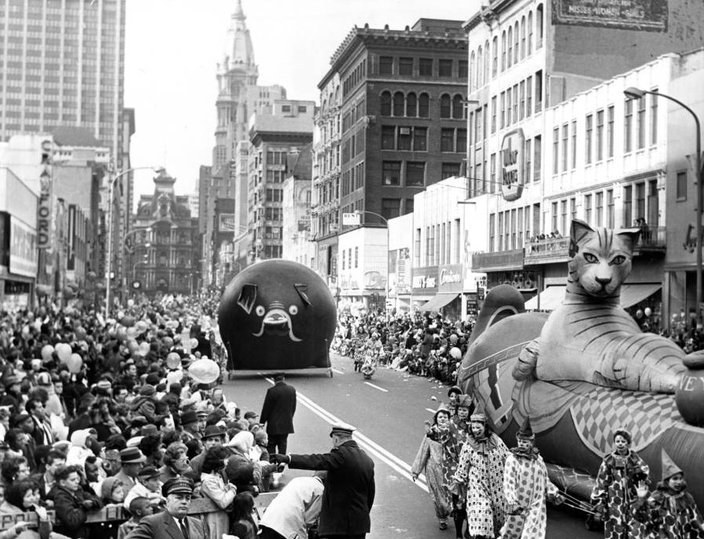
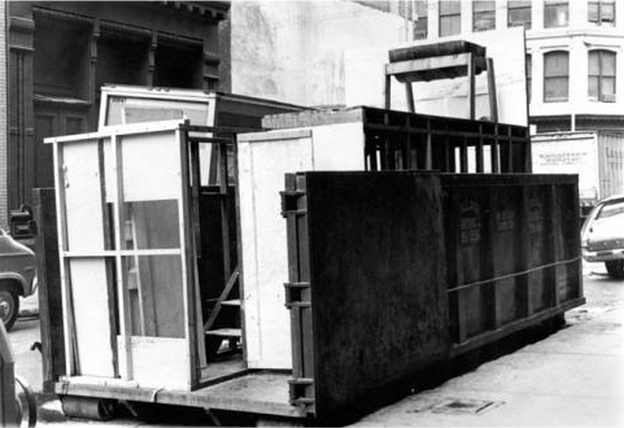
Here's a fascinating recording from the late Ted Greenwald that we added to the site in January 2015. "Voice Truck" was assembled as part of Gordon Matta-Clark's installation Open Space (a similar contemporary work is shown at right). Our own Charles Bernstein announced the new addition in a Jacket2 commentary post, which includes this description of the recordings:

In May 1972, the artist Gordon Matta-Clark installed a dumpster in front of 98 Greene Street in Soho (Manhattan). The work was called both Open Space and Dumpster. The Dumpster was filled with construction debris and other material, formed into three corridors. For Ted Greenwald's contribution to the installation, he created a special audio work. Greenwald installed a tape recorder on the delivery truck for the Village Voice, his long-time day job. Six reels were recorded. One of the tapes, featuring the most dramatic action of the day, was stolen from the cab of the truck: in the middle of Times Square, mounted police galloped up to a subway entrance, tied their horses to the entrance, and ran down into the subway. The other five reels survived and are being made available by PennSound for the first time (one of those cassettes is listed below in two parts)."

You can listen, read more about the work, and find a link for further discussion of Open Space as well as a short video on Matta-Clark on Bernstein's J2 commentary. The recordings are also linked on our Ted Greenwald author page, where, among many other recordings, you can also listen to a March 1971 reading by Greenwald with Matta-Clark. Click here to start listening.

Monday, November 9, 2020

Lee Harwood on PennSound

We're starting off this new week by revisiting our PennSound author page for British poet and translator Lee Harwood, whose work crossed the Atlantic to find affinities with the poets of the New York School.

When Harwood passed away in the summer of 2015, he was remembered by The Argus for his dedication to both poetry and politics, serving "as a union official and as a member of the Labour Party during its most radical years." John Harvey offered up a recollection of his long friendship with Harwood, including the memory of an event in the last year of the poet's life when they both read their work with jazz accompaniment, conjuring up memories of Harwood's formative experiences in New York during the 1960s. Finally, Enitharmon Press, publishers of Harwood's most recent collection, The Orchid Boat hailed him as "not only a highly gifted and skilled poet, but a man of immense kindness and thoughtfulness."

The heart of our Lee Harwood author page is his career-spanning Rockdrill  album The Chart Table: Poems 1965-2002, which showcases twenty titles from across his career, including "As Your Eyes Are Blue," "Linen," "Animal Days," "Summer Solstice," "African Violets" and "Gorgeous." Another highlight is "Chanson Tzara," a twenty-seven minute audio composition that serves as an ambitious and fully-dimensional tribute to both Tzara and the chaotic spirit of Dada made contemporary, starting with a hectic sound collage of found samples, ring modulated radio noise, music, and text-to-speech voice generation, which eventually gives way to a touching and elegiac voiceover by Harwood that weaves together memories, translations, and the young poet's conversation with Tzara. Finally, we have Harwood's half hour set from the Shearsman Reading Series at London's Swedenborg Hall in June 2008.You can listen to all of these recordings by clicking here.

Friday, November 6, 2020

New at PennSound Cinema: 'Hanuman Presents!' dir. Vivien Bittencourt and Vincent Katz

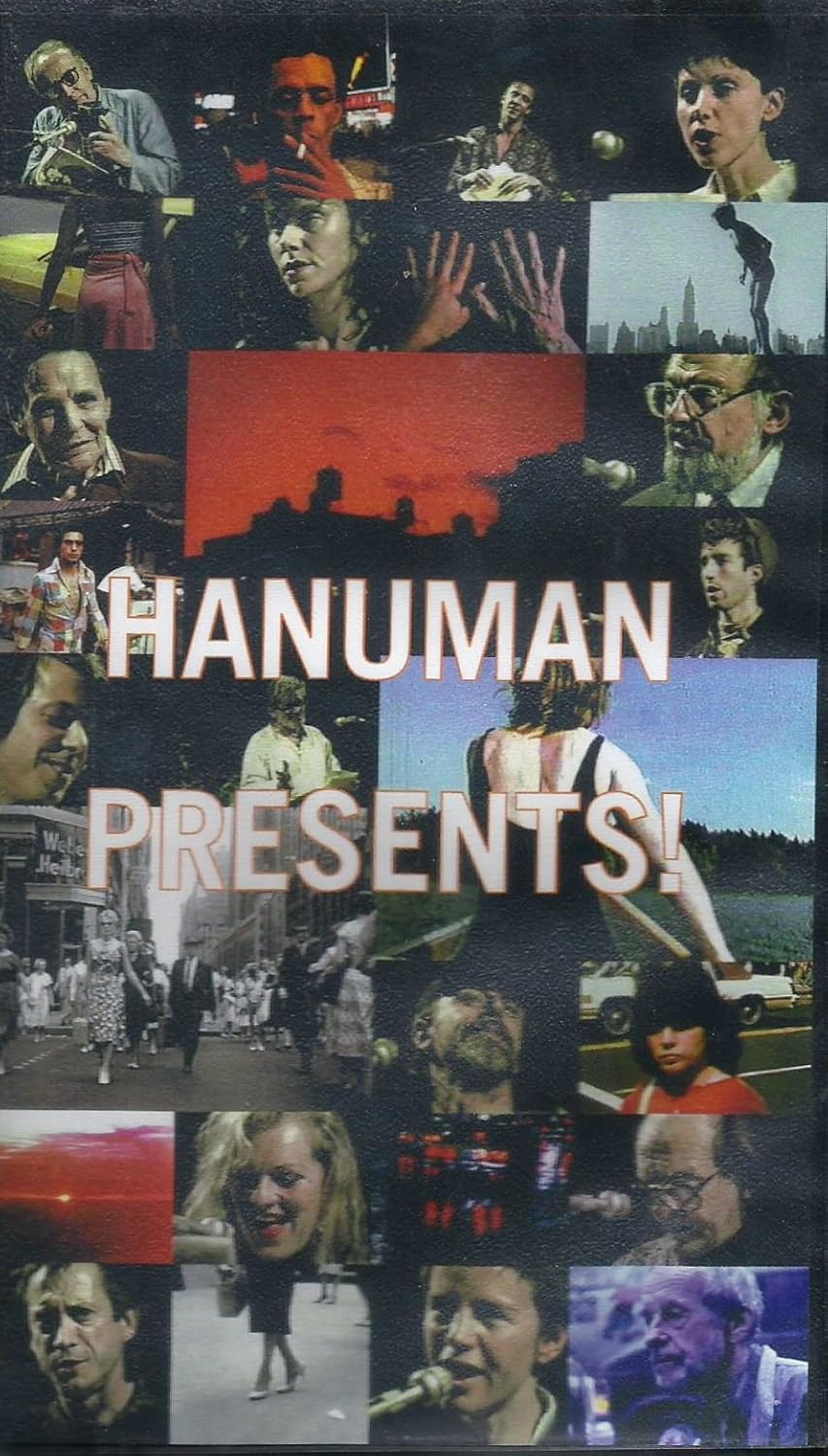
Here's a very exciting new addition to the site to bring this hectic week to a close. Directed and produced by Vivien Bittencourt and Vincent Katz, Hanuman Presents! is a filmic tribute to Raymond Foye and Francesco Clemente's influential press of the same name, centered around a reading at the St. Mark's Poetry Project that took place on May 18, 1989. 

Introduced by Foye, the film was edited by by David Dawkins and Henry Hills, and features a stellar line-up of poets spanning two generations — Gregory Corso, Elaine Equi, Bob Flanagan, Amy Gerstler, Allen Ginsberg, Richard Hell, Herbert Huncke, Katz, Taylor Mead, Cookie Mueller, Eileen Myles, Rene Ricard, David Trinidad, John Wieners — reading from their work. As Foye notes in his opening comments, all of Hanuman's living authors are included in the event. While the poets and the poems are wonderful enough on their own, the performances are cleverly accompanied by abstract images from the films of Rudy Burckhardt. Running just shy of forty-three minutes, Bittencourt and Katz's film is both a stunning time capsule and testimony to the power of Foye and Clemente's innovative press. You can start watching by clicking here.

Wednesday, November 4, 2020

As we did four years ago, we turn to Muriel Rukeyser for guidance in the wake of a presidential election. Just like four years ago, there's a lot of uncertainty at the present moment, but a fruitful sort that merits cautious optimism.


Poem (1:45): MP3

I lived in the first century of world wars.
Most mornings I would be more or less insane,
The newspapers would arrive with their careless stories,
The news would pour out of various devices
Interrupted by attempts to sell products to the unseen.
I would call my friends on other devices;
They would be more or less mad for similar reasons.
Slowly I would get to pen and paper,
Make my poems for others unseen and unborn.
In the day I would be reminded of those men and women,
Brave, setting up signals across vast distances,
Considering a nameless way of living, of almost unimagined values.
As the lights darkened, as the lights of night brightened,
We would try to imagine them, try to find each other,
To construct peace, to make love, to reconcile
Waking with sleeping, ourselves with each other,
Ourselves with ourselves. We would try by any means
To reach the limits of ourselves, to reach beyond ourselves,
To let go the means, to wake.

I lived in the first century of these wars.


Monday, November 2, 2020

PennSound Classics: "Burd Ellen," Performed by Ruth Perry

We start this week off in eighteenth century Scotland with "Burd Ellen," an exemplery ballad by Anna Gordon Brown (transcribed by her nephew, Robert Scott), which you can find on our PennSound Classics page.

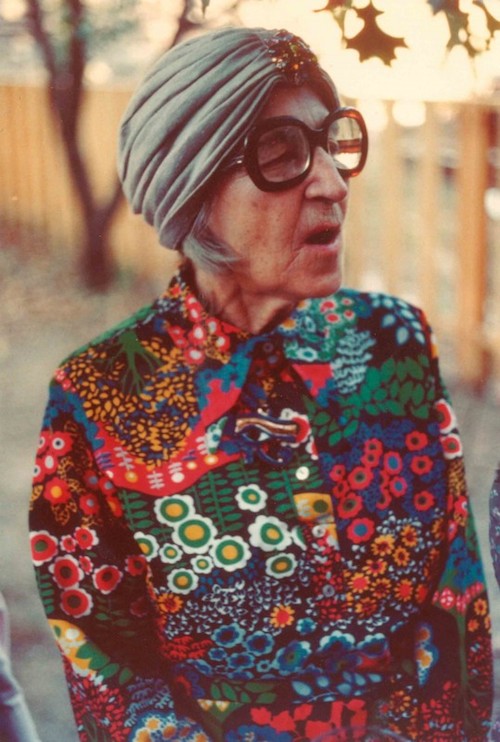
Ruth Perry of MIT [shown at right] has written a chapter for a volume being edited by Ellen Pollak, A Cultural History of Women in the Age of Enlightenment, to be published by Berg/Palgrave. This work will be part of an illustrated, six-volume Cultural History of Women being assembled with a general audience in mind. Ruth Perry's topic is Anna Gordon Brown, whose repertoire of English ballads was the first to be tapped and written down by antiquarians and literary scholars in the eighteenth century, at a time when scholars feared that the oral tradition was in danger of disappearing forever. It turns out that Ruth Perry, aside from being an eminent scholar of the ballad tradition in English, is a talented ballad singer herself. As of today, PennSound has added to its "Classics" page a studio recording of Perry performing "Burd Ellen," generally deemed to be one of the most beautiful of Brown's ballads. Ruth transcribes "Burd Ellen" in her forthcoming chapter, and discusses it as well. It is the hope of Ellen Pollak that the published book will refer to the PennSound URL so that readers can have easy permanent access to the recording, without the need of a CD inserted into the book. We at PennSound are happy to help with this project and any similar endeavor.

You can read more about the history of the piece in Filreis' J2 commentary and listen to Perry's performance here. "Burd Ellen" and many more interpretations of poetry that predates recording technology — from the ancient Greeks to Walt Whitman — can be found at PennSound Classics


Monday, October 26, 2020

Fred Moten: Two Newly Segmented Readings

Just a few weeks ago we celebrated Fred Moten's richly-deserved MacArthur Fellowship, and today we're back to start the new week with a pair of 2018 readings by the poet that were recently segmented by PennSound staffer Wes Matthews.

First up, we have Moten's September 20, 2018 reading as part of the Mackey Sessions — a.k.a. the 2018 Blackburn Literary Festival at Duke University — a three-celebration of the poet's life and work. Moten's set here consists almost exclusively of selections from the sequence "come on, get it!," sections 13–17, concluding (appropriately enough) with the poem "Nathaniel Mackey."

Then, jumping back six months to a March 10, 2018 Segue Series reading at New York City's Zinc Bar, we find Moten unintentionally continuing his future set, reading sections 18–23 from the same series, some of which you can read along with at The New Inquiry.

Tyrone Williams wrote about "come on, get it!" — which was published as part of Moten's book The Feel Trio (Letter Machine Editions, 2014) and was a finalist for the National Book Award — as part of his 2014 Jacket2 commentary series, "Hunches, Hedges, Etc.," noting that "like the novelist Charles Johnson, Moten is himself philosophically inclined, and so the Heideggerean echoes of the opening of the second section, 'come on, get it,' are very much on point: 'Performers feel each other differently,/ as material things that never happen,/ in persistent substance and their risen cities.'" Williams continues: 
The impasse here, a different kind of blockage, rests on the thing/event, material/substance, distinctions, and so "even if there’s no escape, their training in certain clinical tendencies,/or in the general structure of being a problem,//because of the pivot they never disavowed/in thrown-ness, begins the world where we are fallen…" And though this state of having fallen is our "falling down together in an accident we dream," the accident of race neither relieves the West of responsibility ("welcome to what we took from is the state.") nor justifies "our" slavish commitments to race (not the same as a "free" commitment to culture). Nowhere does Moten make this more clear than near the end of the middle section: "I mean to make something else all the time./the harder you look inside/the easier it is to forget about gary. black youth has/always been a project of sonic youth in the/everyday distortion. we clear? sharper? my/plan is based on human nature, from tutu/to biko, with a continental burst in my/gig bag, which is keene-toed, sharp as a tack…"

You can read more here.  You can listen to the two readings mentioned above, along with many more decades spanning two decades, on PennSound's Fred Moten author page.

Friday, October 23, 2020

PoemTalk #153: on Daphne Marlatt's "Arriving"

Today we are proud to release the newest episode in the PoemTalk Podcast series, number 153 in total, which addresses Daphne Marlatt's "Arriving," taken from her 1981 collection Here & There. This special program was recorded on location in Vancouver, British Columbia at the home of friends Richard Cook and Lucy Oh Cook, where host Al Filreis was joined by a panel that included Meredith Quartermain, Fred Wah, and Marlatt herself.

"'Arriving" ... seems to have been written during — and in any case is about — a summertime gathering of artist friends and others in the Kootenays in July 1980," Filreis notes in his PoemTalk blog post announcing the new episode. "Here & There is dedicated to 'my fellow swimmers.' And 'Arriving,' the first poem in the group, bears a dedication reading 'for Fred & Pauline,' and they would be Fred Wah and Pauline Butling, her hosts those summers — both present at Lucy and Richard’s home." He continues, explaining that "the poem records Daphne's nine-and-half-hour journey from the city of Vancouver to that remote haven in a steep mountain valley, and in its lines we sense a body in motion, the rushing occurrence of the environment, an 'ambushing' of the natural, and a sense of being seemingly always on the way, or a towardness."

You can read more about this latest show, read Marlatt's poem, and listen to the podcast or watch the unedited video footage of the session here. The full PoemTalk archives, spanning more than a decade, can be found here.

Wednesday, October 21, 2020

POG Reading Series: Mei-mei Berssenbrugge 2020

We've had the pleasure of mentioning Mei-mei Berssenbrugge quite a bit recently, due to her well-deserved nomination for this year's National Book Award in Poetry for her latest, A Treatise on Stars. Today, we're very happy to share a new video of Berssenbrugge, made in conjunction with our own Charles Bernstein (who served as an audience of one), which was presented as part of the POG Reading Series in lieu of the live reading she was originally scheduled to give in person on October 10th. This twenty-five minute set includes three poems from A Treatise on Stars: "Jaguar," "Lux," and "Wonder."

Bernstein recently posted Charles Alexander's introductory comments for the event on Jacket2. Here's a little of what he had to say about Berssenbrugge: 
Berssenbrugge, in her many books (Hiddenness, Empathy, Mizu, Hello the Roses, Endocrinology, and many more, including the recent A Treatise on Stars, finalist for the National Book Award at present) has sought to create a space for the mind, the breath, the perceptions, to intertwine in long lines which draw in and include the reader in a variety of observations and meditations based on the world in which we live and think, and the impacts of such life & thought. Long ago, Mei-mei told me that she had made two important commitments for and through her work — to the sentence, and to beauty. She has also, in the course of her oeuvre, entirely interrogated those two notions, how they might work, what they might mean, how we might find beauty, and what we may have to say about it. We are fortunate witnesses to her imagination, which I find nothing less than visionary. In the company of such writers as William Blake and Hildegarde of Bingen, she expands us.
You can read more here. PennSound's author page for Berssenbrugge is home to more than two dozen individual recordings going back as far as 1986, including interviews, radio programs, and a great many readings. You can hear more from A Treatise on Stars specifically by checking out her 2019 Kelly Writers House Fellows reading.

Monday, October 19, 2020

Jacques Roubaud Reads in Paris, 2019

We're hopping across the Atlantic for this week's first post, highlighting a recent addition to the site from mathematician, translator, and Oulipo member Jacques Roubaud

This reading, celebrating Roubaud's most recent book, Tridents (Éditions Nous, 2019), was recorded at Paris' Librairie Texture on December 4th of last year. Éditions Nous publishers Benoît Casas and Patrizia Atzei were on hand to celebrate this latest book from their press, the sixth in total from Roubaud that they've published. This was also Roubaud's third time reading at the book store.

You'll find video footage of this nearly hour-long reading on our Jacques Roubaud author page, which is also home to a thirty-five minute "Lecture de Poète" filmed by François Sarhan in Paris in 2012. Click here to start watching.


Friday, October 16, 2020

'Poker Blues' (1991) by Les Levine and Ted Greenwald

Let's stay in the realm of poetry/film collaborations to close out this week. Today we're highlighting Poker Blues a 1991 video collaboration by artist Les Levine and Ted Greenwald, and published by Museum of Mott Art, Inc. (the conceptual museum Levine founded in 1970).

A marvelous fugue constructed from the lexicon of card players, Poker Blues is filmed in a two-camera setup, alternating between perspectives so that Greenwald becomes his own interlocutor, while Levine remains faceless off-screen. The claustrophobic feel is underscored by quick edits and tight close-ups, along with the looped soundtrack of Diana Ross' "I Love You (Call Me)."

Over at Mimeo Mimeo, Kyle Schlesinger offers up a brief write-up of the film as well as the mimeographed book that resulted from it, noting that "according to Greenwald, the performance was improvised and later transcribed by Levine for the book (above) along with several stills from the film."

We've made video footage of the sixteen-minute film available, along with the isolated audio track. You can experience both by clicking here.

Wednesday, October 14, 2020

Henry Hills, 'Plagiarism' (1981)

Today we've got an exciting new addition to the site from filmmaker Henry Hills. Filmed in 1981, Plagiarism features Hannah Weiner, Charles Bernstein, Bruce Andrews, and James Sherry reading from Weiner's notebooks that would eventually be published as Little Books/Indians (Roof Books, 1980). Hills offers these notes on the film:

Begins jokingly proclaiming, "I'll make my Ernie Gehr film," a major preoccupation of my generation in the late 70s/early 80s, & then this very raw other thing proceeds to unfold, raw because I only had enough money (a loan from Abby Child) to do 4 shoots never having done sync & using outdated film stock from Rafik & an unfamiliar, undependable camera & trying to keep everything together & everything going wrong, yet determined to make concrete the ideas I had been abstractly developing over several years with whatever I got back from the lab no matter & so abandoning all caution to open a new area, I decided who could possibly talk better than poets? Edited in Times Square.

Fans of Hill's Money (1985) will recognize many familiar techniques at play here, with rapid-fire cuts creating a dense, rhythmic collage of sights and sounds punctuated by pregnant pauses, bursts of noise, and enigmatic, orphaned fragments of speech. It would be a mistake to judge it solely in its relationship to Money, however, since the two films differ radically in scope and spirit: while the latter is an expansive survey of the city and its scenes (including poets, dancers, and musicians), the feel here is much more intimate, between the smaller cast and the more limited visual vocabulary. At the same time it's fascinating to see hallmarks of Hills' style in a raw early state, particularly given the influence of the considerable technical challenges that Hills enumerates above. You can watch Plagiarism by clicking here.

Tuesday, October 13, 2020

John Richetti reads Poe, Tennyson, Coleridge

We've recently highlighted a number of recordings of the poetry of Walt Whitman made by beloved UPenn emeritus professor John Richetti. Today we're going to cover the rest of the poets whose work he performed in his most recent session, including Edgar Allan Poe, Samuel Taylor Coleridge, and Alfred, Lord Tennyson.
 
Given the season, how can we not start with Poe? Richetti's September home recording sessions included several of the poet's more iconic titles, including "Annabel Lee," "To Helen," "El Dorado," "Israfel," and "The Conqueror Worm." Interestingly, Richetti's selections all appear in Jerome McGann's 2011 set of Poe recordings, where you'll also find "The Sleeper," "Dream-Land," "The Haunted Palace," "The Raven," and "Ulalume - A Ballad." 

Next, Richetti revisits Coleridge, reading "Rime of the Ancient Mariner" in its entirety. Richetti performed a number of works by the poet in a 2014 session, including "The Rose," "This Lime-Tree Bower My Prison," "Kubla Khan," "Dejection: An Ode," and "Frost at Midnight," which you can hear on the same page. Finally, Richetti returns to Tennyson — the focus of the recordings he made for us this past April — with one new poem, "The Eagle."

Numerous previous sessions with Richetti are available on PennSound Classics, spanning more than a decade. They include his prodigious "111 Favorite Poems for Memorizing," "The PennSound Anthology of Restoration & 18th-Century Poetry," and his audio anthology of English Renaissance Verse. Richetti has additionally recorded selections from Matthew Arnold, W.H. Auden, William Blake, Elizabeth Barrett Browning, Robert Browning, Lord Byron, Emily Dickinson, John Donne, John Dryden, George Herbert, Ben Jonson, John Keats, Andrew Marvell, John Milton, William Shakespeare, Percy Bysshe Shelley, Algernon Charles Swinburne, Walt Whitman William Wordsworth, and William Butler Yeats. These lovingly-made recordings, rendered in Richetti's distinctive tenor, are a tremendous resource for the classroom or for any lover of poetry. 

With the exception of the aforementioned anthologies, PennSound Classics is divided by author, so you can see Richetti's ample contributions alongside those of many other poets and scholars. To start browsing, click here.