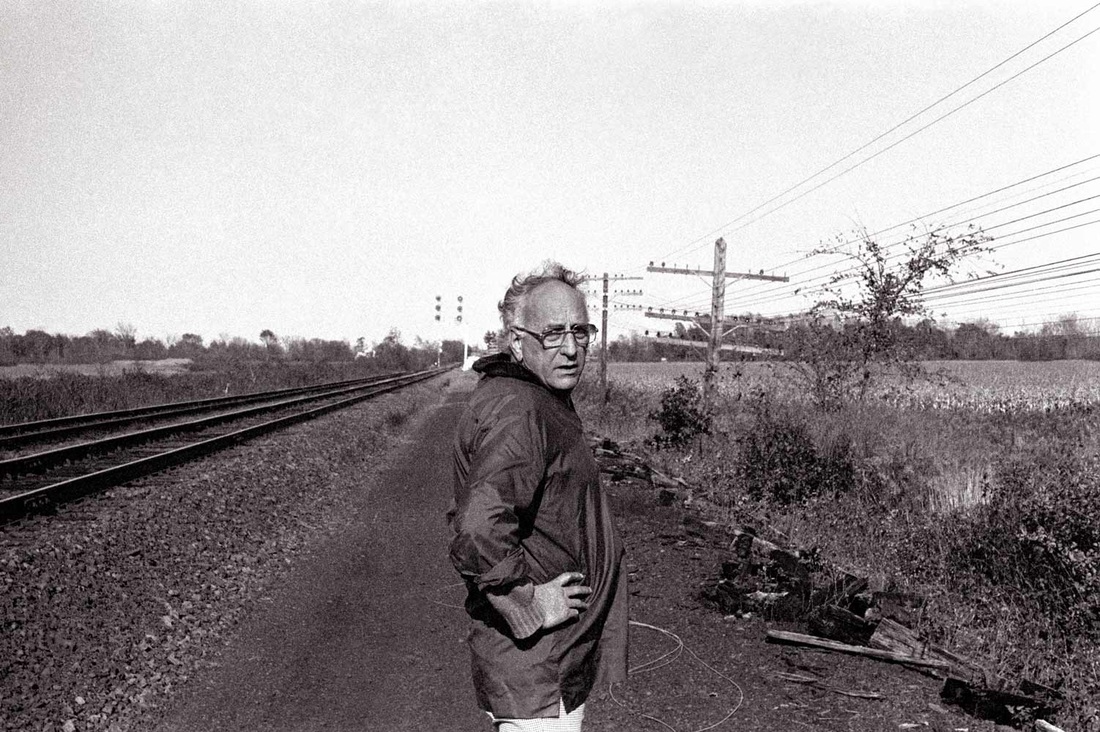
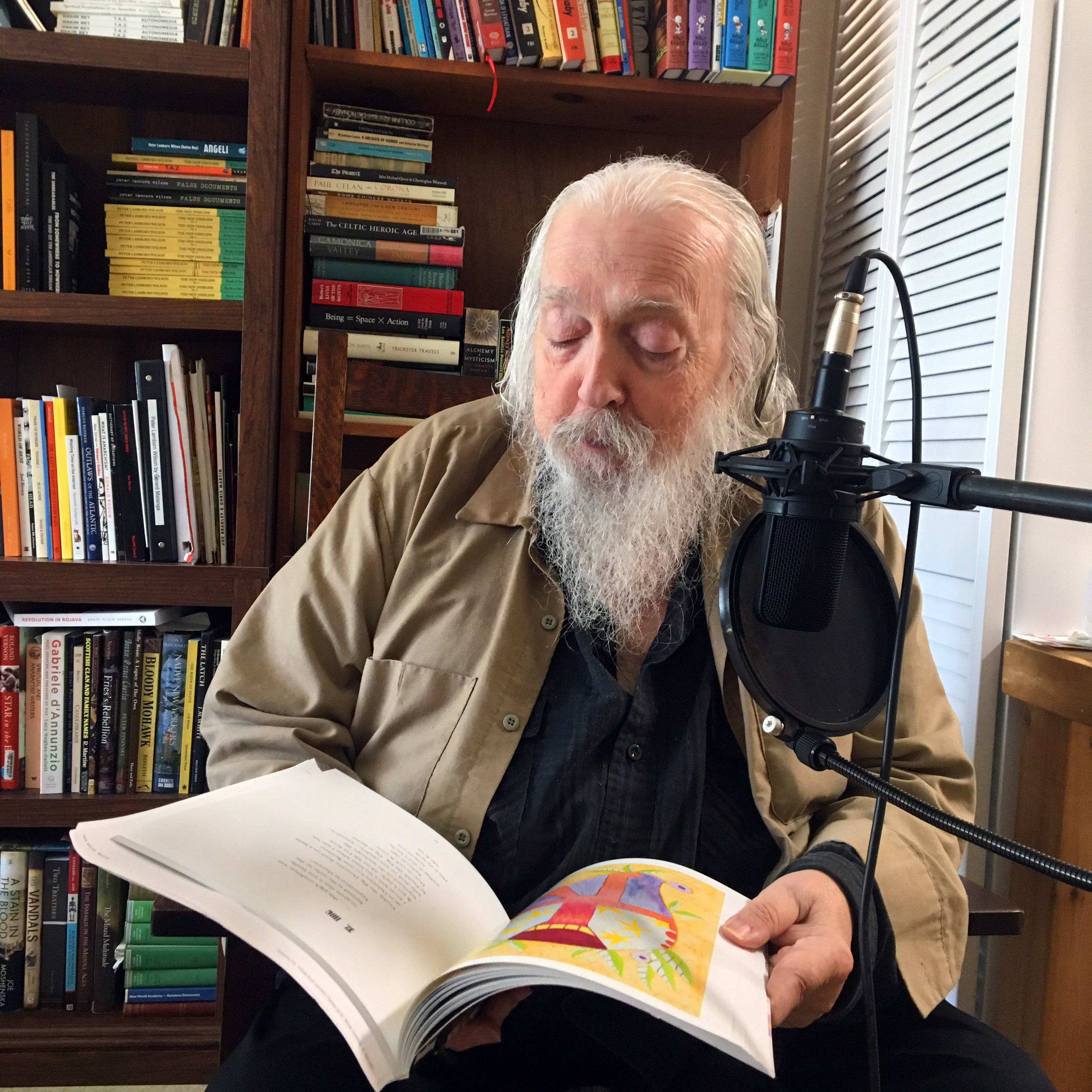
We close this week out by remembering poet, translator, and political theorist
Peter Lamborn Wilson, who passed away from a heart attack on May 22nd of this year.
Our author page for Wilson, curated by
Chris Funkhouser, is equally a tribute to Wilson's own talents and Funkhouser's dedication to documenting them.
Funkhouser and Wilson's collaboration began in the summer of 2015 when he traveled to Wilson's Woodstock, NY home for a series of nine recording sessions. Split into twenty sets in total, these recordings encompass hundreds of poems, all drawn from an "unpublished six hundred page-long [manuscript of] collected poems." These sessions are presented with organizational links to each of the recording dates, along with bracketed references to the placement of individual tracks within each larger set and the page numbers corresponding to
a PDF version of the uncollected poetry manuscript. In conjunction with the launch of this archives, we published Funkhouser's essay
"Peter Lamborn Wilson: A PennSound Archive" at
Jacket2, in which he details the origins and progress of the project. Here, Funkhouser explains his long, complicated history with Wilson:
I met Peter Lamborn Wilson in the late '80s at Naropa Institute, and after acquiring his pamphlet Chaos, written under the takhallus Hakim Bey, became a devotee to his work. His support of DIY efforts was encouraging and validating, and We Press took up the invitation to "pirate" Chaos by way of corporate resources we had at our disposal at the time.
After falling in and out of touch over the years, on a visit to Woodstock in 2013 I learned he now resides there. Less than a year later — two days after my family moved to the Hudson Valley in August 2014 — I found my way to a poetry reading featuring Wilson, Sparrow, and Michael Brownstein at the Golden Notebook in Woodstock. Knowing him primarily as a cultural critic and writer of prose, to hear Wilson's verse was something new, and a delight.
And here, Funkhouser details how this project finally came together:
In March 2015, seeking a collaborative project, I discussed doing a recording session with him. He brought up the six hundred pages of unpublished poems, suggesting we could document them. Having high regard for his writing, knowing his work as a poet is essentially unknown beyond the circle of people who are part of his community, this was a grand idea, and something different than any other previous audio project I'd done before: focusing on the work of a single poet over a course of many weeks. For one thing, the duration, scale, and informal approach enabled a series of routines to develop. Some were minor, some technical and pragmatic, and others symbolic. I decided, for example, to bring a different piece of small visual art along to each of our nine sessions, to "keep us company" and temporarily transform decor in his studio apartment during the many hours we spent at work on our endeavor.
Funkhouser would go on to supplement this impressive body of work with a 2019 recording of the book Hoodoo Metaphysics read in its entirety, and after news of Wilson's passing spread, he contacted us and sent along three additional recordings: a 2016 reading with Charles Stein at the Hudson Opera House and a pair of 2015 recordings from the Woodstock Public Library and Olana State Historic Site. We are grateful, as ever, to Funkhouser for his passionate work as an archivist and send our condolences to Wilson's friends, family, and fans.