Wednesday, January 31, 2024

PoemTalk #192: Two by Owen Dodson

Last night, we released the latest episode in the PoemTalk Podcast series, which focuses on two titles by Owen Dodson, a prominent poet, novelist, and playwright of the generation of Black authors that followed in the footsteps of the Harlem Renaissance. Together with host Al Filreis, panelists Herman Beavers, Tracie Morris, and Amber Rose Johnson discuss Dodson's "Sorrow Is the Only Faithful One" and an elegaic sonnet "For Billie Holiday — Finally, Lady, You are Gone From Us."

Filreis starts off his write-up of this new episode on Jacket2 noting that "our recordings of these poems come from the Library of Congress, where on December 13, 1960, Dodson entered the Recording Laboratory there to perform a selection of his verse." He also quotes Dodson's recollection of meeting Holiday as a young man from Hilton Als' book The Women
Chile, I met Billie Holiday through my boyfriend, Karl Priebe, in the forties. She was appearing in a club in New York, on Fifty-second Street. I came up from Washington [where he was on the faculty at Howard University] to see Karl. He was working, and he suggested I come along to meet her. Chile, she was in this awful dressing room, smaller than my bathroom. She called me "Teach." Her dress was hiked up around her waist. She was fanning her pussy with a fan. She said, looking straight at me, fanning her pussy: "Teach, it's so goddamn hot in here" (p. 137).
You can listen to this latest program and learn more about the show here. PoemTalk is a joint production of PennSound and the Poetry Foundation, aided by the generous support of Nathan and Elizabeth Leight. Browse the full PoemTalk archives, spanning more than a decade, by clicking here.

Monday, January 29, 2024

The Brooklyn Rail and PennSound Present "A Tribute to Frank O'Hara"

We hope you'll join us this Wednesday, January 31st at 1PM EST for a special listening session co-presented with our friends at The Brooklyn Rail as part of their series of daily MWF events (sponsored by the Terra Foundation for American Art). We'll be showcasing, "A Tribute to Frank O'Hara," a memorial event held at New York's St. Mark's Poetry Project in 1976, marking the 10th anniversary of the poet's tragic passing. 

Not surprisingly, this tribute features a stellar line-up of poets, painters, and art critics, including Joe LeSeuer, Patsy Southgate, Jane Freilicher (reading James Schuyler), Anne Waldman as MC, Kenneth Koch (reading "Awake in Spain"), Carter Ratcliffe, Tony Towle, Patsy Southgate, David Shapiro, and Peter Schjedahl. Registration is required to join us — click here — and you'll receive a reminder email on Wednesday with the event link. You'll also be added to The Brooklyn Rail's mailing list so you won't miss out on any of the fascinating events (now approaching #1000) held every weekday. We hope to see you Wednesday!

Saturday, January 27, 2024

Charles Reznikoff Reads from "Holocaust" for International Holocaust Remembrance Day

January 27th is International Holocaust Remembrance Day, marking the day Soviet troops liberated Auschwitz seventy-eight years ago. In acknowledgment of the day and the six million European Jews who perished senselessly, we revisit one of the more remarkable and harrowing recordings in our archives:

In late 2009, we were fortunate enough to be contacted by filmmaker Abraham Ravett, who offered us a treasure trove of rare recordings he'd made of poet Charles Reznikoff reading from his final collection, Holocaust, along with a number of photographs. Recorded December 21, 1975, these eighteen tracks — which include a number of retakes and an audio check — were originally recorded for inclusion in the soundtrack to the recently-graduated director's debut film, Thirty Years Later, which he describes as an autobiographical document of "the emotional and psychological impact of the Holocaust on two survivors and the influence this experience has had on their relationship with the filmmaker — their only surviving child."

In addition to the recordings themselves, Ravett graciously shared his recollections of that day — noting, "Mr. Reznikoff's West End apartment was located within a high-rise apartment complex reminiscent of where I grew up during my teens in the Brighton Beach section of Brooklyn, N.Y. He was very kind and gracious to a rather nervous young filmmaker fumbling with his Nagra tape recorder and Sennheiser microphone who hoped that everything would work as planned" — along with a series of eight photographs of the poet, including the stunning image at right.

While Holocaust, as a text alone, serves as a viscerally pointed indictment of Nazi atrocities during the Second World War, not to mention a marvelous example of documentary poetics, in these selections, the auratic resonance of these appropriated testimonies are amplified dramatically, particularly when framed by the frail yet determined voice of the seventy-nine year old poet — who would pass away a month and a day from the date of this recording session — lending the work a gravid anger, a grand sense of monumental enormity.

You can listen to these tracks by clicking here, where you'll also find a link to a separate page housing Ravett's photographs, and don't forget to visit Reznikoff's main PennSound author page, where you can listen to the poet's 1974 reading at the Poetry Center at San Francisco State University (where he was famously introduced by his Objectivist compatriot, George Oppen) and his 1975 appearance on Susan Howe's Pacifica Radio program, "Poetry Today," among other recordings.

Friday, January 26, 2024

Charles North: William Corbett Poetry Series at MIT, 2022

Today we're highlighting one of the newest additions to the site: a reading by Charles North for the William Corbett Poetry Series, hosted by the Comparative Media Studies department at MIT. This virtual event took place on April 21, 2022.

Introduced by Ed Barrett, North begins by discussing how special this reading is for him, due to both his close friendship with the late Bill Corbett, and his lifelong connection to the Boston area. His set includes more than two dozen poems, and as he notes, he breaks with tradition by starting with his most recent work — as collected in Everything and Other Poems and Elevenses (a collaboration with Trevor Winkfield) — and working backwards to older work. Titles read include "Opening Day," "Equilibrium," "French Licks," "Oh Night," "The Toad," "Beat It to the Punch," "Alchemy," "Brownstones," "Tomato," "Pencil Line," "The Sky," "The Silent Splash," "Philosophy of New Jersey," and "Baseball Lineups."

You can watch this video, along with a broad array of recordings going back to a 1978 Segue Series Reading at the Ear Inn, on PennSound's Charles North author page.

Wednesday, January 24, 2024

Art, Fantasy and Experience, Moderated by Carla Billitteri, 2010

Today we take a deep dive into the archives to revisit Art, Fantasy and Experience, a marvelous event organized by Carla Billitteri at the Renee and Chaim Gross Center for the Arts in New York on December 12, 2010. This reading, presented in conjunction with the exhibition Fantasy: Chaim Gross Drawings, 1944-1950 (which rans through March 31, 2011), features an all-star roster of poets, including Elaine Equi, Nada Gordon, Rod Smith and Charles Bernstein.

In her introduction, Billitteri discusses her motivations in inviting these poets to invite these four poets to take part in this event: "I see in their poetry, fantasy as the configuration of a conceptual space that undoes itself, or undoes its configuration; fantasy as the reconfiguration of familiar conceptual space in such a way as to distort it; and finally, fantasy as the presentation of an untranslatable, or only partially translatable experience. In this sense, fantasy is a sense memory."

Brief sets from each poet (running approximately ten to fifteen minutes) are presented as both audio and video, with segmented tracks available for both Equi and Gordon's readings. These performances are followed by a short conversation period in which the poets discuss the role of fantasy in their poetry. You can see and hear all of these recordings on the special page we've put together for this event as well as on the individual author pages for each poet. To start exploring these fascinating readings, click on the title above.

Monday, January 22, 2024

Robert Creeley and Company: Home Movies by Bobbie Louise Hawkins

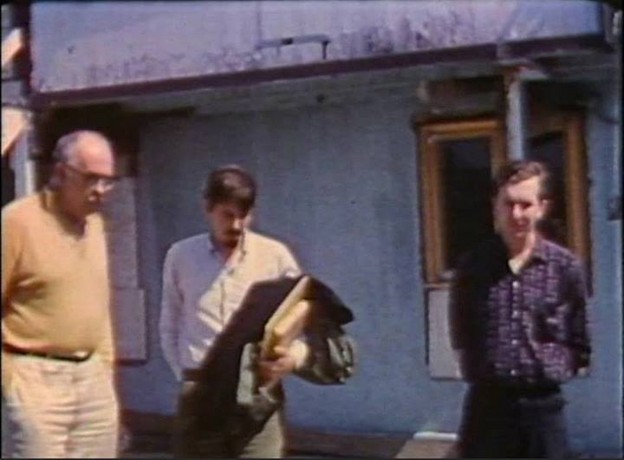
We kick off this new week with a remarkable document that demonstrates that the quotidian can also be historically significant: "Robert Creeley and Company: Home Movies by Bobbie Louise Hawkins."

Charles Bernstein provided some background information in a 2014 Jacket2 commentary post announcing the addition of these films, along with a timetable of its contents: "Bobbie Louise Hawkins took these home movies from 1962 to 1965. She provided them to Robert McTavish for his film about the Vancouver poetry conference of 1963, The Line Has Shattered (2013), and then asked McTavish to send them to PennSound. Penelope Creeley and McTavish provided most of the annotations. We welcome any further identifications: let us know!"

Above, we see a screenshot of Charles Olson, Robert Creeley, and John Wieners; other captures Bernstein has selected from the films include Allen Ginsberg, Robert DuncanTuli Kupferberg, Ed Sanders, and John Cage. You can see them here and watch the films here.

Friday, January 19, 2024

Happy 215th Birthday to Edgar Allan Poe

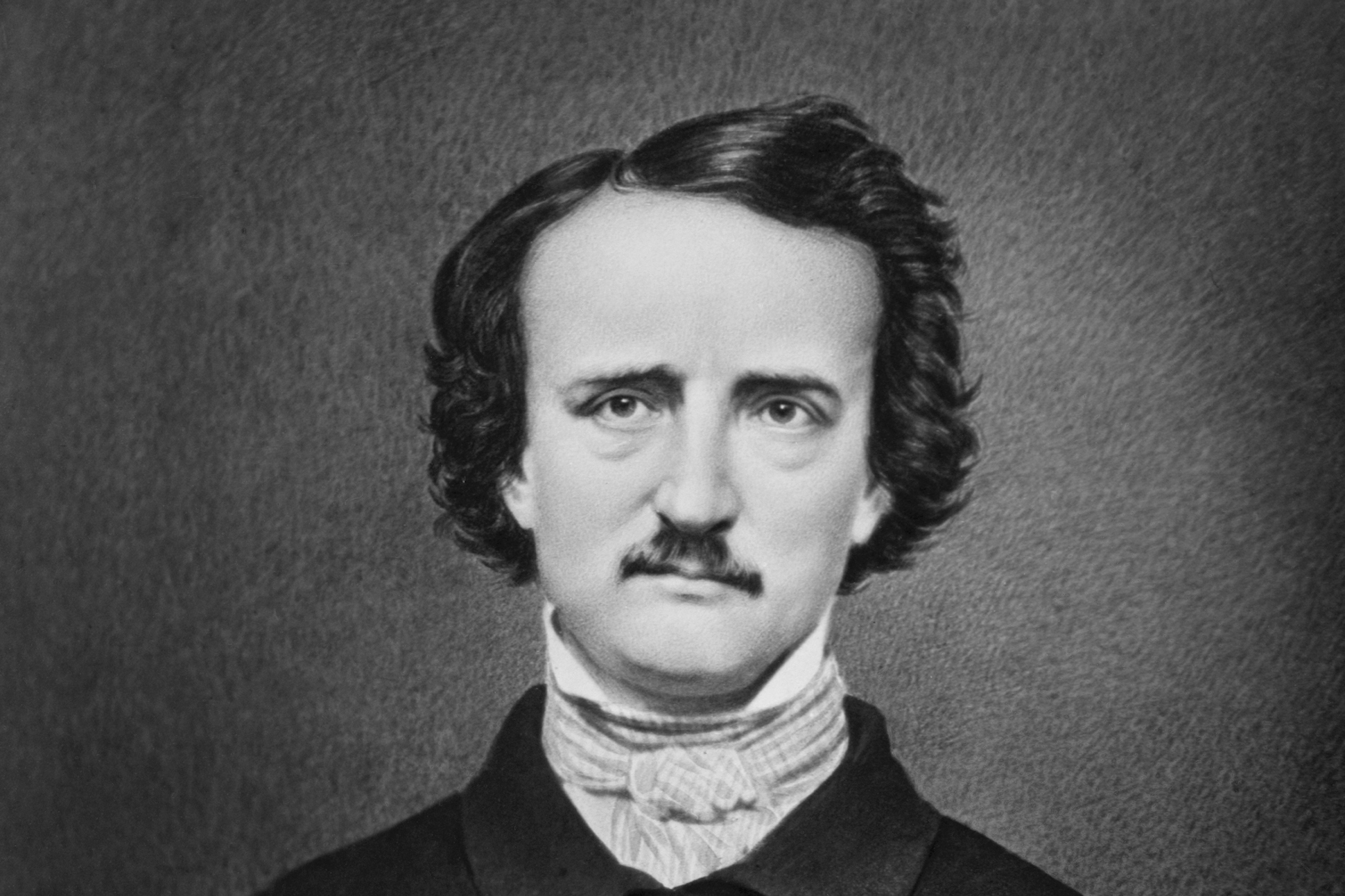
We wrap up this week thinking of Edgar Allan Poe, born on this day 215 years ago in Boston. Given present Poe's stature as a foundational American poet, short story writer, and essayist, it's fascinating to think that he could have been lost to obscurity if not for the fervent interest of French authors like like Baudelaire, Apollinaire, and Mallermé, who set the stage for rediscovery in his native land. To celebrate this historic milestone we're highlighting the recordings of Poe's work that you'll find on our PennSound Classics homepage

First, we have a set of poems by Poe recorded by noted Poe scholar Jerome McGann in Charlottesville, VA in 2011. Titles performed include "To Helen," "Israfel," "The Sleeper," "The Conqueror Worm," "The Haunted Palace," "The Raven," "Ullalume — A Ballad," "El Dorado," "Annabel Lee," and "Dream-Land," which was the subject of PoemTalk episode #48. Then, from UPenn professor emeritus John Richetti, we have a 2020 set of Victorian Dramatic Monologues, which includes Poe's "Annabel Lee," "El Dorado," "Israfel," "The Conqueror Worm," "To Helen,"  and "The Raven." Both of these sets are excellent for classroom use as well as your personal enjoyment. To start listening click on any of the links above.

Wednesday, January 17, 2024

Remembering Gregory Corso

Today we are thinking of poet Gregory Corso, who passed away on this date in 2001 at the age of 70. While the last years of his writing — as captured in Gus Reininger's moving documentary Corso: The Last Beat — have finally seen print in The Golden Dot: Last Poems, 1997–2000 (read William Lessard's Jacket2 interview with its editors here), this key poet is still in need of a proper collected poems, and dare one hope for a critical resurgence to go along with it.

We launched our Gregory Corso author page in June 2017, with assistance from Raymond Foye. There, you'll find five full readings plus one individual poem recorded between the 1970s and 1990s. The earliest recording is a April 1971 reading at Duke University, which is followed by an August 1985 appearance at the San Francisco Art Institute as part of their "Art of Poetry" series. Jumping forward to the 90s, there's a March 1991 Brooklyn College reading notable for the appearance of Corso's iconic late poem "The Whole Mess ... Almost" and for the half-hour candid conversation recorded in the car on the way home. From December 1992, there's a stellar reading in New York City also featuring Herbert Huncke, John Wieners, and Allen Ginsberg, and finally, from March 1993, we have a half-hour reading from Rutgers University including "I Met This Guy Who Died," "Earliest Memory," "Youthful Religious Experiences," and "How Not to Die," among other poems. Our most recent addition is a 1969 recording session at Fantasy Records' San Francisco studios on Natoma Street showcasing "In the Fleeting Hand of Time," "Vision of Rotterdam," "The Last Warmth of Arnold," "Mexican Impressions," "Botticelli Spring," "Sun — A Spontaneous Poem," "Ode to Coit Tower," and "I Am 25," among others.

Ginsberg famously offered high praise for his dear friend, calling him "a poet's Poet, his verse pure velvet, close to John Keats for our time, exquisitely delicate in manners of the Muse," who "has been and always will be a popular poet, awakener of youth, puzzlement & pleasure for sophisticated elder bibliophiles." He continues, judging Corso as "'Immortal' as immortal is, Captain Poetry exampling revolution of Spirit, his 'poetry the opposite of hypocrisy,' a loner, laughably unlaurelled by native prizes, divine Poet Maudit, rascal poet Villonesque and Rimbaudian whose wild fame's extended for decades around the world from France to China, World poet." Click here to start listening.

Monday, January 15, 2024

VOX Audio Collection, 2005–2011

Today we are proud to showcase the just-added VOX Audio collection, which archives poetry readings held mostly in New Mexico and Maine (with a handful of events recorded in Ontario, Minnesota, and New York State) between the years of 2005 and 2011. 

On the VOX Audio series homepage, you'll find solo readings by David Benedetti, Jim Bishop, Michael Boughn, Wayne Crawford, David Empfield, Gene Frumkin, Burt Hatlen, Mary Rising Higgins, Bruce Holsapple, Howard McCord, Carol Moldaw, Stanley Noyes, Margaret Randall, Janet Rodney, Lee Sharkey, Marilyn Stablein, Bill Sylvester, Nathaniel Tarn, John Tritica, Anne Valley-Fox, Lawrence Welsh, and Keith Wilson. Paired readings include events featuring Mei-mei Berssenbrugge and Jonathan Skinner, Bobby Byrd and Joe Hayes, John Clarke and Charles Keil, Craig Dworkin and Mary Rising Higgins, Donald Guravich and Joanne Kyger, George Kalamaras and Alvaro Cardona-Hine, Jeffrey Lee and David Abel, Donald Levering and Janine Pommy Vega, Suzanne Lummis and Margaret Randall,  Anne MacNaughton, and Peter Rabbit, Amalio Madueno and Alvaro Cardona-Hine, and Michael Rothenberg and David Meltzer. A group reading with Mary Rising Higgins, George Kalamaras, Mary Ann Cain, and Gene Frumkin rounds out the collection.

We're grateful to Bruce Holsapple, who provided the majority of the recordings, along with Ron Silliman, who assisted with the remainder. Click here to start exploring this continent-spanning series.

Tuesday, January 9, 2024

In Memoriam: Phill Niblock (1933–2024)

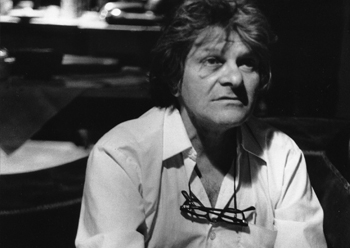
We are saddened to share the news that artist, composer, and Experimental Intermedia Foundation director Phill Niblock passed away yesterday at the age of 90. 

PennSound has been honored to host work by Niblock since very close to our project's inception, with a pair of important films documenting New York poets, which were upgraded to higher-resolution versions in 2013. Niblock's mid-70s portrait of Hannah Weiner, showcases her rapid-fire delivery of her clairvoyant writings, while the visuals weave in and out of live reading segments juxtaposed with domestic scenes. Meanwhile, in his 1973 portrait of Armand Schwerner, the poet contends with the wind as he reads (or more accurately, preaches) from his Tablets pacing back and forth in a bright orange jacket on a hilltop, the Verrazano-Narrows bridge behind him. At that time, we also added  Evidence, starring Erica Hunt and shot in 1983. This short relishes negative space, beginning with stark white Helvetica lettering on a black background that persists for more than a minute before fading in to the film's sole visual: the poet's face, silhouetted to near-featurelessness by a white television screen. Seen in profile, Hunt's speaking gestures are heightened — subtle shudders and nods, along with the frenetic moiré of her mouth — serving as an apt accompaniment to the narrative.

In 2021, we added two more films to Niblock's page: spontaneous portraits of singer and voice therapist Dagmar Apel and sound artist Charlie Morrow that practically beg to be read in dialogue with one another. "Dagmar Apel improvises text, the form of which is prescribed by Phill Niblock," reads the title screen of the first, while the latter's states, "Charlie Morrow talks tongues, plays scacciapensieri jewsharp." Both films play with extended length as well as the fascinating interplay between recognizable speech and asemic language.

You'll find all five of these marvelous poetic portraits on our Phill Niblock page. News of Niblock's passing has already sent tremendous ripples through the art community, and we send our condolences to his family, friends, and fans worldwide.

Monday, January 8, 2024

A New Disability Poetics Symposium, 2018

Today we're highlighting A New Disability Poetics Symposium, which was recorded at the LGBT Center at UPenn on October 18, 2018. This ambitious, multi-part gathering was organized by Jennifer BartlettAriel Resnikoff, Adam Sax, and Orchid Tierney, in collaboration with Knar Gavin, Declan Gould, Davy Knittle, and Michael Northen.

The proceedings began with the panel "Larry Eigner's Disability Poetics," moderated by Charles Bernstein, with talks by George Hart, Michael Davidson, and Jennifer Bartlett. That's followed by "Disability and Performance," moderated by Declan Gould, with contributions by torin a. greathouse and Camisha Jones; and "Poetic Experiment and Disability," moderated by Orchid Tierney, with panelists Sharon Mesmer and Gaia Thomas.

These talks are complemented by a number of readings, the first taking place as part of the symposium itself, with sets by Bartlett, Jim Ferris, Ona Gritz, Anne Kaier, Dan Simpson, and Brian Teare. There's a second set recorded at our own Wexler Studios with Kaier, Simpson, Ferris, Gritz, and Michael Northen reading their work. Finally, poet Kathi Wolfe was unable to take part in the symposium, but made home recordings of the pieces she would have read at the event, which we've made available to listeners as well. To start listening, click here.

Saturday, January 6, 2024

William Carlos Williams Burns the Christmas Greens

In Irish culture January 6th is traditionally recognized as Little Christmas, which marks the official end of the holiday season. On a chilly day like today, even a lapsed Catholic such as myself can't help but shudder just a little at the sight of the previous year's Christmas trees stripped bare and piled at the curbside waiting on trash day. Richard Brautigan's portrait of the grim holiday season after JFK's assassination, "'What Are You Going to Do With 390 Photographs of Christmas Trees?'" (from The Tokyo-Montana Express) does a fine job of paying tribute to this strange phenomenon — the sense of loss that haunts the promise of a fresh new year — but even it pales in comparison to the stark beauty of William Carlos Williams' "Burning the Christmas Greens," one of my favorite hidden gems on PennSound's encyclopedic Williams author page.

First published in the January 1944 issue of Poetry, the poem would later appear in The Wedge that same year. Altogether we have four recordings of Williams reading the poem: one from a May 1945 session at the Library of Congress Recording Library, another from a June 1951 home recording by Kenneth Burke, the third from a reading at Harvard in December of that year, and the last from the 92nd Street Y in January 1954; we also have a 1990 rendition of the poem by Robert Creeley.

"At the winter's midnight" — the thick of the dark / the moment of the cold's / deepest plunge" — "we went to the trees, the coarse / holly, the balsam and / the hemlock for their green," Williams tells us, before launching into a litany of the season's decorative delights. "Green is a solace / a promise of peace, a fort / against the cold," something that "seemed gentle and good / to us," and yet now, "their time past," Williams finds a different sort of solace in the "recreant" force of the conflagration, "a living red, / flame red, red as blood wakes / on the ash." Surrendering ourselves to the experience, we find ourselves, like Williams, "breathless to be witnesses, / as if we stood / ourselves refreshed among / the shining fauna of that fire," ready and grateful to be able to begin the cycle once more.

So even though the calendar's turned over, the presents are put away, and the all-too-swift delights of the season are gone, here's one last chance to reflect on what we've experienced and an opportunity to prepare ourselves for what lies ahead. You can listen to our four recordings of Williams reading the poem on his PennSound author page, or click here to hear the earliest.

Friday, January 5, 2024

Tuli Kupferberg: "No Deposit, No Return" (1966)

Today's the perfect day to give Tuli Kupferberg's 1966 ESP-Disk LP, No Deposit, No Return a spin. While many know the late Kupferberg for his inimitable contributions to poetry-rock mavericks, the Fugs, this ambitious solo album is far more obscure, though not without its dedicated fans, myself included.

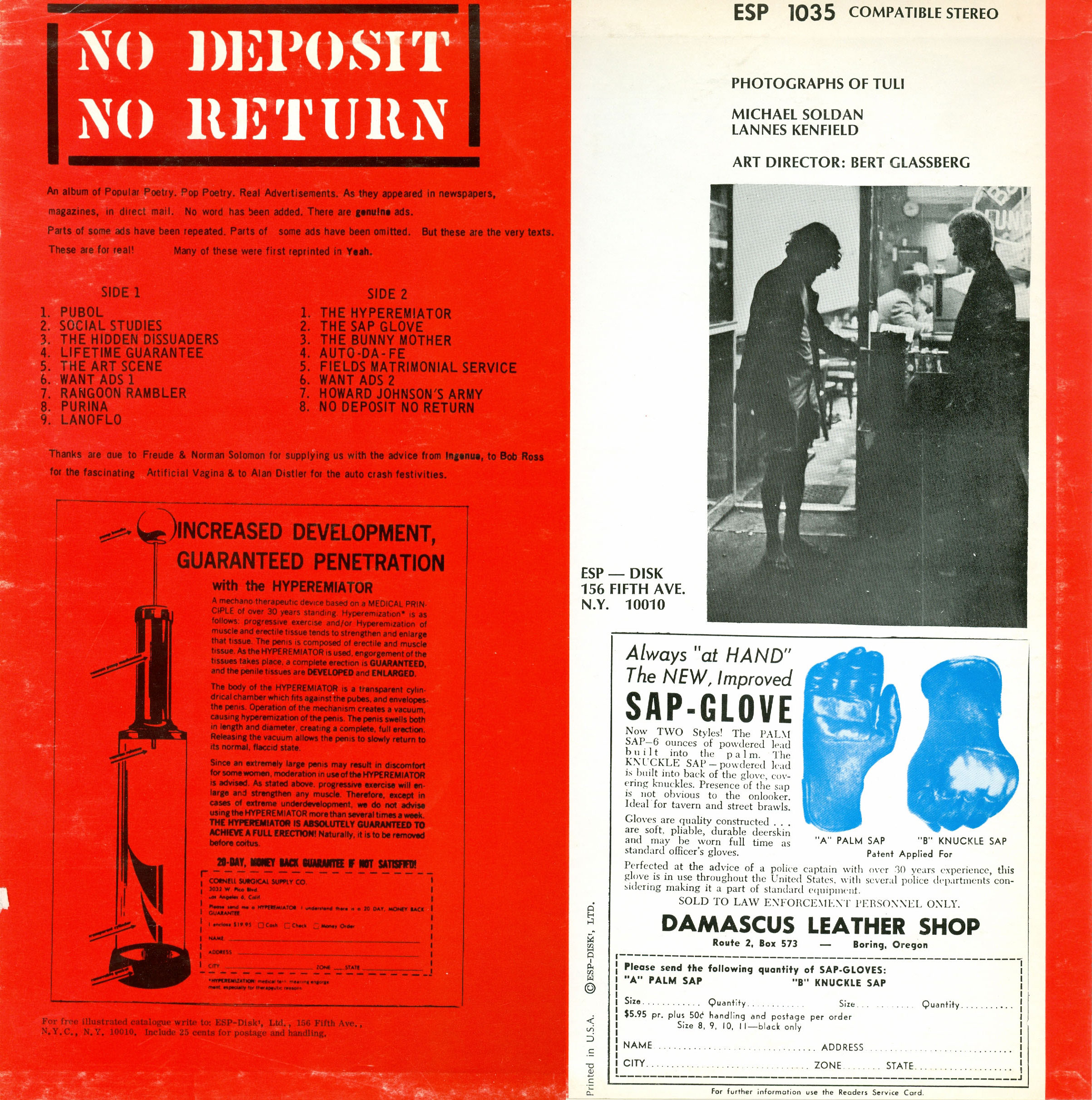
Subtitled "an evening of pop poetry" on the record sleeve, which devolves into "a nightmare of popular poetry" in Kupferberg's opening track, No Deposit, No Return is comprised exclusively of found texts performed with musical accompaniment "by Gary Elton on the various": "Real Advertisements," as the back cover explains, "As they appeared in newspapers, magazines, in direct mail. No word has been added. There are genuine ads. Parts of some ads have been repeated. Parts of some ads have been omitted. But these are the very texts. These are for real!" The end result is quite poetic, yet also drifts into the realm of pure comedy — albeit a comedy rooted in social critique — along with the golden age of radio, thanks to Elton's musical backings and sound effects. The invocation of sixties pop sensibilities and appropriative aesthetic also adds an element of the visual arts, creating a truly hybrid electric form that neatly parallels the contemporaneous sound poetry of John Giorno in building upon the foundational work of Charles Reznikoff.

"Everyone I suppose has always wanted to write his own commercial." Kupferberg notes in the introductory track, explaining the album's origins. "I have resisted this temptation strenuously, especially for this album, but when a certain well-known shampoo company came to the Fugs last summer, proposing that we do our own commercial for their new summer product, I countered with my own suggestion for a new product" — namely, Pubol, a pubic hair shampoo — and thus the project was born.

Aside from consumerism and America's culture of violence, No Deposit, No Return's major preoccupation is sex and sexuality, as Kupferberg performs advertisements for timid swingers, not-so-timid swingers, fetish photos, an erotic novel (Violations of the Child Marilyn Monroe, attributed to "Her Psychiatrist Friend") and a scary-looking penis pump,"the Hyperemiator," whose ad is one of two reproduced on the record's back cover. In a Foucauldian sense, particularly in the midst of a period of revolutionary sexual exploration, the poet reminds us that societal curiosity about sex and atypical sexual interest are nothing new. Regardless, there's a startling difference between the hidden, repressed and clinical nature of the poems on No Deposit, No Return, and the joyous and liberated carnality celebrated in Fugs' songs like "Supergirl" and "Coca Cola Douche." Thus, the album serves as both a strident cross-generational critique and a statement of shared beliefs, targeted at young audiences through one of their most popular media. In a fashion not dissimilar from what Kupferberg parodies in tracks like the heartbreaking "Social Studies," or the Fugs' "Kill for Peace," No Deposit, No Return is very effective propaganda.

We're grateful to Kupferberg's daughter, Samara, for her permission to share this groundbreaking record, which you can listen to in its entirety here. By clicking on the thumbnail images you can view large-format scans of the album covers and liner notes as well.

Wednesday, January 3, 2024

In Memoriam: Edward M. Burns (1944–2023)

With start off this new year with a remembrance of Edward M. Burns, a noted editor, teacher, and "avid supporter of the arts and literature in New York and Paris" (per his obituary), who passed away on November 3rd of last year.

Our own Charles Bernstein recently posted a note on Jacket2 commemorating Burns' achievements, which included a fruitful teaching career and a notable roster of books that he edited, including Picasso: The Complete Writings, Staying on Alone: Letters of Alice B. Toklas, The Letters of Gertrude Stein and Carl Van Vechten, The Letters of Gertrude Stein and Thornton Wilder, A Tour of the Darkling Plain: The Finnegans Wake Letters of Thornton Wilder and Adaline Glasheen, A Passion for Joyce: The Letters of Hugh Kenner and Adaline Glasheen, and his latest, Questioning Minds: The Letters of Guy Davenport and Hugh Kenner.

Bernstein recalls that, "I met Ed through his close friend, Ulla Dydo. He offered me fundamental help on the Gertrude Stein: War Years dossier, that successfully corrected disinformation about Stein amplified by The New York Review of Books, The New Yorker, and other outlets." Faithful readers will recall that we covered the Jacket2 feature "Gertrude Stein's War Years: Setting the Record Straight" here on PennSound Daily when it debuted in May 2012, detailing several contributions from Burns, including "Gertrude Stein: A Complex Itinerary, 1940-1944," which was originally a talk delivered at New York's Metropolitan Museum of Art in conjunction with the exhibit, "The Steins Collect;" Burns' and Dydo's 1987 letter to The Nation, written in response to Natalie Robin's article, "The Defiling of Writers;" and an appendix from their co-edited The Letters of Gertrude Stein and Thornton Wilder that details Stein's experience in Europe between September 1942 and September 1944. You can browse the feature here.

Bernstein ends his note with a plea to readers: "I would welome more information on Ed. He helped me a great deal in constructing the obit for Ulla Dydo, but I have no one to turn to for help with his own obituary." If you have any information to share, please write us at pennsound@writing.upenn.edu. We send our condolences to all those who will miss their "loving uncle, great-uncle, great- great-uncle, friend and colleague to many," Edward M. Burns.