Friday, July 30, 2021

Norman (N. H.) Pritchard: New Author Page

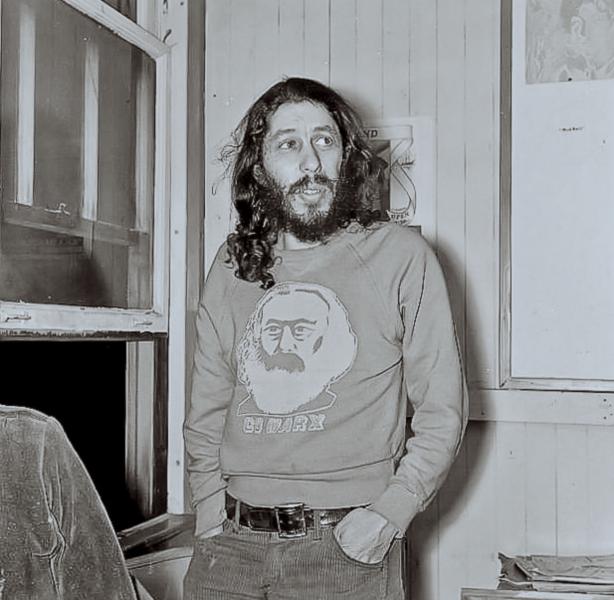
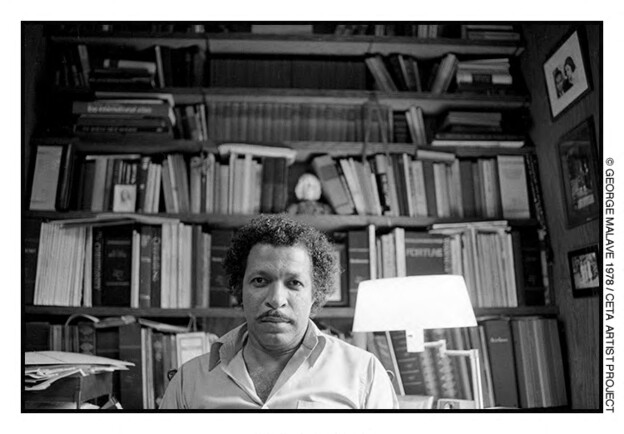
We're incredibly excited to unveil a new PennSound author page for poet Norman (N. H.) Pritchard, which brings together some terrific new recordings with one classic track that had been in our singles database for years.

The centerpiece of these new additions is a September 11, 1978 interview with Pritchard conducted by Judd Tully. Charles Bernstein announced this recording with a Jacket2 commentary post earlier this week, in which he notes, "The ninety-minute conversation is informative and engrossing, offering more information about Pritchard than has been previously available." He continues, "Pritchard was a poet in the CETA / Cultural Council Foundation Artists Project in New York and Tully, a CETA writer, interviewed him as part of the program. PennSound is happy to make this recording, made as part of the Artists Project, available, thanks to Tully and to Molly Garfinkel of CityLore."

Bernstein's post goes further still — noting that Pritchard "reads an early poem and two recent poems (at the beginning of part two)" he goes on to break out MP3 tracks of these particular poems, and then provides an extensive list of resources on the poet that one can find online and in print, including versions of his two published books via the Eclipse archive, as well as rare photos and a biographical sketch. He also notes our pre-existing recording of the poet reading "Gyre's Galaxy" in 1967, but since his initial announcement, we've managed to get our hands on another recording of Pritchard, which we're very happy to share. That ten-minute recording, made in 1966, includes eight poems from the manuscript Destinations, including "Alcoved Agonies," "As Once Was," "These Dead," "From a Harlem Mourning Vantage," "Hue: Blue," "As Altar Is," "Constriction, " and an abbreviated version of "Aswelay."

With any luck, we can hope to get our hands on more recordings in the near future to add to this already-wonderful resource. You can check out the aforementioned recordings by clicking here.

Wednesday, July 28, 2021

Happy Birthday, John Ashbery

Today would have been the 94th birthday of John Ashbery, who passed away in September 2017. 

Certainly, Ashbery's place in poetry's pantheon is well-established, and you get a sense of this by trying to take in the immense scale of PennSound's Ashbery author page, which is home to nearly a thousand individual MP3 files, along with countless videos and other resources that run the gamut from a 1951 student presentation of his play Everyman in Cambridge to home recordings made not long before his death. Ashbery held a special place for those of us at PennSound and the Kelly Writers House as well, as evidenced by the poet's rare honor of serving twice as a Kelly Writers House fellow (in 2002 and 2013). As for PennSound, I wrote at length on this day last year about the inarguable positive effects that Ashbery and David Kermani's enthusiasm for the PennSound project in its early years had upon our growth, which is well worth remembering.

It just so happens that on this Ashbery birthday, we have a new addition to his PennSound author page to share with our listeners: a November 27, 1972 television appearance as part of the Brockport Writers Forum. Dubbed "The Writing of John Ashbery," this program includes both readings (he starts with "Leaving the Atocha Station") and conversation with host A. Poulin Jr. and runs for more than an hour. Click here to start watching.

Monday, July 26, 2021

PoemTalk #162: Two by Tuli Kupferberg

Today we release episode #162 in the PoemTalk Podcast series, which focuses on two pieces by the legendary Tuli Kupferberg: "Morning, Morning," a classic track from his infamous poetry-rock band the Fugs, and the title track from his "nightmare of popular poetry," the 1966 LP, No Deposit, No Return. For this program, recorded at the Brooklyn home of Charles Bernstein and Susan Bee, host Al Filreis was is joined by a panel that included Bernstein, Lee Ann Brown, Rachel Levitsky, and Pierre Joris.

Along with contextual information on the two recordings, Filreis' PoemTalk blog post announcing the new episode include this brief summary of the group's sprawing discussion: "The conversation ranged widely, covering Tuli;s various debts to the poetic tradition; his under-recognized influence on avant-garde poetry today; his connections to European modernism and twentieth-century politics (depression, war, postwar); his role in 1960s culture. Yet the discussion kept returning to the central idea of 1966 (or '1968,' as the moment has come to be known). Charles argues at one point that 1968 in fact began, with Tuli's help, in 1960." To figure out what he means by that you're just going to have to listen.

You can tune in to this latest program and read more about the show here. PoemTalk is a joint production of PennSound and the Poetry Foundation, aided by the generous support of Nathan and Elizabeth Leight. You can browse the full PoemTalk archives, spanning more than a decade, by clicking here.

Saturday, July 24, 2021

Raúl Zurita on PennSound

We bring this week to a close by shining a spotlight on recordings from Chilean poet Raúl Zurita that you can find in our archives.

One clear highlight of our Zurita author page is his performance at the 2019 Rotterdam Poetry Festival. In this brief clip, he reads excerpts from his iconic Canto a Su Amor Desaparecido (Song for His Disappeared Love) in Spanish, while translations provided by Anna Deeny Morales are projected on the screen behind him (along with the original text). Originally published in 1985 in the midst of Pinochet's horrendous reign, Song for His Disappeared Love was published by the venerable Action Books in a 2010 bilingual edition with translation by Daniel Borzutzky. As Steven Karl notes in his review of that volume, Zurita envisioned the poem as a "[response] to the terror with a poetry that was just as powerful as the pain being delivered by the state." As an Academy of American Poets appraisal of the book acknowledges, the poet knew these atrocities all too well: "Zurita was arrested by the Chilean government and persecuted for being a possibly 'suspicious' poet, and his first volume of poems was tossed into the sea." Karl continues: 
Throughout the poem, Zurita examines and questions the binary opposition of life and death, often conflating the two into a sense of sameness. What does it mean to 'live' when your liberty has been confiscated, when you are silenced either by fear or force? How 'alive' are the oppressed when family has been kidnapped, beaten, abused, or murdered? How does one live a 'life' when the very idea of what constitutes 'life' is defined by a political ideology opposite our own?" 
Sadly, these questions every bit as pressing now as they were decades ago. 

Central to this archive are a half-dozen episodes of Leonard Schwartz's indispensable radio show, Cross Cultural Poetics. Four programs feature Zúrita reading his own work: in episode #219 he reads from Purgatory and Anteparadise (both translated by Anna Deeny and published by University of California Press), in episode #234 he reads from Inre (Marick Press), in episode #245 he reads from the aforementioned Song For His Disappeared Love, and finally in episode #271, he reads from Dreams for Kurosawa (also translated by Deeny and published by Arrow as Aarow).  The remaining two episodes feature other poets discussing Zúrita and his work — Isabel Cadenas Canon discusses translating his work into Basque in program #273, while episode #287 is wholly dedicated to Zúrita and features appraisals by poet and translator Forrest Gander and journalist Magdelena Edwards.

Wrapping things up, we have a quartet of VideoPoesia films made by Ernesto Livon Grosman as part of his 2009 "Sur & North" series: "Canto," "Desierto de Atacama," "Pastoral de Chile," and "Me Llamo ... Raquel," and "Inscripcion 15" — recorded in 2002 and presented as part of Rattapallax — rounds out the collection. Taken together, these recordings represent a generous introduction to the work of an important and uncompromising poet. Click here to start exploring.

Wednesday, July 21, 2021

Congratulations to Arts Molson Prize Winner M. NourbeSe Philip

We send our congratulations to the one and only M. NourbeSe Philip, who was recently announced as one of two winners of the 2021 Arts Molson Prize

The $50,000 lifetime achievement award, granted annually by the Canada Council for the Arts and subsidized by the brewing magnate, recognizes the author's "invaluable contributions to literature." In lieu of formal commendations, the Canada Council has opted for brief interviews with the recipients. Philip offers this compelling advice to emerging writers: "Learn how to trust their gut instincts about their own work — sometimes the critics are wrong; be willing to risk — failure or success; and have someone in your life who loves what you do and will critique your work honestly." You can read more about the Arts Molson Prize and Philip here.

As is frequently the case, good news like this gives us the perfect opportunity to revisit that author's work, or for the uninitiated to get to know her a little better. Towards that end we direct you towards PennSound's M. NourbeSe Philip author page, where you'll find a dozen recordings from 1995 to the present, including two visits to our own Kelly Writers House. You'll hear Philip read from and discuss her work at venues throughout the US and Canada along with radio interviews, conference presentations, and a PoemTalk podcast addressing her poetry. Click here to start listening.


Tuesday, July 20, 2021

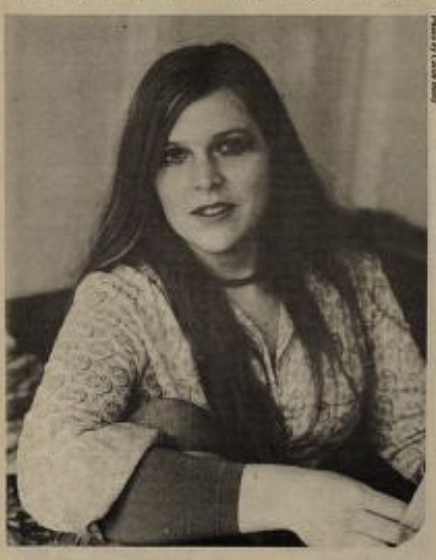
In Memoriam: George-Thérèse Dickenson (1951–2021)

We start this week on a sad note with news that poet, editor, and activist George-Thérèse Dickenson passed away on June 15th in New York City from a brain hemorrhage. She was sixty-nine years old. 

A member of New York's Language Poetry circles, Dickenson was co-editor (with Will Bennett) of Assassin and the author of two books of poetry: Striations (Good Gay Poets, 1976) and Transducing (Segue Foundation, 1986). Her brother John contacted us so that we could share the tragic news with our listeners. He also passed along this brief biographical note:

George-Thérèse Dickenson was born Oct. 23, 1951 in Napa, CA, daugher of Howard George Dickinson, a lawyer and Joanne DePuy (maiden name Cardiff), a wine and travel entrepreneur from Altadena, CA.  Dickinson was a graduate of Wellesely College. She moved to Boston in the late 1960s, where she became involved with the anarchist circle around Murray Bookshin. She also became involved with a group of poets in Boston. She then moved to lower Manhattan.  In the 1980s, in New York, Dickenson was closely involved with Larry Estridge and Peter Seaton. For the last decades she was living in Stockton, NJ. She is survived by her mother and her brothers John and Chuck and her long-time partner Bobby Astarita.

Our Charles Bernstein has posted a memorial note on his Jacket2 commentary page that's currently a work in progress. He welcomes friends and fans to share any further information or photos they might have. As he notes, we are proud to host a total of four Segue Series readings by Dickensen — the first three taking place at the Ear Inn in 1984, 1986, and 1988, with a fourth recorded at Zinc Bar in 2015. Dickensen can also be heard as a respondent during numerous events in the 1984 New York Talk series. We've created a new author page for Dickenson to house all of these recordings in one place and send our sincere condolences to Dickenson's family, friends, and colleagues.


Friday, July 16, 2021

Newly Segmented: Marmer Interviews Rothenberg and Antin, 2015

We close this week out with an exciting new addition to the site: segmented MP3 files for Jake Marmer's 2015 interview with two poetic titans: Jerome Rothenberg and David Antin. Recorded in San Diego on December 23, 2015, this sprawling interview runs more than ninety-minutes and has been broken up into fifteen discrete tracks by topic.
In a 2016 Jacket2 commentary post, Al Filreis reprinted Marmer's introduction to the interview, which there was dubbed "Imagining a Poetry That We Might Find: Conversation with Jerome Rothenberg and David Antin." A few paragraphs in, he offers a simple summation of his intentions: "Rothenberg and Antin have been friends for nearly sixty-five years, and for the past decades have been living within a short drive from one another. It is clear that this friendship has been formative for both poets. I wanted to experience what the discourse between the two of them might be like. I also wanted to understand the source of mutual concern, given how vastly different – one might be compelled to say, incompatible – their poetry is."

Appropriately enough, the discussion starts with the two poets talking about how they first met. This segues into more foundational information on each, including how each got started in writing and when they first encountered avant-garde poetry. Rothenberg and Antin also discuss translation and their initial inspirations before moving into questions of recognizing poetry and poetry in performance. They then talk about Rothenberg's "COKBOY," which spurs them to consider both the past in poetry as well as the poetic imagination. Antin then addresses the concept of "dissemblage," central to his own poetics, which was inspired in part by Rothenberg's work as both a poet and anthologist, and this leads into a discussion of how to remove the self from poetry and shadow cast by Cage upon their practice. Questions of retrospection lead into the last phase of the interview, with a brief stop for critiques of Harold Bloom before closing with a very apropos topic: poetry and friendship.

If you're familiar with both of these iconic and iconoclastic poets, then you know that you don't want to miss this illuminating conversation between them. Click here to start listening.

Thursday, July 15, 2021

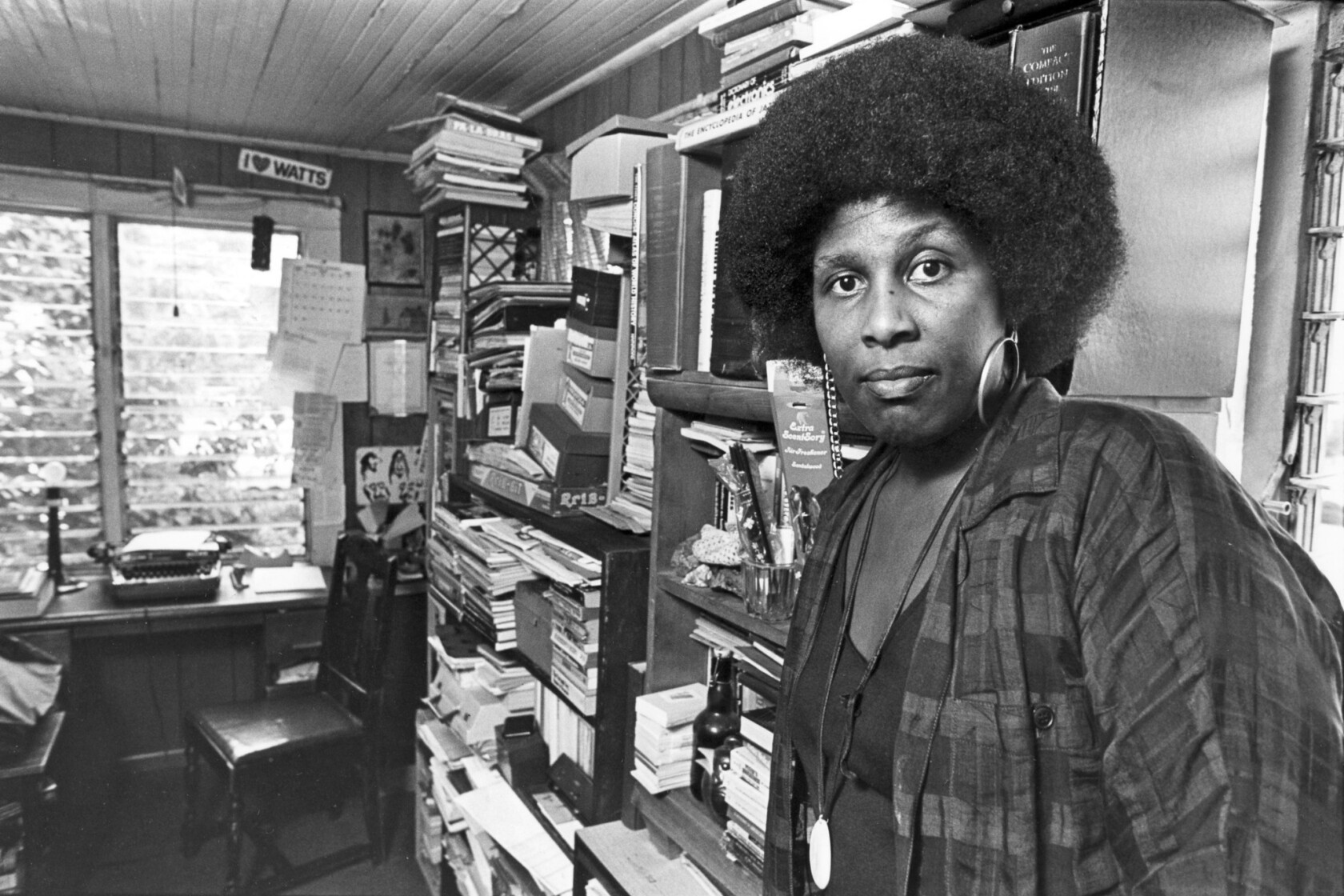
Wanda Coleman at PennSound

When Wanda Coleman passed away at the age of 67 in 2013, the headline of her Los Angeles Times obituary remembered her as that city's "unofficial poet laureate." In that same tribute, Richard Modiano of Beyond Baroque recalled that Coleman "wrote not just about the black experience in Los Angeles but the whole configuration of Los Angeles in terms of its politics, its social life," and poet and actress Amber Tamblyn, in a memorial for the Poetry Foundation, echoed those sentiments: 
Wanda was not just a Los Angeles treasure, she was a trove of it. She was the original performance poet, someone who could blow the hair off of any audience’s scalp, who read complex poems of race, suffering, sexual desire, music and love with the same power with which she wrote them. She was the person I refereed to when some shithead from New York wanted to tell me that no one cool or kind or genuine ever came out of Los Angeles. "Maybe you should stop trying to meet your wife at the Chateau, then, and go see Wanda Coleman read instead."
Modiano concurs. In his estimation, she was "a world-class poet. The range of her poetry and the voice she writes in is accessible to all sorts of people."

For those reasons and many more, we're very glad that Coleman is a part of our archives. On her PennSound author page, you'll find a modest but vital collection of recordings that make clear the breadth of her immense talents.  The most recent material you'll find there is a fifteen-minute set from a 2008 benefit for poet Will Alexander in Los Angeles, and we also have a few poetic selections from albums released by Coleman — Our Souls Have Grown Deep Like the Rivers (Rhino, 2000) and Jazzspeak: A World Collection (New Alliance Records, 1991) — along with the 1988 New Alliance LP Black Angeles in its entirety. Finally, thanks to David Buuck, we have recordings from the conference Expanding the Repertoire: Continuity and Change in African-American Writing, held at Small Press Traffic in April 2000.

Speaking in 2001, Coleman acknowledged that "Others often use the word 'uncompromising' to describe my work," before noting, "I find that quite pleasing." You can see for yourself by clicking here.

Tuesday, July 13, 2021

EPC@20 Celebrations at SUNY-Buffalo, 2014

Today we're revisiting EPC@20, the two-day celebration of two decades of the Electronic Poetry Center, which was held at SUNY-Buffalo in the fall of 2014 to celebrate the archive's twentieth anniversary. EPC@20 featured readings, talks, and performances by poets who've had a close affiliation with the site over its lifespan. 

The proceedings on Thursday, September 11th  began with an afternoon session that included talks by Steve McCaffery, Danny Snelson, Laura Shackelford, cris cheek, Elizabeth Willis, and Loss Pequeño Glazier. Evening performances followed in two sets: the first featuring Tammy McGovern, Snelson, and Wooden Cities with Ethan Hayden; the second with Joan Retallack, cheek, and Tony Conrad.

Friday, September 12th began with afternoon readings and talks by Myung Mi Kim, Retallack, Charles Bernstein, and a panel talk featuring Bernstein, Glazier, Jack Krick, Shackelford, and Snelson. The celebration concluded with evening performances from Glazier, Willis, and Bernstein.

Video and audio recordings of the proceedings are available here. The program for the celebration can be found here.

Friday, July 9, 2021

Julie Patton: Two Short Films by Ted Roeder

We're closing out this week by revisiting a wonderful pair of videos of Julie Patton performing her poetry, which were made by Ted Roeder circa 2013. Filmed in an intimate domestic setting, traffic noises and birdsong drifting through open windows, Patton sits comfortably in a chair before the camera, reading from typescript pages, a pen poised in one hand. She performs in a fluid sprechtstimme, easing in and out of accents and personas, casually adding various musical accompaniments from time to time: she forces the knob on a toddler's toy music box, galloping through the lullabye at a hectic gait, then backs off, plinking it forward in little tonal constellations; she reaches down, offscreen, to plunk a guitar note or stroke the strings behind the nut, producing glassy little accents; her foot settles into a restless and insistent rhythm that resonates through the room. Papers flutter as pages turn, her hands trace and stretch notes through the air. She stares you down, then returns to the poem.

These remarkable clips demand and reward your attention, whether you're watching or simply listening in, the various sonic elements creating one sort of experience with their visual counterparts and a different one without. You'll find these two films here on PennSound's Julie Patton author page, which is also home to a wide variety of audio and video recordings of readings, performances, panel discussions, interviews, and more, from 1997 to the present.


Tuesday, July 6, 2021

Remembering Kenneth Koch

Kenneth Koch, New York School titan and an inventive proselytizer for poetry, passed away on July 6, 2002. Nineteen years later, we're remembering him by taking a look at the recordings housed on PennSound's Kenneth Koch author page.

While we only have one full-length reading from Koch in our archives, it's a great one from the early years of our own Kelly Writers House. Recorded on April 15, 1998, Koch's set is largely focused on his iconic One-Thousand Avant-Garde Plays, showcasing a number of songs taken from individual plays, followed by a selection of plays themselves, before closing with a strong late poem, "One Train." Additionally, we have a few discrete tracks, including "The Boiling Water" and "The Circus," as well as a five minute set at the St. Mark's Poetry Project from 1996.

Those audio recordings are joined by some pretty interesting videos. First, we have a pair of collaborations with filmmaker Rudy Burckhardt, featuring his New York School compatriot Kenneth Koch that you can see on our PennSound Cinema  page for filmmaker and photographer. The earlier of the two, The Apple (1967), features a lyric and spoken interlude written by Koch, which was set to music by Tony Ackerman and Brad Burg, and sung by Kim Brody. In stop-motion and live action, it traces the sprawling adventures of its titular fruit. Running just one minute and fifty-four seconds, the film is nevertheless the subject of a marvelous essay by Daniel Kane — "Whimsy, the Avant-Garde and Rudy Burckhardt's and Kenneth Koch's The Apple" — in which he praises it for "the ways in which ideas of temporality, spontaneity, childishness, and parody are expressed within this tiny little film work," thus "revealing the latent and hilarious power of the whimsical affect."

The latter film, On Aesthetics (1999) has a sense of finality about it, coming during Burckhardt's last year and not long before Koch developed leukemia that would ultimately take his life. Running nine minutes and taking its name from the last poem in Koch's 1994 collection One TrainOn Aesthetics — charmingly presented by "KoBu Productions" — features the poet's voice-over reciting the various micropoems contained under that title, from "Aesthetics of the Man in the Moon" and "Aesthetics of Creating Light" to "Aesthetics of Being with Child" and "Aesthetics of Echo," while Burckhardt's camera eye finds appropriate accompanying images, whether literary or abstract.

Finally, there's a link to Niels Plenge, Lars Movin, and Thomas Thurah's 2001 documentary Something Wonderful May Happen. Largely focused on Koch and John Ashbery, the two surviving members of the core quartet, the film features insightful commentary from our own Charles Bernstein and David Lehman.

Friday, July 2, 2021

Andrews, Mac Low, Pettet read at PROSPECT Conference, 1996

Here are a trio of short recordings that we recently added to the archive from "PROSPECT: The Second Sensational Festival of Russian and American Poetry and Poetics," which was co-curated by Ed Foster and Vadim Mesyats at Hoboken's famed Stevens Institute of Technology in May 1996. In the POETICS List archives, I managed to turn up Foster's original announcement of the event and invitation for participants, which offered this initial list of participants:

Arkadii Dragomoshchenko, Vadim Mesyats, Maya Nikulina, Lev Rubenshtein, Elena Shvarts, Ivan Zhdanov — Bruce Andrews, Eileen Myles, Ron Padgett, Leslie Scalapino, Aaron Shurin, John Yau — plus a most stellar assembly of other great poets, critics, academics, surprise guests, and more totally terrific people.

While we don't have documentation of the vast majority of the conference, we're grateful to have these three short (10–15 minute) recordings of the contributions of Bruce Andrews, Jackson Mac Low, and Simon Pettet. Click on each poet's name to be taken directly to the recording on their individual PennSound author page.


Thursday, July 1, 2021

Celebrate Canada Day with North of Invention

We can't think of a better way to mark Canada  Day than revisiting the marvelous North of Invention: A Canadian Poetry Festival, which was co-organized by Sarah Dowling and Charles Bernstein, at the Kelly Writers House. Extensive audio and video documentation from the multi-day event is available on PennSound's homepage for the event. Here's a description of the festival's aims, taken from its event page on the KWH website:
North of Invention presents 10 Canadian poets working at the cutting edge of contemporary poetic practice, bringing them first to the Kelly Writers House, then to Poets House in New York City for two days of readings, presentations and discussion in each location. Celebrating the breadth and complexity of poetic experimentation in Canada, North of Invention features emerging and established poets working across multiple traditions, and represents nearly fifty years of experimental writing. North of Invention aims to initiate a new dialogue in North American poetics, addressing the hotly debated areas of "innovation" and "conceptual writing," the history of sound poetry and contemporary performance, multilingualism and translation, and connections to activism.
Poets involved in the festival include Lisa Robertson, M. NourbeSe Philip, Stephen Collis, Christian Bök, Nicole Brossard, Adeena Karasick, a.rawlings, Jeff Derksen Fred Wah and Jordan Scott, and the full schedule includes both readings and presentations from all participants. You can start exploring this wonderful resource by clicking here. A companion feature of the same name, edited by Dowling, was published by Jacket2 in 2013, and is likewise well worth your time.