Monday, September 28, 2020
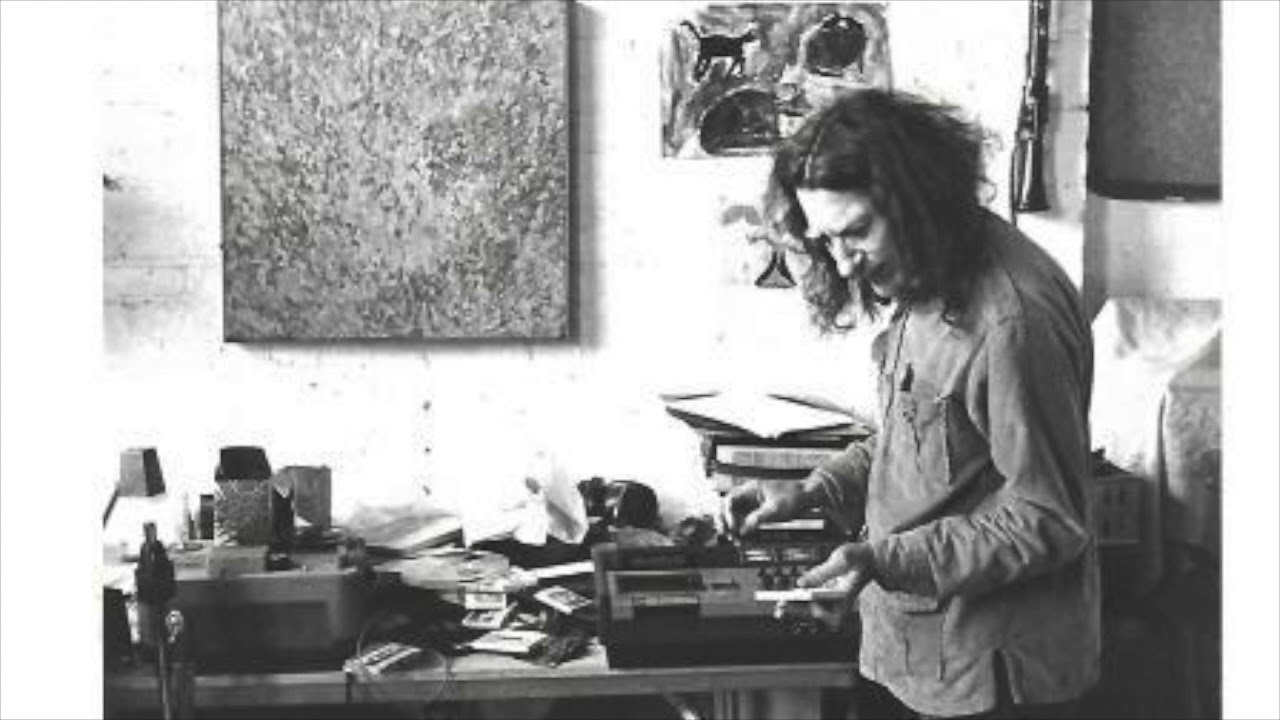
Remembering Michael Gizzi, Ten Years Later
Friday, September 25, 2020
PoemTalk #152: on Wallace Stevens' "The Poem That Took the Place of a Mountain"
Thursday, September 24, 2020
Kevin Killian: Four Newly Segmented Readings
Monday, September 21, 2020
Bob Perelman Reads Live, Sept. 23rd at 6PM
Friday, September 18, 2020
Congratulations to National Book Award Nominees Berssenbrugge, Choi
The New Yorker has been announcing the longlists for this year's National Book Awards this week, with the ten books under consideration for the poetry category released yesterday. Their short article starts by highlighting Honorée Fanonne Jeffers' The Age of Phillis, inspired by pioneering Black poet Phillis Wheatley who died free but lived most of her short life as a slave. As the author notes, Jeffers' book is just one of many among this year's longlist that "observes the violence of empire and excavates histories that have been forgotten or erased," including Anthony Cody's Borderland Apocrypha, Natalie Diaz's Postcolonial Love Poem, and Don Mee Choi's DMZ Colony.
We were very excited to see Mei-mei Berssenbrugge, among the nominees for her most recent collection A Treatise on Stars, which the panelists hailed as "a lyrical work that reveals constellations of our connectedness to fuel introspection" and "implores that we connect with the larger natural and cosmic world." You'll recall that Berssenbrugge was one of our Kelly Writers House Fellows in 2019, and during her visit she read a number of poems from A Treatise on Stars, including "Star Beings," "Lux," and "Chaco and Olivia." You'll find audio and video from that visit here. Our PennSound author page for Berssenbrugge houses more than two dozen individual recordings going back as far as 1986, including interviews, radio programs, and many, many readings.
While we don't have a PennSound author page for Don Mee Choi, you can also hear her reading her work as part of Poetry Politic and as part of the 2012 MLA Offsite Reading.
We offer our congratulations to Berssenbrugge, Choi, and all of this year's worthy nominees. This year's panel, which will announce its final decision on November 18th, is chaired by Layli Long Soldier, and also includes Rigoberto González, John Hennessy, Diana Khoi Nguyen, and Elizabeth Willis.
Wednesday, September 16, 2020
Announcing the 2021 Kelly Writers House Fellows
Funded by a grant from Paul Kelly, the Kelly Writers House Fellows program enables us to realize two unusual goals. We want to make it possible for the youngest writers and writer-critics to have sustained contact with authors of great accomplishment in an informal atmosphere. We also want to resist the time-honored distinction — more honored in practice than in theory — between working with eminent writers on the one hand and studying literature on the other.
Monday, September 14, 2020
Clark Coolidge reads 'Polaroid,' 1976
We first added Clark Coolidge's Polaroid to the site in December 2005, but it's only recently that listeners have been able to see it in its proper context within the full S Press catalogue, as well as read the liner notes. Released in 1979 as S Press Tonbandverlag #57, the cassette contains Polaroid (Adventures in Poetry / Big Sky, 1975) read in its entirety, as recorded by S Press head Michael Köhler on September 24th 1976 at University of Connecticut at Storrs. Excerpts from Polaroid are available on Coolidge's EPC page, while the entire book can be read or downloaded in PDF format from Eclipse.
Interestingly, given both Coolidge's own musical history as drummer for Tina and David Meltzer's San Francisco-based psych-folk band The Serpent Power and the liner notes' acknowledgment that "In addition to his books [Coolidge] has composed a number of word tapes, which have remained unpublished so far," this is Coolidge's first solo album. It would take another thirty-four years to see the release of Comes Through in the Call Hold, the first of two albums Coolidge recorded with Anne Waldman and Thurston Moore; Coolidge and Moore's Among The Poetry Stricken was released earlier this year.
Saturday, September 12, 2020
Happy 98th Birthday to Jackson Mac Low!
This September 12th would have been the ninety-eighth birthday of the one and only Jackson Mac Low, and that's as good a reason as any to revisit some of the recordings housed on his PennSound author page.
Wednesday, September 9, 2020
John Richetti Reads Two By Whitman
Friday, September 4, 2020
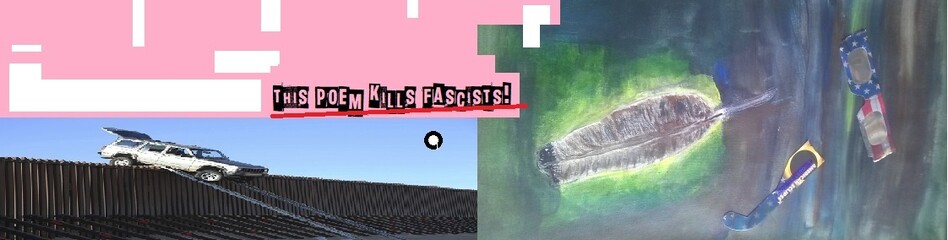
New at Jacket2: "This Poem Kills Facists!" — Poetry and the 2020 Election
We're really excited to share news of a new Jacket2 commentary series that launched this week, "'This Poem Kills Facists!' — Poetry and the 2020 Election," which is co-curated by Michael Ruby and Sam Truitt (who also co-edited the 2016 feature "13 Poems by Bernadette Mayer," published in coordination with Eating the Colors of a Lineup of Words: The Early Books of Bernadette Mayer). In their introductory post, they set out their plans for the next two months:
Our thought was to showcase responses to this poetry-politics crisscross from Hudson Valley poets. Elections are decided by bodies of people on land with arbitrary boundaries. The Hudson Valley is as good a set as most — at once full of wild practitioners and via the Hudson River connected to New York City, with many of us circulating back and forth. That means it breathes and integrates myriad influences, interests, and ways of whipping up words, among other poetic materials.
We wanted the poets who responded to this call to be free in what they do — as immortal, uncanny, and useful as they saw fit — with the proviso that they maintain foremost in mind that they are writing as commentators on poetry in relation to the 2020 elections or vice versa.
After mentioning the "suggestions and instigations" they offered their respondents (which are appended at the end of the post) they note that "That pretty much takes us to now: this first post introducing what's to come, which we haven't yet seen from most of the other contributors. This puts us all on the same plane, analogous to where the world is, wondering what this coming vote may bring."
Ruby and Truitt then offer individual notes to inaugurate the series. In Truitt's, he ruminates on the commentary series' title — "The phrase of course derives from the Oklahoma-born poet folk-rocker Woody Guthrie (1912–1967), who in 1943, in wartime, wrote on his guitar 'THIS MACHINE KILLS FASCISTS.' He did that shortly after writing 'Talking Hitler's Head Off Blues.' — and connects the iconic folk singer to the current occupant of 1600 Pennsylvania Ave. via "white supremacist Fred Trump," who owned the Brooklyn apartment complex where Guthrie lived in the early 1950s. Ruby starts in " haze of fear and pessimism," about the election that leads him to revisit "some political poems that had always resonated for me, some about elections, some not," by the likes of Whitman, Williams, Lowell, Olson, Mayer, Ginsberg, and Baraka, before concluding, "I came to the possibly defeatist conclusion that American political poetry is a series of responses to defeats. That's what I'm going to write about in our next post."
While the next few months will be hectic, we're glad to have these two poets spearheading what promises to be a fascinating commentary series. Be sure to check in frequently to see when new posts have gone up.