Monday, March 28, 2022

PennSound podcast #73: Emily Abendroth and Jeff T. Johnson

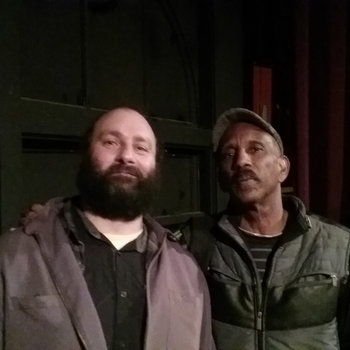
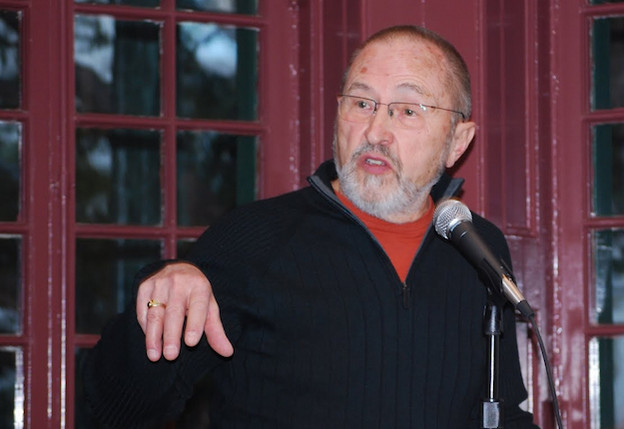
Today we released the latest episode in the PennSound Podcast Series, program #73 in total, in which features Emily Abendroth and Jeff T. Johnson in conversation regarding Johnson’s Trouble Songs: A Musicological Poetics (punctum books, 2018) and Abendroth’s Sousveillance Pageant (Radiator Press, 2021).

As Knar Gavin notes in their write-up of the new episode, their dialogue is an "exchange [of] perspectives on how modular, nonlinear writing can open into enactive relationships that press readers and listeners alike beyond individual experience toward 'critical empathy' and its relational tactics and strategies for living in common amidst social struggles that require collective reflection and navigation." Gavin continues:
"Where are our comrades?" Abendroth asks, inviting reflection on how textual gestures might ignite collective forms of reckoning. Likewise, Johnson compels reflection on how "trouble songs" — and perhaps trouble itself — might be written through listening and listened to through writing. These are just a few provocations that emerge in this afternoon conversation, recorded in the Wexler Studio at the Kelly Writers House during the winter of 2021. 

You can listen in to this new episode by clicking here. You can browse the complete archives of the PennSound Podcast Series here.

Saturday, March 26, 2022

Happy Birthday, Gregory Corso

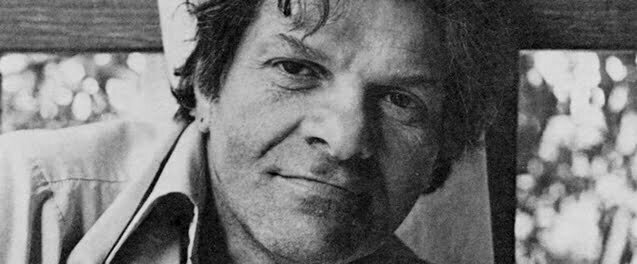
This March 26th would have been the ninety-second birthday of American poetry's Dead End Kid made good, Gregory Corso.

We launched our Gregory Corso author page in June 2017, with assistance from Raymond Foye. There, you'll find five full readings plus one individual poem recorded between the 1970s and 1990s. The earliest recording is a April 1971 reading at Duke University, which is followed by an August 1985 appearance at the San Francisco Art Institute as part of their "Art of Poetry" series. Jumping forward to the 90s, there's a March 1991 Brooklyn College reading notable for the appearance of Corso's iconic late poem "The Whole Mess ... Almost" and for the half-hour candid conversation recorded in the car on the way home. From December 1992, there's a stellar reading in New York City also featuring Herbert Huncke, John Wieners, and Allen Ginsberg, and finally, from March 1993, we have a half-hour reading from Rutgers University including "I Met This Guy Who Died," "Earliest Memory," "Youthful Religious Experiences," and "How Not to Die," among other poems. Our most recent addition is a 1969 recording session at Fantasy Records' San Francisco studios on Natoma Street showcasing "In the Fleeting Hand of Time," "Vision of Rotterdam," "The Last Warmth of Arnold," "Mexican Impressions," "Botticelli Spring," "Sun — A Spontaneous Poem," "Ode to Coit Tower," and "I Am 25," among others.

Corso's birthday is a wonderful time to remember his unique voice and perspective. Ginsberg famously offered high praise for his dear friend, calling him ""a poet's Poet, his verse pure velvet, close to John Keats for our time, exquisitely delicate in manners of the Muse," who "has been and always will be a popular poet, awakener of youth, puzzlement & pleasure for sophisticated elder bibliophiles." He continues, judging Corso as "'Immortal' as immortal is, Captain Poetry exampling revolution of Spirit, his 'poetry the opposite of hypocrisy,' a loner, laughably unlaurelled by native prizes, divine Poet Maudit, rascal poet Villonesque and Rimbaudian whose wild fame's extended for decades around the world from France to China, World poet." Click here to start listening.

Wednesday, March 23, 2022

Join Us for KWH Fellow Caroline Bergvall Next Week

Poet, performance artist, sound artist Caroline Bergvall is traveling from London to be with us on March 28th and 29th. Please plan to join us!

Caroline is our second Kelly Writers House Fellow of winter/spring 2022. She will join us at 3805 Locust Walk here in Philadelphia to give a reading on Monday, March 28 at 6:30PM and the next morning will be back for an interview/conversation moderated by Al Filreis — Tuesday, March 29 at 10:30AM.

Both events will be livestreamed and recorded, of course, so you have many ways to join us for these extraordinary days! But we urge you to come to the Writers House to meet Caroline and be involved as an audience member at the House! Note that in-person attendance for both events will be strictly limited, and you must RSVP to attend either or both events at the Writers House. 

To RSVP, please write to Lily Applebaum, Fellows Program Coordinator, at whfellow@writing.upenn.edu. If you will be attending online, you can get a program reminder with a direct streaming link as well! Please just indicate when writing to Lily whether you're attending in person or online only.

Those attending in person will receive information about our COVID-19 protocols.

And please also write to Lily at whfellow@writing.upenn.edu with questions to ask for more information. 

Monday, March 21, 2022

Tango with Cows: Book Art of the Russian Avant Garde, 1910-1917

Today we're remembering. "Tango with Cows: Book Art of the Russian Avant Garde, 1910-1917," a groundbreaking exhibition that ran through the spring of 2009 at Los Angeles' Getty Center.

PennSound Senior Editor Danny Snelson was responsible for seeing this remarkable multimedia resource through to fruition, and so we thought it fitting to have him provide our listeners with an introduction. Here's what he had to say:
PennSound has been working in collaboration with the Getty Research Institute to present this remarkable collection of historical and contemporary transrational poetry, centered on an exhibition of Russian Futurist book art held at the Getty earlier this year. The exhibition's title — "Tango with Cows" — taken from a poem by Vasily Kamensky, points to the sense of hilarity and irreverence you'll hear in these startlingly original 'beyonsense' poems. Our page of recordings compliments the extensive media collected online at the Getty's website. There, you can find programs, essays, video footage, full scans of the Futurist books, and even a fully interactive slideshow of key books from the exhibition! 
Our archive of sound recordings comes in two parts: first, Tango with Cows features Oleg Minin's bilingual readings of essential poems found in book art projects from poets such as Alexei Kruchenykh, Velimir Khlebnikov, and Pavel Filonov. By reading from the Russian before the accompanying English translation, Minin offers listeners the pleasure of sound before recognition — an ideal situation for the revolutionary poetics on display here.

However, the real highlight of this great resource sounds from the second half: we're pleased to present high quality recordings of Explodity: An Evening of Transrational Sound Poetry held on February 4th, 2009. This blockbuster reading casts the zaum' poetries of Khlebnikov and Kruchenykh in the parallel light of historic and contemporary sound poetry, as presented by Christian Bok and Steve McCaffery. After virtuoso performances of English translations of historical Russian poems, Bok and McCaffery present personal selections from the history of sound poetry alongside their own original compositions. On the short list are works by Aristophanes, Raoul Hausmann, F.T. Marinetti, Hugo Ball, Kurt Schwitters, and R. Murray Schafer, just to mention a few.

You can hear more work in this vein on PennSound pages for Christian Bok, Steve McCaffery, Jaap Blonk, Tomomi Adachi, and The Four Horsemen. Additionally, we'd like to suggest our historic pages for F.T. Marinetti and Vladimir Mayakovsky. Our partner UbuWeb offers a huge index of this exciting brach of poetry; we suggest in particular that you visit a companion set of Russian Futurist recordings from the GLM Collection.

Special thanks to Nancy Perloff and everyone at the Getty Research Institute for making this resource possible. We hope these recordings lend the same vision of language that mystified Benedikt Livshits in 1911 (from Nancy Perloff, Curator's Essay): "I saw language come alive with my very own eyes. The breath of the primordial word wafted into my face."
You can start browsing our PennSound page for this event by clicking here.


Saturday, March 19, 2022

Aural Monsoon: 'Live in the Haight' (2017)

Here's an opportunity to get to know another side of poet Will Alexander through his jazz duo, Aural Monsoon, where he plays piano alongside drummer Mark Pino. Today, we're proud to highlight Live at the Haight, an album recorded on August 13, 2017. Click here to listen to all nine tracks, including "Bamboo and Fire," "Calm and Furious Waters," "Verdigris Panorama," "Lyrical Jasmine Towers," "Aural Diamonds in Motion," and "Double Recognition."

Here's what Pino had to say about his their collaboration: "Los Angeles poet and musician Will Alexander's work been shaking my perceptions for several years now. I was happy to play with him on sets with Cloud Shepherd, and continue to love to read his writing. Hence, when Will contacted me to ask about my being available for a house show in San Francisco, with me on drums and he on piano, I jumped at the opportunity." Later, he says of the same gig, "Towards the end of the second set, I simply stopped playing my drums and listened to Will, more as a fan than a duo partner. I guess I kind of got lost in that for a few minutes. Will's Surreal Trance moves will have that effect!"

For those craving more of Alexander's work, click here to visit his PennSound author page, which is home to a variety of talks, readings, and interviews going back to 1994.

Wednesday, March 16, 2022

Barbara Henning: Launch Reading for 'Ferne, a Detroit Story'

Today we're highlighting a just-added recording of Barbara Henning's launch event for her latest, Ferne, a Detroit Story (Three Fold Press, 2022), which was just a few weeks back on March 6th. The celebration, which ran more than an hour, included introductions from Chris Tysh and sets from Henning and Lynn Crawford.

John Hartigan, Jr. has hailed Ferne, a Detroit Story as "a time capsule of mid-century Detroit, a city poised to explode." He continues, "Its sounds, scents, and sights spill forth, as vividly experienced by a vibrant young woman whose life would end too soon. Ferne joyously curates her own life; that’s the heart of this book. But we also encounter her through the fervent eyes of her daughter, poet and novelist Barbara Henning, who lyrically fills in and fleshes out the social contours and details of the ghostly presence that haunts these pages." He concludes, "Through her daughter's skilled hands, Ferne comes to life again on these pages, bringing with her glimpses of the city she loved so deeply."

Likewise, Anne Waldman calls Henning "an indomitable writer, thinker, traveler and a stalwart weaver of the threads through the heart centers and margins of her own existence." To Waldman, Ferne is "a daughter's complicated love story of a mother and a city and a time before we knew more than we thought to know," "[a] poignant tribute of what haunts the premises in all the fractures and layers in the souls of America," and "[a] brilliant—and in a strange way—a most timely intervention."

You can sample Ferne yourself by tuning in to this event on our Barbara Henning author page.

Monday, March 14, 2022

PoemTalk #170: on Diane di Prima's 'Revolutionary Letters'

Today we launched the latest episode in the PoemTalk Podcast series, its 170th in total, which covers three poems from Diane di Prima's iconic Revolutionary Letters: #16 ("We are eating up the planet"), #19 ("If what you want is jobs:), and #27 ("How much can we afford to lose before we win"). Joining host Al Filreis for this show was the formidable trio of (from left to right) Kristen Gallagher, Lee Ann Brown, and Laynie Browne.

In his Jacket2 blog post announcing the new episode, Filreis speaks of the unique, evolving nature of di Prima's project as well as the relation between its discrete parts: "These letters were always part of an ongoing activity, carried on long after the leaflet-disseminating phase of the late 1960s. The project's goals and modes of address shifted over time. Any single letter-poem, read separately from the others, might seem definitive  — tonally evincing ideological as well as poetic choices having been made with apparent finality. Our decision to read and listen to three poems, forming a small sampler of the Letters, helped us understand and, through this hour-long chat, to convey the project's quality as overall a series of variations; each thus is an instance of ways of thinking about poems' social efficacy."

You can listen to this latest program and read more about the show here. PoemTalk is a joint production of PennSound and the Poetry Foundation, aided by the generous support of Nathan and Elizabeth Leight. You can browse the full PoemTalk archives, spanning more than a decade, by clicking here.

Saturday, March 12, 2022

Happy 100th Birthday, Jack Kerouac

Today would have been the 100th birthday of Beat Generation legend Jack Kerouac (1922–1969). While we don't have permission from the Kerouac estate to share recordings of the poet's work — multiple albums, including collaborations with Al Cohn and Zoot Sims, along with polymath Steve Allen, are widely available — we do have a few noteworthy recordings of others reading him within our archives.

One of our more recent and exciting additions is Vivien Bittencourt and Vincent Katz's short film documenting a 1988 tribute reading of Kerouac's Mexico City Blues, which took place at the Knitting Factory. This stunning half-hour video includes live performances by Barbara Barg, Charles BernsteinLee Ann Brown, Maggie Dubris, Allen GinsbergRichard HellBob Holman, Lita Hornick, Vicki Hudspith, Vincent Katz, Rochelle Kraut, Gerard Malanga, Judith Malina, Eileen MylesSimon Pettet, Hanon Reznikov, Bob Rosenthal, Jerome Rothenberg, Tom Savage, Elio Schneeman, Michael Scholnick, Carl Solomon, Steven Taylor, David Trinidad, Lewis Warsh, Hal Willner, and Nina Zivancevic, while Mark Ettinger, Dennis Mitcheltree, Charlie Morrow, and Samir Safwat, among others, providing live, improvised accompaniment. Lawrence Ferlinghetti and Michael McClure also appear in brief interview segments. You can watch here.

Then we have another old favorite from the archives: Clark Coolidge and Michael Gizzi reading Kerouac's iconic spontaneous prose piece, "Old Angel Midnight," taken from a 1994 recording session at the West Stockbridge, MA home studio of Steve Schwartz. Coolidge is, of course, well-known for, as Al FilreisAl Filreis phrases it, "his advocacy for Kerouac as properly belonging to the field of experimental poetry and poetics." Here's how he lays out his sense of what he refers to as Kerouac's "babble flow":
[S]ound is movement. It interests me that the words "momentary" and "moments" come from the same Latin: "moveo, to move. Every statement exists in time and vanishes in time, like in alto saxophonist Eric Dolphy's famous statement about music: "When you hear music, after it's over it's gone in the air, you can never capture it again." That has gradually become more of a positive value to me, because one of the great things about the moment is that if you were there in that moment, you received that moment and there's an intensity to a moment that can never be gone back to that is somehow more memorable. Like they used to say, "Was you there, Charlie?" 
Kerouac said, "Nothing is muddy that runs in time and to laws of time." And I can’t resist putting next to that my favorite statement by Maurice Blanchot: "One can only write if one arrives at the instant towards which one can only move through space opened up by the movement of writing." And that’s not a paradox.
Here's how Kerouac himself described the project (which famously appeared in the premier issue of Big Table, along with excerpts from William S. Burroughs' Naked Lunch — content liberated from the suppressed Winter 1958 issue of The Chicago Review): 
"Old Angel Midnight" is only the beginning of a lifelong work in multilingual sound, representing the haddalada-babra of babbling world tongues coming in thru my window at midnight no matter where I live or what I'm doing, in Mexico, Morocco, New York, India or Pakistan, in Spanish, French, Aztec, Gaelic, Keltic, Kurd or Dravidian, the sounds of people yakking and of myself yakking among, ending finally in great intuitions of the sounds of tongues throughout the entire universe in all directions in and out forever. And it is the only book I've ever written in which I allow myself the right to say anything I want, absolutely and positively anything, since that's what you hear coming in that window... God in his Infinity wouldn't have had a world otherwise — Amen."
You can listen to Coolidge and Gizzi's rendition of this classic here, and might also want to check out PoemTalk #124, wherein Coolidge and Filreis, along with J.C. Cloutier and Michelle Taransky, discuss their recording of the poem.

Thursday, March 10, 2022

Sophia Naz: Wexler Studio Session, 2021

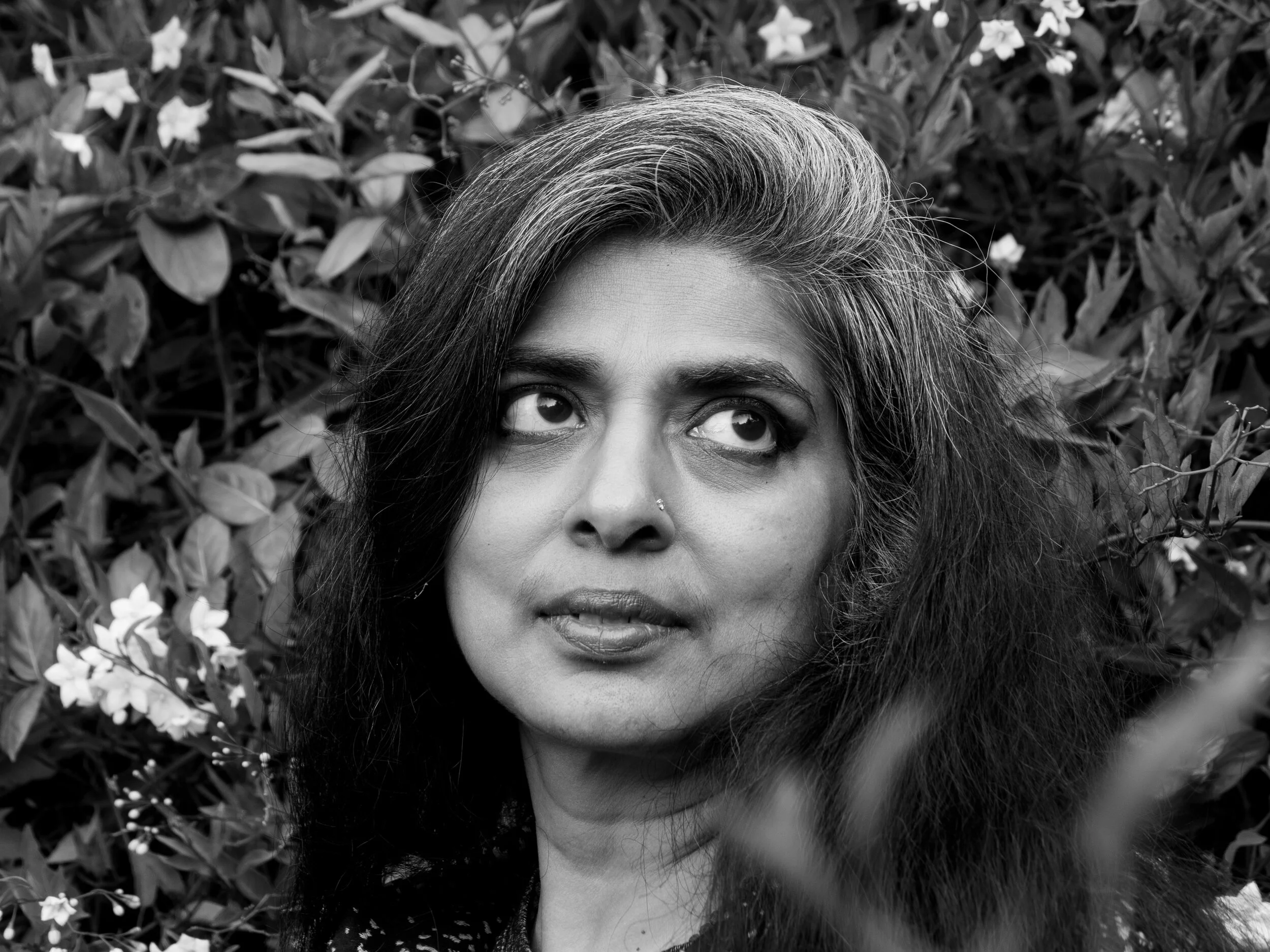
Today we're highlighting a recently added set by poet Sophia Naz that was recorded especially for PennSound at the Wexler Studios at our own Kelly Writers House on September 8, 2021. In this session Naz reads five short poems: "The Lesson," "Thumbnail," "Split Ends," "Nakhuda," and "The Dance." You can listen to these poems by clicking here.

This 2021 Wexler Studios session is a lovely complement to an earlier set of poems recorded in the same facilities a few years earlier. Dating from April 3, 2019, this session sees Naz read a total of sixteen poems in a twenty-nine minute set, including "Black Butterflies," "The Heart of the Matter," "Habeas Corpus," "Odysseys of an Onion Moon," "Ode to a Scar," "Twenty-Six Soldiers of Lead," "Atomic Nocta," and "The Department of Wronged Rights." You can listen in to both of these sessions on PennSound's Sophia Naz author page.

Monday, March 7, 2022

Voices for Ukraine: Words Together, Worlds Apart

We find ourselves in a remarkable moment, with the whole world's attention and sympathies directed towards Ukraine as it endures an unjust invasion by Russian forces. Spurred to action, many events — from teach-ins to benefits to readings — have been organized on short notice to address the crisis. Today we're proud to be able to share video footage from one such event put together at UPenn by Julia Kolchinsky Dasbach and Olga Livshin last week, "Voices for Ukraine: Words Together, Worlds Apart." 

"Amid the current catastrophe in Ukraine, a brutal invasion of a sovereign nation, it is more urgent than ever to listen to the voices of its people," Kolchinsky Dasbach an Livshin write. "While media provides overwhelming coverage, literature, poetry, and art are just as important for processing, coping, and surviving trauma," hence they curated this "transatlantic reading spanning from Kyiv, Odesa, and Lviv, to LA, Atlanta, Philly, and Little Rock," which also included "recordings Ukrainian poets have sent in the event they are unable to join [...] live due to internet outages and air raids."

The readers who took part in "Voices for Ukraine: Words Together, Worlds Apart" include (in order) Carolyn Forché, Ilya Kaminsky, Lyudmyla Khersonska, Katie Farris, Boris Khersonsky, Martha M. F. Kelly, Boris Dralyuk, Oksana Maksymchuk, Lyuba Yakimchuk, Amelia Mukamel Glaser, Iya Kiva, Yuliya Ilchuk, Katherine E. Young, Tatiana Filimonova, Ostap Slyvynsky, Yuliya Chernyshova, Danyil Zadorozhnyi, Iryna Shuvalova, Olena Jennings, Ali Kinsella, Dzvinia, Orlowsky, Vasyl Makhno, Oksana Lutsyshyna, Victoria Juharyan, and Joy David. You can watch video footage of the event and learn more about the participants by clicking here.


Saturday, March 5, 2022

PennSound Italiana

Our PennSound Italiana anthology page, lovingly edited by Jennifer Scappettone, offers our listeners a stellar survey of contemporary Italian poetry. When we launched the page many years ago, Scappettone offered an introduction to the collection in an essay published at Jacket2. Here's how she starts off:
We seek over the course of this ongoing project to offer a broad sense of the field, filling in the substantive gaps in global access to Italian poetry (as both written and sonic text — even within Italian borders), and expanding awareness of its range of practitioners, with an emphasis on marginalized and experimental voices of the twentieth and twenty-first centuries. It is an effort — a unique one, in our reckoning — to "liberate" the spectrum of Italian poetry for as broad a public as possible through audio and video recordings, given that the publishing industry and the translation market are endangered and/or blinkered enough to condemn a significant swath of both historical and contemporary innovation to oblivion. As such, this live archive extends the task of PennSound writ large. 
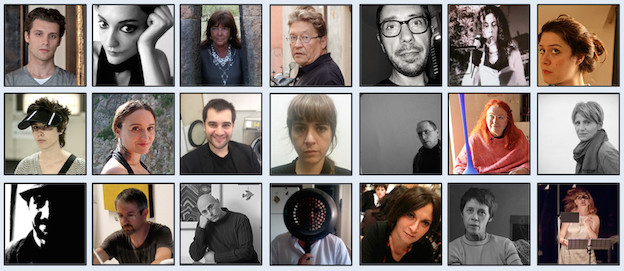
Regular updates have been made to the page over the intervening years and we're always eager to have more work from Scappettone to share with our listeners. At present, the page has recordings from Gian Maria Annovi, Mariasole Ariot, Maria Attanasio, Luigi Ballerini, Gherardo Bortolotti, Franco Buffoni, Maria Grazia Calandrone, Alessandra Cava, Laura Cingolani, Corrado Costa, Elisa Davoglio, Milo De Angelis, Alessandro De Francesco, Antonella Doria, Giovanna Frene, Florinda Fusco, Samir Galal Mohamed, Marco Giovenale, Milli Graffi, Mariangela Guatteri, Giulio Marzaioli, Andrea Inglese, Eva Macali, Enzo Minarelli, Tommaso Ottonieri, Angela Passarello, Jonida Prifti / Stefano Di Trapani (a.k.a. Acchiappashpirt), Laura Pugno, Andrea Raos, Marilena Renda, Lidia Riviello, Amelia Rosselli, Rosaria Lo Russo, and Andrea Zanzotto. Click here to start browsing PennSound Italiana, and don't forget that Scappettone's Jacket2 intro includes some of her highlights from the collection, including background information on the historical nature of each recording.

Thursday, March 3, 2022

Fred Wah: "Standing in the Doorway - the Hyphen in Chinese-Canadian Poetry"

Here's a wonderful recording from Fred Wah to keep you going this week: "Standing in the Doorway - the Hyphen in Chinese-Canadian Poetry" is a lecture delivered by Wah at the Richmond Public Library in British Columbia, on March 25, 2013. We're able to present both audio and video (via YouTube) of this talk, along with a written summary prepared by Husnaa Hashim.

Wah begins by discussing his own ethnic identity and his grandfather's emigration from China to Canada followed by "the cultural inability to write about race in the late 1950s–early 1960s after he (himself) arrived at the University of British Columbia." From there he addresses "the introduction of bilingualism and biculturalism in Canada in the 1970s," via Joy Kogawa's novel Obasan (set in Japanese-Canadian internment camps), which "allowed for conversations about race to begin in English departments in Canada," as well as "the chronology of national racial conversations and redress (for internment)." Wah shares that he was pleasantly surprised "about race suddenly becoming discussable in English literary spaces in comparison to the conversations he had been having with white colleagues (mostly on class)," then goes on discuss several highlights in that growing discourse from the 70s, 80s, and 90s, including the work of the Vancouver-based Chinese-Canadian Writers Workshop (later the Asian-Canadian Writers Workshop), Sky Lee's Disappearing Moon Cafe, Jim Wong-Chu and Bennett Lee's anthology Many-Mouthed Birds: Contemporary Writing by Chinese Canadians, and Rita Wong's Monkey Puzzle, along with contemporaneous cultural developments.

As he nears the end of his talk, Wah explains its metaphoric title through a poem from his Diamond Grill reflecting upon the importance of hybridity to his poetics: "If I stand in the doorway and don’t go through, I can see both rooms.” Thus the hyphen, representative of his hybrid identity, serves a similar purpose, allowing multiple perspectives. He shares more of his poetry and answers questions about his writing process along with culture and memories. You can listen (or watch) this fascinating talk by clicking here.

Tuesday, March 1, 2022

Remembering John Wieners, Twenty Years Later

This March 1st marks twenty years since the passing of beloved poet John Wieners, whose long writing life took him from Black Mountain to San Francisco to New York City to Buffalo, and finally to Boston, where he spent the last three decades of his life. It's also a great opportunity for our listeners to reacquaint themselves with the recordings available on PennSound's Wieners author page.

Our earliest recordings include Wieners' participation in the Mad Monster Mammoth Poets Reading for Auerhahn Press in 1959 and a 1960s appearance on Paul Blackburn's radio program. That's followed by a trio of recordings from 1965: Wieners' July 14th set at the Berkeley Poetry Conference, another July reading possibly in Berkeley, and a brief recording from SUNY-Buffalo that September. Next, we have a October 1966 event from the 92nd Street Y's Unterberg Poetry Center and a pair of long recordings made at SUNY-Buffalo in 1967 and at the St. Mark's Poetry Project in 1968. Following that we have a wonderful conversation with Walter Lowenfels, Lillian Lowenfels, and Alan DeLoach in March 1969 and two recordings from Boston in 1972: two days' worth of visits to Robert Creeley's ENG-1670 class at Harvard and a short appearance on WBCN-FM.

Jumping forward to the 1980s, there are two tracks from The World Record: Readings at the St. Mark's Poetry Project, 1969-1980 and three poems recorded at Brooklyn College in 1988. The next decade starts in grand fashion with a pair of recordings from the spring of 1990: the first in San Francisco, followed by an appearance at the St. Mark's Poetry Project. There's another Poetry Project set from the fall of 1996, and an October 1999 reading at the Guggenheim to round things out, along with the recently-added film Hanuman Presents!

I also happily recommend that interested listeners check out the Wieners component of Jim Dunn and Kevin Gallagher's ambitious Jacket2 feature, Mass: Raw Poetry from the Commonwealth of Massachusetts," which we published in December 2012, as well as Wieners' page at the Electronic Poetry Center.