Friday, December 30, 2022

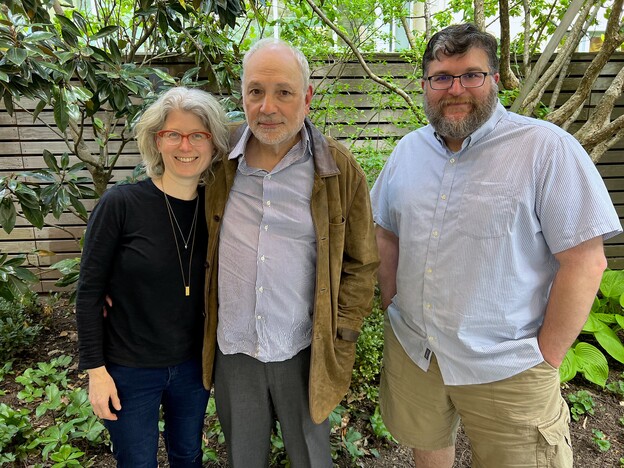
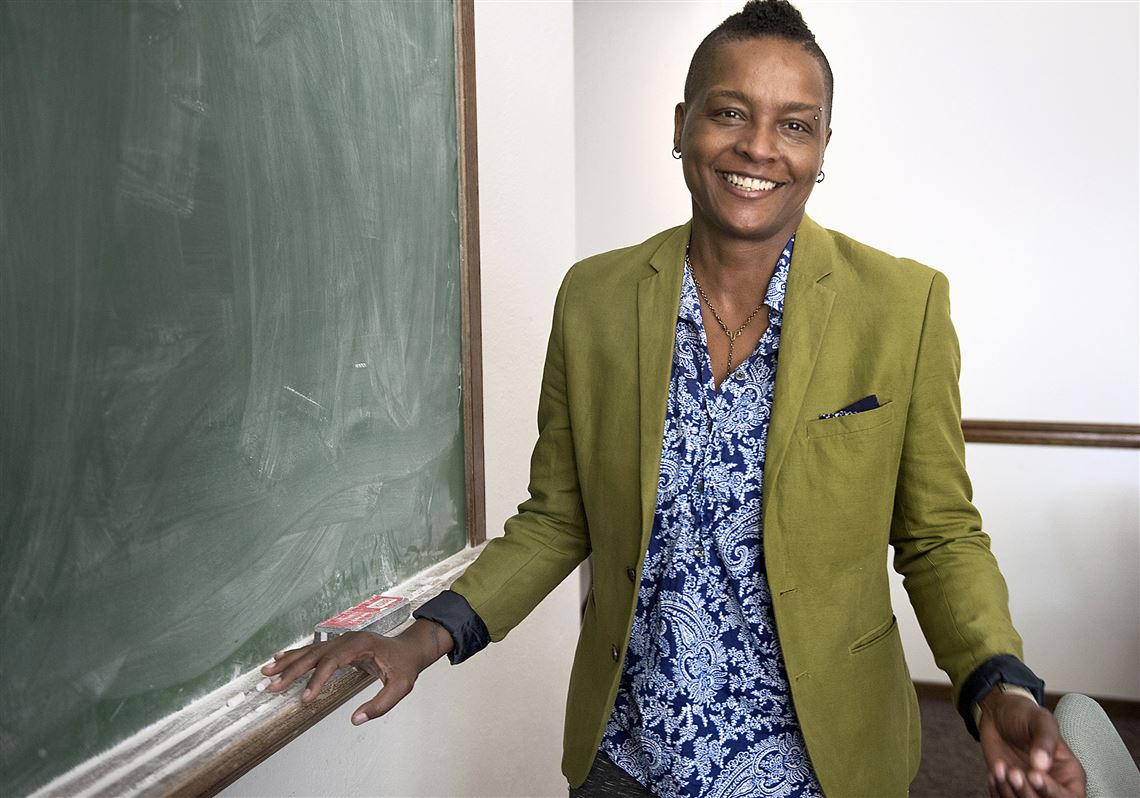
Dawn Lundy Martin on PennSound

In our last PennSound Daily entry of 2022, we're taking a look at the recordings available on our Dawn Lundy Martin author page, which offers listeners the opportunity to check out readings and talks from 2006 to 2016.

The earliest pair of recordings come from an April 2006 visit to New York City, which yielded sets for both Belladonna* and the Segue Series; Martin would return for another Segue reading at the Bowery Poetry Club in December 2008. Our first recording from A. L. Nielsen's Heatstrings Theory archives is an October 2009 reading at Penn State University, and Nielsen was also kind enough to share a March 2016 appearance by the poet as part of a reading celebrating What I Say: Innovative Poetry by Black Writers in America, held in Brooklyn for that year's National Black Writers Conference at AWP. Then, from Andrew Kenower's A Voice Box archives, we have a pair of Bay Area readings: a 2010 reading at David Buuck's house and a 2013 reading at Tender Oracle held as part of the East Bay Poetry Summit. Finally, we have "On Discomfort and Creativity," the 2016 Leslie Scalapino Lecture in Innovative Poetics, held at Naropa University’s Jack Kerouac School of Disembodied Poetics. Video of that event is available, along with a link to the text in Something on Paper.

Four of the earlier readings mentioned above have been segmented into individual MP3s, providing listeners the unique opportunity to listen to multiple iterations of the same poems — including "The Undress," "The Morning Hour," "Bearer of Arms 1775-1783," and "The Symbolic Nature of Chaos" — read at separate events. Taken together, they also provide an interesting document of Martin's evolving style from her first publications up to just before her most recent collection, Good Stock, Strange Blood (Coffee House Press, 2017), which earned Martin the Kingsley Tufts Poetry Award in 2019 for "creating 'fascinating, mysterious, formidable, and sublime' explorations of the meaning of identity, the body, and the burdens of history along with one’s own private traumas." You can experience Dawn Lundy Martin's formidable voice by clicking here.

Wednesday, December 28, 2022

Purkinge, "Lollapalooza Soundtrack" (1994)

While Chris Funkhouser has been sending us tapes from his incredible archives from over a decade, they are more often than not recordings of other folks and not his own poetics and musical projects. Today we're taking a look at one such rare recording — a 1994 performance from the Lollapalooza festival's stop in Saratoga Springs, NY by Purkinge, a supergroup of sorts in which Funkhouser had taken part. Here's his description of the group's evolution and their triumphant appearance on the sidestage of the eclectic summer festival:
In 1992 made the unlikely move from Santa Cruz to Albany to pursue a Ph.D., partially because Katie Yates told me about a fascinating collaborative writing initiative Don Byrd spearheaded there. Too much technical & social back story to tell, but a performance group consisting of Sandy Baldwin, Belle Gironda, Eric Douglas, & I emerged named Purkinge (after brain fibers that conduct an electrical stimulus enabling the heart to contract in a coordinated fashion). Networked writing conducted across a series of computer terminals, sound, & stage were emphasized. We made hundreds of pages of poems, hours of multi-track recordings, played arts venues & theory conferences. Intent on re-defining expressive conventions, we weren't together to be popular or make money; we liked each other & did whatever we wanted given what we had ("being only possible because of gravity"). I was the only musician in the group, but our shows always featured soundtracks with everyone's input. 
We peaked in so many ways at the Saratoga Raceway stop of the 1994 Lollapalooza festival. People I knew were running a side stage, & various friends traveled show-to-show. I was invited to join & round up local talent. Purkinge worked on a set for a few weeks, mixing a 23 minute soundtrack combining ambient recordings, percussive segments, & language. We made several hundred 10 inch segments of dowels for the crowd. Voices on tape freed us from being bound to microphones, so we moved around a lot. We planned an interactive experience with the audience, & an almost unbelievable thing happened. Gorgeous afternoon: main-stage sets by the Breeders & Boredoms transpired under sunny skies. I wore a skirt, & a random party girl said, "I'm glad you're man enough to wear that." Shortly before Purkinge's show beneath a mini-circus tent on the infield, black clouds roll in & — simultaneous to thunder playing on our soundtrack — an intense thunderstorm hits. Suddenly five- or six-hundred people were in the tent, many of them hopped up, drumsticks in hand, performing. Boisterous & strident, beautiful within the larger event, we lashed folding metal chairs to ourselves, played & crashed into each other, setting a certain tone. As we finished, the rain stopped, then we danced with everyone else to George Clinton (P-Funk All Stars) & Beastie Boys in the mud.
Chris has done a wonderful production job here, creating a spacious mix that benefits those listening on headphones in particular, and leaving plenty of room for conversant dynamics to develop between noise, music and the sparring voices. You can hear this track, along with a wide array of readings, performances, interviews and lectures on PennSound's Chris Funkhouser author page.

Tuesday, December 27, 2022

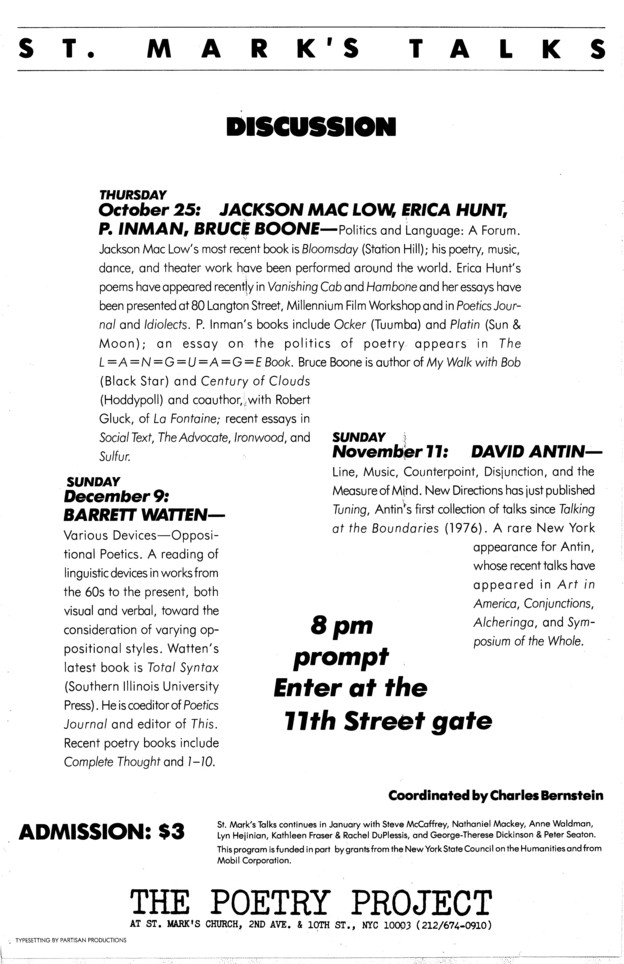
St. Mark's Talks (1984-1986), Curated by Charles Bernstein

Today we revisit a fantastic highlight from the PennSound archives originally added to the site 10 years ago this month: the the St. Mark's Talks series, which was organized by Charles Bernstein at the Poetry Project from the fall of 1984 to the spring of 1986. The St. Mark's Talks series was an extension of the New York Talks series Bernstein curated and moderated during the first half of 1984. 

In a Jacket2 commentary post announcing the new additions in 2012, Bernstein explains the origins of the series: "In 1985, Eileen Myles was the new director of the St. Mark's Poetry Project in New York. [They] asked me to curate a lecture series, the first such program at the church. I modeled the series at the Poetry Project on my earlier series New York Talk, giving it the amusing title, given the sometimes seeming resistance to poetics at the St. Mark's at the time, St. Mark's Talks. And talk it did." "I made these recordings myself," he continues, "and we are missing some of the talks, and in some case parts of the talk ... Here is what we got."

Altogether, PennSound has preserved all or part of fifteen events in the series, which follow the same general pattern of talk followed by discussion established during New York Talks. The series began with "Politics and Language," featuring Bruce Boone, P. Inman, Erica Hunt, and Jackson Mac Low, and continued with events including David Antin's "line music counterpoint disjunction and the measure of mind," Nathaniel Mackey's "Sound and Sentiment, Sound and Symbol," "The Tradition of Marginality," featuring Kathleen Fraser and Rachel Blau DuPlessis, Barbara Guest's "Mysteriously Speaking of the Mysterious Byzantine Proposals of the Poem," and Ron Silliman's "Postmodernism: Sign for a Struggle, the Struggle for the Sign." Other participants included Steve McCaffery, Lyn Hejinian, Anne Waldman, David Bromige, Nick Piombino, Lorenzo Thomas, and Bob Perelman, among others.

Friday, December 23, 2022

John Richetti reads "A Visit from St. Nicholas"

As we close out the year, we have one more gift to pass along to our listeners from our friend John Richetti: a recording of Clement Clarke Moore's beloved Christmas poem, "A Visit from St. Nicholas," from his ever-growing anthology, "125 Favorite Poems, Good for Memorizing."

More frequently known by its opening phrase, "'Twas the night before Christmas ...," "A Visit from St. Nicholas" was first published in Troy, New York's Sentinel on this day in 1823 with no attribution. It became wildly popular, reprinted far and wide, and its author — a professor of literature and divinity at New York City's General Theological Seminary of the Episcopal Church, who initially sought to downplay his connection to the poem — would finally be credited in 1837, with Moore including it in a collection of his verse in 1844.

Click here to listen to Richetti's performance of the poem. You can read along on the Poetry Foundation's copy of the poem here. Many more recordings made by Richetti form the backbone of our PennSound Classics page, which is organized by author name. To start browsing, click here.


Thursday, December 22, 2022

PoemTalk #179: Two by Armand Schwerner

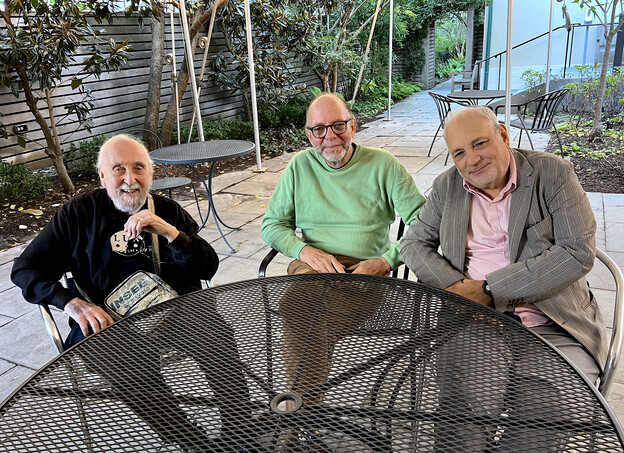
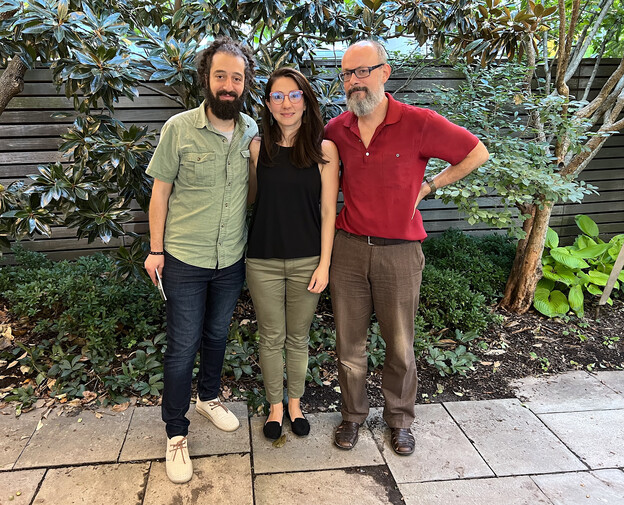
Today we release the last new episode in the PoemTalk Podcast series for 2022. Program #179, "Untranslatable" focuses on two poems by Armand Schwerner: "Tablet XXV," an entry in his signature project, The Tablets, written near the end of his life, and "'daddy, can you staple these two stars together to make an airplane?,'" an earlier poem published in the collection Seaweed. For this episode, host Al Filreis is joined by a formidable panel that included (from left to right) Jerry RothenbergPierre Joris, and Charles Bernstein.

Filreis' Jacket2 blog post announcing the new episode offers the provenance for each of the recordings discussed in the program: "'Tablet XXV' was recorded by the National Poetry Foundation in the mid-1990s," while "'"daddy, can you staple …"' was made by Paul Blackburn during Schwerner's public reading at the Poetry Project, at St. Mark’s Church, in New York, on January 18, 1967, and is made available through the remarkable Blackburn collection housed at the University of California at San Diego." There, you'll also find links to the complete text of each poem discussed and links to other recordings made during Jerry and Diane Rothenberg's visit to the Kelly Writers House last September

You can listen to this latest program and read more about the show here. PoemTalk is a joint production of PennSound and the Poetry Foundation, aided by the generous support of Nathan and Elizabeth Leight. Browse the full PoemTalk archives, spanning more than a decade, by clicking here.
Wednesday, December 21, 2022

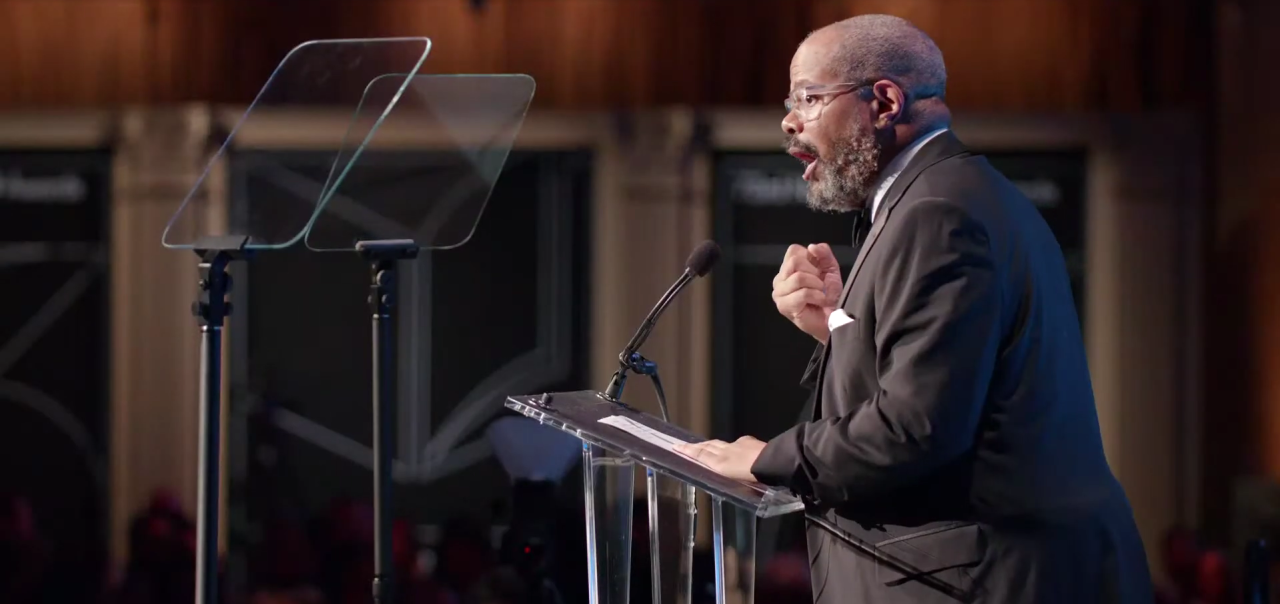
Our First Midwinter Day Without Bernadette Mayer

At 4:47PM EST this afternoon we will officially make the transition from autumn into winter, and 32 minute later the sun will set, ushering in the longest night of the year. For many of us, the last month has felt especially dark due to the passing of Bernadette Mayer, whose beloved Midwinter Day celebrates its forty-fourth birthday this year. While not published until 1982, Mayer famously wrote the book — hailed by Alice Notley as "an epic poem about a daily routine ... sedate, mundane, yet marvelous" — in its entirety while marking the the winter solstice at 100 Main Street in Lennox, Massachusetts on December 22, 1978. 

Celebrating Mayer and Midwinter Day on this day is an annual PennSound tradition, dating back to 2014. As Megan Burns notes in her Jacket Magazine essay on the book: "A long held tradition on Midwinter's Day was to let the hearth fire burn all night, literally keeping a light alive through the longest night of winter as a source of both heat and a symbol of inspiration to come out the other side of the long night closer to spring and rebirth. It is fitting that a poem about surviving death and the intimacy of the family would be centered around this particular day that traditionally has focused on both. The hearth is the center of the home where the family gathers, where the food is cooked and where warmth is provided. Metaphorically, the poem Midwinter Day stands in for the hearth gathering the family into its folds, detailing the preparation of food and sleep and taking care of the family's memories and dreams."

Mayer read a lengthy excerpt from the book at a Segue Series reading at the Ear Inn on May 26th of the following year, which you can listen to on her PennSound author page along with a wide array of audio and video recordings from the late 1960s to the present. 

Monday, December 19, 2022

Ted Enslin on PennSound

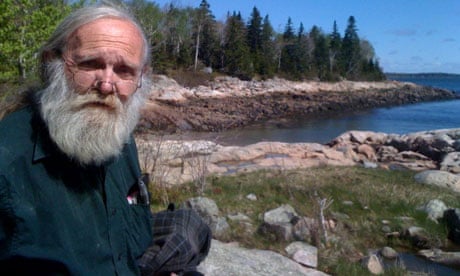
Today we're surveying our collection of recordings from Ted Enslin (1925–2011), the avant-garde poet long associated with Maine's wilderness. 

Our collection starts well into his writing life, with a February 1985 reading at the legendary Woodland Pattern Book Center, followed by a January 1986 interview and reading on WMCS-AM and a reading of the single poem "Antiphony" at Bowling Green State University's Kobacker Hall in April 1989. We have another Woodland Pattern reading from February 1990, a March 1992 reading at Granary Books and another set from the same month at Wendell's, both in New York City. Then there are readings in Las Cruces in February 1997, the University of Maine in February 2000, and a recording of Enslin and Ben Friedlander reading at an unknown location in April 2000. Finally, from Jonathan Skinner's Steel Bar Reading Series, we have Enslin's last reading, close to home at Bates College in November 2009.

You can browse the aforementioned readings by clicking here.

Friday, December 16, 2022

Lytle Shaw: "Olson's Archives: Fieldwork in New American Poetry"

Today we dip into our archives to revisit Lytle Shaw's 2008 lecture, "Olson's Archives: Fieldwork in New American Poetry," delivered at the Kelly Writers House as part of the Theorizing series. 

Delivered on October 22nd of that year, "Olson's Archives" would eventually appear as a chapter in Shaw's 2013 book, Fieldworks: From Place to Site in Postwar Poetics (here referenced under its working title, Field Authorities). In the essay Shaw examines "site-specific poetry and art as forms of experimental historiography and ethnography," tracing the shift from "a future-oriented poetics of place" (as seen in Williams and Olson) to a contemporaneously lived aesthetic (he cites Creeley, Baraka and Snyder as examples). In particular, Shaw is "interested in the way that poets who wanted to account for actual empirical places found themselves having to trespass beyond poetry proper to poach some of their authority from other disciplinary fields."

You'll find Shaw's lecture on his PennSound author page, alongside eight other recordings, starting with a 1999 reading at the St. Mark's Poetry Project. Other readings include a trio of Segue Series readings — two from the Bowery Poetry Club (in 2004 and 2009) and a 2014 set at Zinc Bar — plus a 2002 reading at The Kootenay School of Writing, a 2006 appearance on Cross-Cultural Poetics, and his contributions to a "Barbara Guest Praise Day" at the BPC during the same year. In addition, you'll want to be sure to check out the Line Reading Series, which Shaw curated at the Drawing Center in New York from 2000-2006.

Wednesday, December 14, 2022

Paul Buck's Pressed Curtains Tape Project

In the 1970s, Paul Buck edited Curtains, a leading British avant-garde journal, whose amorphous identity was evidenced by its issue-by-issue name changes (Safety Curtain, Curtain-Raiser, A Range of Curtains, etc.) in the style of Tom Clark's Once and Kenward Elmslie's Z. "Curtains was not a poetry magazine either," Buck notes, "though it contained poetry and was viewed as part of the poetry world. Initially I was intent on researching an area of writing between poetry and prose, a writing that was more likely to be written by poets, though not exclusively." In time, the magazine would expand to become a multimedia endeavor:
Halfway through the 1970s, the notion of performing, whether relating to "performance art" or in terms of the oral tradition of poetry, was another factor that became part of the fabric. I was combining the two courses and exploring the oral in terms of poetry, music, art and ethnic traditions. It seemed natural to extend the boundaries of Curtains into a cassette tape series, even if no sophisticated equipment was available, either at home or nearby. 

In time, Buck would go on to release three cassettes under the series name Pressed Curtains: readings by Eric Mottram and Ulli McCarthy (then known as Ulli Freer) made at his own home, along with a recording of himself reading his piece xxxx7. Other recordings were made for potential release, but never saw the light of day. That ended in 2015, when Test Centre and Blank Editions put out a lavish limited-edition box set including a ten cassettes in total. With that edition of fifty now sold out, Buck has generously shared the complete archives with PennSound. In addition to the three original releases, you'll find recordings by Kathy Acker, cris cheek, Allen Fisher, Bill Griffiths, Pierre Joris, Robert Kelly, and Jean-Luc Parant. Buck's illuminating liner notes are also included. Click here to start exploring this fascinating time capsule.


Monday, December 12, 2022

Ted Greenwald, "Voice Truck" (1972)

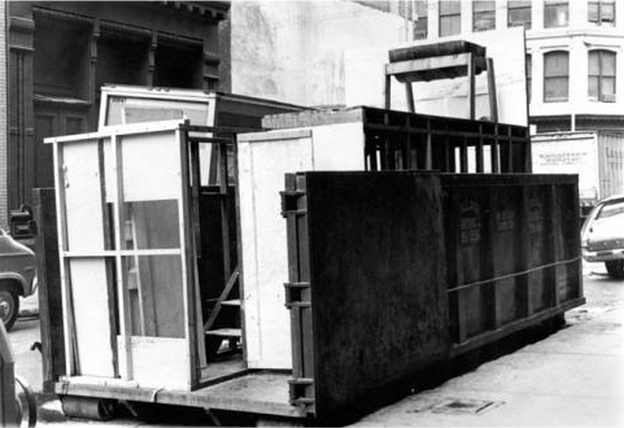
Here's a fascinating recording from the late Ted Greenwald that we added to the site in January 2015. "Voice Truck" was assembled as part of Gordon Matta-Clark's installation Open Space (a similar contemporary work is shown at right). Our own Charles Bernstein announced the new addition in a Jacket2 commentary post, which includes this description of the recordings:

In May 1972, the artist Gordon Matta-Clark installed a dumpster in front of 98 Greene Street in Soho (Manhattan). The work was called both Open Space and Dumpster. The Dumpster was filled with construction debris and other material, formed into three corridors. For Ted Greenwald's contribution to the installation, he created a special audio work. Greenwald installed a tape recorder on the delivery truck for the Village Voice, his long-time day job. Six reels were recorded. One of the tapes, featuring the most dramatic action of the day, was stolen from the cab of the truck: in the middle of Times Square, mounted police galloped up to a subway entrance, tied their horses to the entrance, and ran down into the subway. The other five reels survived and are being made available by PennSound for the first time (one of those cassettes is listed below in two parts)."

You can listen, read more about the work, and find a link for further discussion of Open Space as well as a short video on Matta-Clark on Bernstein's J2 commentary. The recordings are also linked on our Ted Greenwald author page, where, among many other recordings, you can also listen to a March 1971 reading by Greenwald with Matta-Clark. Click here to start listening.

Saturday, December 10, 2022

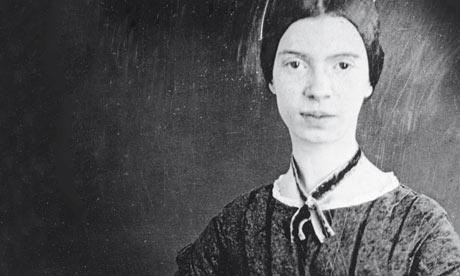
Happy Birthday to Emily Dickinson

Today would have been the 191st birthday of Emily Dickinson. For many years, a treasure trove of Dickinson materials was scattered throughout our site, but a few years ago we pulled together a proper PennSound author page for the poet, gathering selected resources from throughout our archives.

It should come as no surprise that Susan Howe would be prominent featured, and here you'll find complete talks on the poet from 1984 (from the New York Talk series) and 1990 (from SUNY-Buffalo) in addition to several smaller excerpts from larger talks pertaining to the poet. There's also a link to PoemTalk #32, which discusses Howe's interpretation of Dickinson's "My Life had stood - a Loaded Gun."

Full series of lectures on Dickinson are also available from Robert Duncan and Robert Creeley, both at the New College and dating from 1981 and 1985, respectively. Among other substantial contributions, there's also the 1979 Dickinson Birthday Celebration at the St. Mark's Poetry Project (featuring Jan Heller Levi, Charles Bernstein, Susan Leites, Charles Doria, Virginia Terrace, Barbara Guest, Madeleine Keller and Vicki Hudspith, Armand Schwerner, Karen Edwards, Jackson Mac Low, Maureen Owen, and Howe) and Rae Armantrout's 2000 presentation on Dickinson from "Nine Contemporary Poets Read Themselves Through Modernism."

You'll also find performances of individual Dickinson poems from John Richetti and Jeffery Robinson as well as brief excerpts of radio interviews — with John Ashbery, Guest, and Elizabeth Bishop — pertaining to the poet.

Our hope is that this page, which brings together disparate resources already available in our archives, will be a useful tool for teachers, students, and casual readers, as well as serious scholars. Click here to start exploring.

Thursday, December 8, 2022

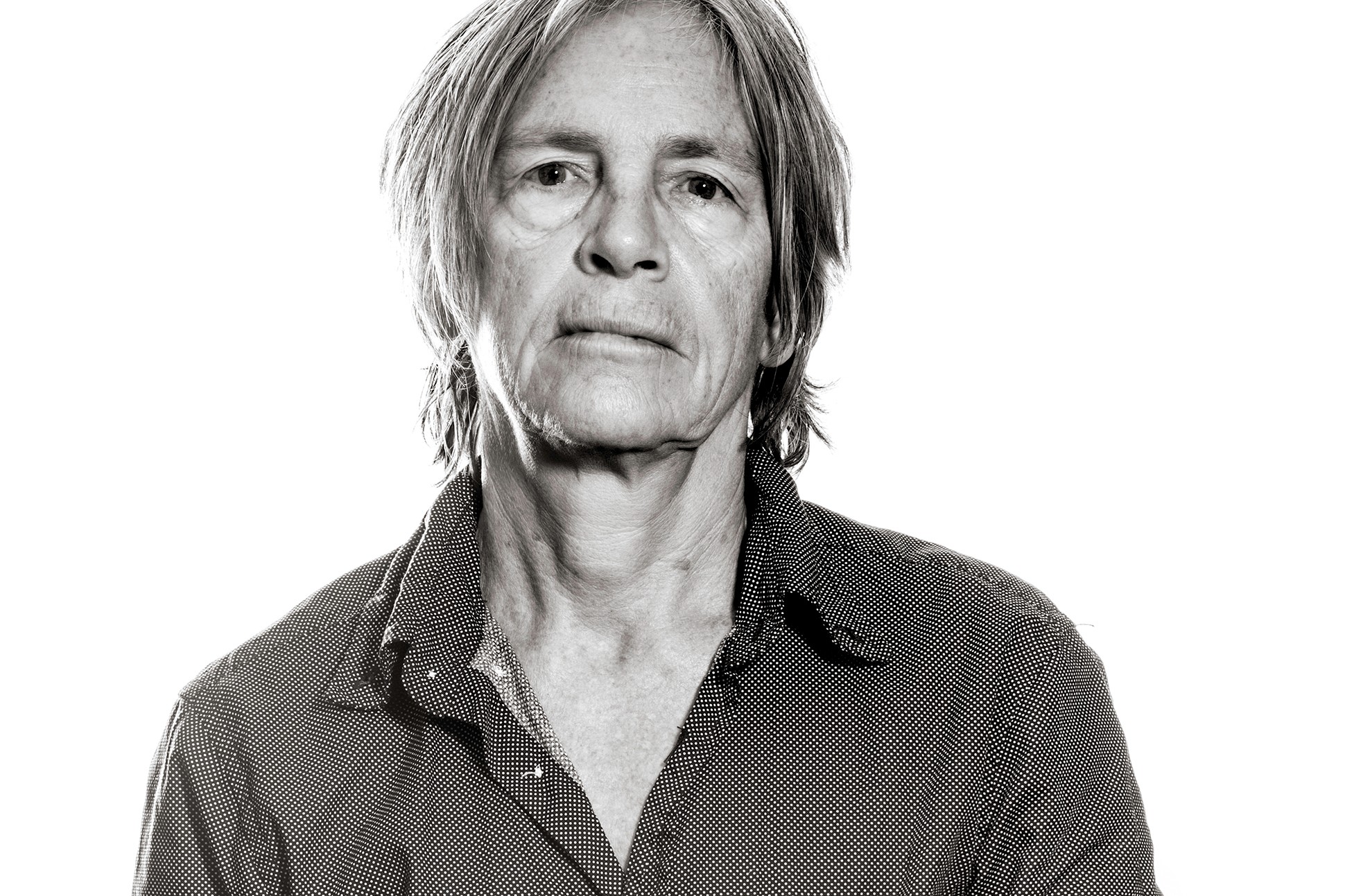
Happy Birthday to Eileen Myles

We send out birthday greetings to Eileen Myles, who celebrates their 72nd birthday today. There's no better way to celebrate than browsing through the selections available on PennSound's Eileen Myles author page

Whether you're an old fan or newly acquainted with Myles, a great place to start is their two-part 2009 Close Listening radio program with Charles Bernstein that includes readings of twenty-one poems selected from across their first three decades of published work — including The Irony of the Leash (1978), Not Me (1991), School of Fish (1997), and Sorry, Tree (2007) — and a half-hour conversation between the two. 

Our earliest recordings of Myles are three appearances on Public Access Poetry in the late 1970s. They're nicely complemented by a 1978 appearance on Susan Howe's WBAI radio program and an October 1978 Segue Series Reading at the Ear Inn — one of seven total Segue Series appearances from the 1970s to the present. That's followed by a 1981 reading at the St. Mark's Poetry Project, a pair of Belladonna* readings from 2003 and 2009, visits to our own Kelly Writers House in 2010 and 2016 (when they were one of that year's Kelly Writers House Fellows). Other full-length readings include sets from the Dia Art Foundation, Mills College's Contemporary Writers Series, the ICA in Philadelphia, the California College of the Arts, the Poetry Center at the University of Arizona (via POG Sound), LA Lit, the CUNY Graduate Center, Basilica Soundscape, and the Penn Book Center, and there are also numerous individual tracks scattered over the past five decades.

Certainly, the promise of the poet's early writing and the audacity of their 1992 presidential campaign have flourished fully in our new century, with Myles taking their rightful place as one of our era's most influential poets, as well as one of our community's greatest ambassadors to lay audiences. Therefore we not only celebrate them today, but wish them many happy returns!

Wednesday, December 7, 2022

Jeff Preiss Discusses the Jon Lovitz / Charles Bernstein Yellow Pages Ads, 2019

If, like 57.19% of the world's population, you have seen Charles Bernstein's cult-classic Yellow Pages ads from the late 1990s, you might reasonably have some questions: Did Charles hurl a bottle of improperly-chilled spring water at a hapless PA? Is Jon Lovitz really just two children in a rubber suit? What is a Yellow Pages? You'll find all the answers you need in this 2019 recording in which Jeff Preiss, who conceived and directed the spots, shares how they came to be.

It all started with a well-received ad Preiss directed for the NBA starring Bill Murray. "Then the Yellow Pages — poor Yellow Pages — they were about to just die. There was no saving the Yellow Pages. Yellow Pages were on life support and they hired an agency to try to figure out a way of keeping the Yellow Pages relevant. Now in hindsight it was really just hopeless." That "absolutely terrible" idea was disposing with the beloved "let your fingers do the walking" slogan and imagery and switch their iconography to a light bulb, thus making the book "a kind of an inspirational text and a work of literature, where it gives you ideas." "A beautiful idea, but a doomed one," as Preiss recollects.

Because the Yellow Pages didn't have the money to get Bill Murray they wound up with Jon Lovitz instead, but Lovitz was reluctant because "the scripts [weren't] funny," though working together Preiss and Lovitz were able to revise them into something workable. Now they needed a literary critic to deliver a few lines, "and I had this idea to cast Charles and I figured Charles, it's so perfect for him, he'll be able to just go for it." Everyone at the agency was please with the results — "Charles is amazing ... like, it's beyond" — to the extent that they wrote and shot a second series of spots starring Bernstein exclusively.

They then took all of this back to the Yellow Pages, and that's where things start to break down. Listen in to hear the company's reaction, Preiss discussing his long friendship with Bernstein facilitated through filmmaker Henry Hills, and more. We're very proud to be able to host the full set of radio and TV ads Preiss made, along with outtakes, which are well worth checking out whether you already know and love them or if you're just seeing them for the first time. We're also grateful to Davide Balula, who made the recording and serves as interlocutor throughout, for sharing this with us. Click here to start listening.

Monday, December 5, 2022

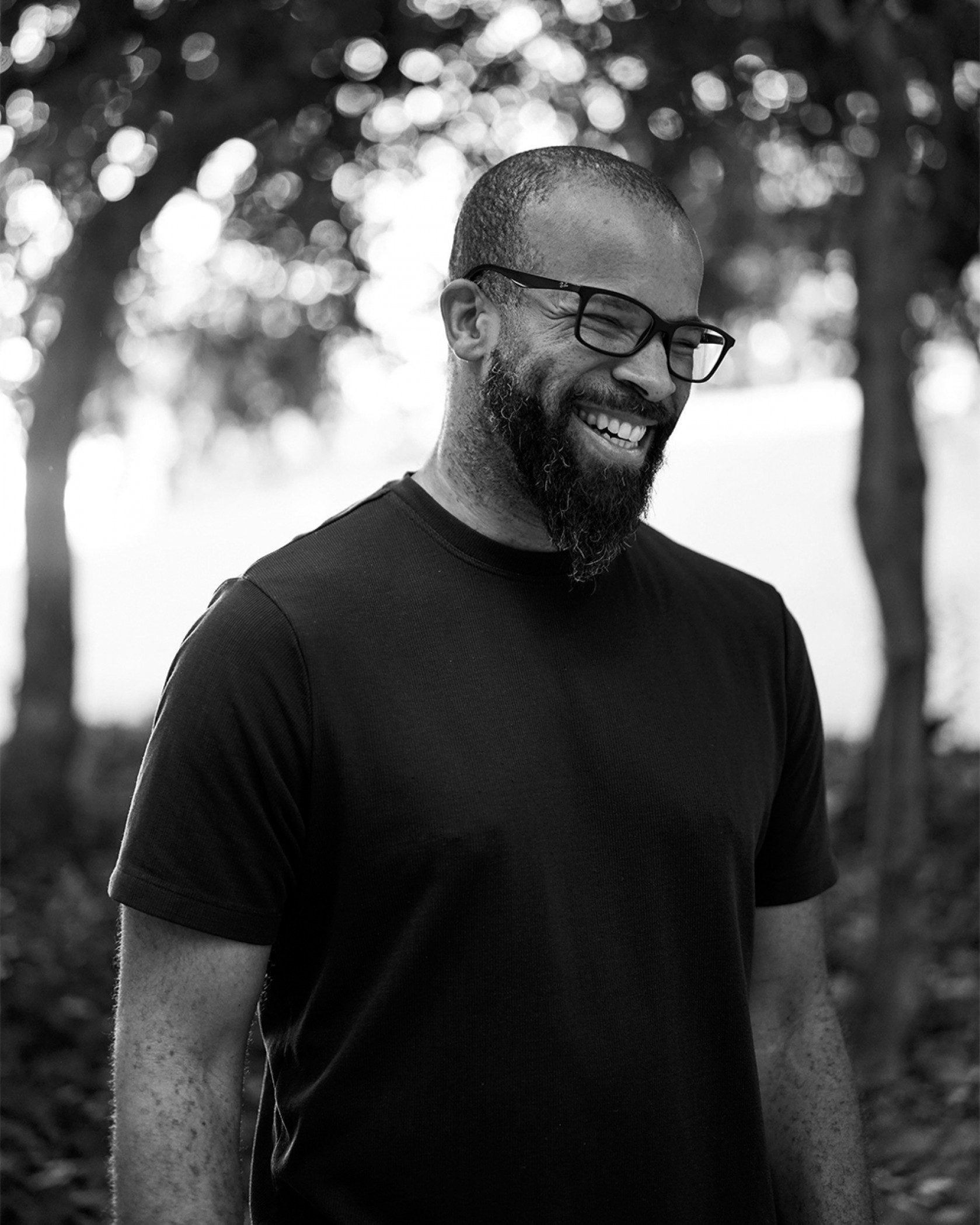
Douglas Kearney on PennSound

We start this week off by taking a look at our author page is for poet, performer, and librettist Douglas Kearney, whose 2022 Griffin Poetry Prize win we celebrated back in June.

The majority of the recordings you'll find there come from Kearney's fall 2018 visit to our own Kelly Writers House, which included a two-part Close Listening reading and conversation with Charles Bernstein recorded on October 22nd, along with an appearance alongside Brian Goldstein for a "City Planning Poetics" event. This sixth installment in the series, organized by Davy Knittle, was titled "Urban Revitalization" and took place the following day.

In addition to these recordings, which are available in MP3 format or streaming video, we also have video from a trio of recent readings, including a September 2017 reading at the Poetry Center at the San Francisco State University, and a pair of undated recordings from Los Angeles' Museum of Contemporary Art and Harvard University's Vocarium Reading Series. A 2005 appearance on LA-Lit is our earliest recording, while a set of home recordings made this October for a future episode of PoemTalk rounds out the collection.

You can check out all of the aforementioned recordings on our Douglas Kearney author page. Click here to start listening.

Friday, December 2, 2022

PoemTalk #178: on Matvei Yankelevich's 'Dead Winter'

Last week we released episode #177 in the PoemTalk Podcast series, which focuses on four poems/sections from Matvei Yankelevich's book-length work Dead Winter (Fonograf, 2022): "Winter comes calling" (7), "Winter have I lost your thread?" (12), "In a disjunctive age, disconsolate, without connection" (21), and "Winter and one more mine is the other guilt" (27). For this show, host Al Filreis was joined by a panel that included (from left to right) Ahmad Almallah, Huda Fakhreddine, and Kevin Platt.

Filreis' Jacket2 blog post announcing the new episode you'll find links to the texts for all four poems as well as segmented tracks from a special session recorded just for this program. That post also includes links to a video recording of a conversation with Matvei himself about Dead Winter — joined by Kevin, Ahmad, and Al as well as a dozen or so of Ahmad's students."

You can listen to this latest program and read more about the show here. PoemTalk is a joint production of PennSound and the Poetry Foundation, aided by the generous support of Nathan and Elizabeth Leight. Browse the full PoemTalk archives, spanning more than a decade, by clicking here.

Wednesday, November 30, 2022

In Memoriam: Doug Lang (1941–2022)

We wrap up our trio of memorials for recently-deceased poets by honoring Doug Lang, who passed away on November 22nd at the age of 81. Born into wartime poverty in Swansea, Wales, Lang first distinguished himself as a novelist before moving to the US for a teaching appointment in 1973. Soon thereafter he was key conspirator in Washington, DC's burgeoning poetry scene, where he coordinated a much-beloved reading series, and formed relationships that would last a lifetime.

Lang's dear friend Terence Winch posted a tribute to Lang at the Best American Poetry blog, which speaks in part to his presence in the local scene: "He was known as a catalyst on the Washington poetry scene.
An accomplished poet himself, he also ran a nationally celebrated poetry reading series in DC at Folio Books in Dupont Circle, attracting many of the leading poets of the day, who were usually paired with a local poet." Lang's dedication and kindness also extended to generations of his students:
The Corcoran [College of Art] hired him, and Doug stayed for the next 37 years, becoming the most loved and respected member of the Corcoran faculty. His colleagues and his thousands of former students felt a tremendous debt to Professor Lang for his prodigious ability as a teacher and his generosity of spirit in all his interactions. In the literary world, he was known as a poet of fierce linguistic energy and technical skill. To his friends, he is an irreplaceable man of wondrous talent.
Introducing Lang at the St. Mark's Poetry Project in 2011, Stacy Szymaszek reached for remarkably similar words to encapsulate his talents: "I’ve been thinking a lot about the poem’s ability to alter our perception of time, and one thing that impresses me is that Doug's poems don’t play with pace as much as they are delivered as pure energy." "Past present and future aren’t part of his measuring system," she observes. "The poem is the sequencer of events, and throws the intervals between them into the realm of our own bodies."

We welcome you to visit to visit our PennSound author page for Lang, which starts off with a couple of vintage recordings from his earliest years in the states: a 1978 Segue Series reading at the Ear Inn and Xa, a collaboration with Tina Darragh released in 1979 on germinal cassette poetry label Widemouth Tapes. We then jump forward to another Segue set at the Ear Inn, this time from 1989, before finishing with a sprawling multi-part interview between Lang and Winch conducted in 2014. Taken together, its eight installments run roughly six hours in length. You can listen to any and all of these recordings by clicking here.

We send our sincere condolences to Lang's close personal friend Sandra Rottmann and family members, along with the generations of students and poets that will feel his loss acutely.

Monday, November 28, 2022

In Memoriam: Michael Rothenberg (1951–2022)

Today we say goodbye to poet, editor, publisher, and environmentalist Michael Rothenberg, who passed away after a long battle with lung cancer on November 21st. Like Bernadette Mayer, Rothenberg is a poet that will be remembered as much for his service to the genre as much as his own work — a "good citizen" of the poetry world whose selfless hard work benefitted us all.

Those endeavors included the long-running press and web journal Big Bridge, Jack Magazine, the organization 100 Thousand Poets for Change, and their associated project "Read A Poem To A Child." You'l find an encyclopedic listing of links to those efforts and more on Rothenberg's homepage at the Electronic Poetry Center, which also houses a healthy sampling of his writing across genres. Our newly created PennSound author page for Rothenberg is home to a trio of recordings of the poet in performance: a 2007 reading in Tucson as part of the POG Sound series, and a pair of videos of the poet reading in Petaluma, CA in 2009.

We send our condolences to Rothenberg's family, fans, and collaborators worldwide. Click here to start browsing through the aforementioned recordings.

Thursday, November 24, 2022

In Memoriam: Bernadette Mayer (1945–2022)

This week has been been devastating for the poetry community, with three beloved poets dying in short succession. We want to honor each one individually, and today we start with Bernadette Mayer, who succumbed to pancreatic cancer on November 22nd, a little over a year since her diagnosis.

There is perhaps no better indication of just how beloved Mayer was within the world of contemporary poetry, the long shadow cast by her work and her ideas, than seeing her mourned equally for her prompts and experiments as her poetry itself. Indeed, along with a deep sense of loss, I most saliently feel a sense of gratitude for her presence in my classrooms throughout my teaching career: from teaching latter-day collections like Scarlet Tanager and Poetry State Forest in Contemporary American Poetry to discussing her innovative approach to the sonnet in Forms of Poetry and the way in which my Creative Writing Pedagogy students  (many of whom have little familiarity with non-traditional poetry) are captivated and inspired (and a little freaked out) by her iconic "Experiments List." 

Mayer was truly the patron saint of the empty page, whose poems not just delighted her fans, but — through their meta-poetic bent, their evident conceptual or ludic processes — challenged them to pick up a pen and try their hand at writing. "Experimental" is a word we throw around easily, and often to describe authors that settled into an established style decades ago, but Mayer truly never stopped blazing new trails, finding new forms, and empowering passive readers to think of themselves actively as poets. I've always drawn inspiration from her line "Let's get on with our non-paying work as always" (from "Sonnet Welcome"), for the way in which it demystifies the writing life: if you're waiting around for a visit from the muse you're not going to write many poems. There's serious work to be done; roll up your sleeves, start a new journal, let's go!

Bernadette was also a beloved member of the Kelly Writers House family, starting with a day-long celebration of her and her work in 1998, with subsequent visits in 2007, 2014, 2018 (as a Kelly Writers House Fellow), and 2019. Her early support for PennSound is reflected by the more than 200 individual files you'll find on her encyclopedic author page, which starts with "Complete Music of Webern, A Movie" from Eduardo Costa and John Perreault's groundbreaking 1969 album Tape Poems, and continues through at least three dozen individual events up to a February 2021 Zoom reading for the University of Glasgow. Particularly for a true poet's poet like Mayer, there is no better way to honor her legacy by connecting with her work, whether on the page or in your headphones. We send our condolences to Philip Good and Mayer's children, her friends, and generations of fans throughout the world.


Wednesday, November 23, 2022

PennSound Presents Poems of Thanks and Thanksgiving

With the US celebrating Thanksgiving this week, it's time to revisit a perennial PennSound Daily tradition that started way back in 2010: a mini-mix of poems of thanks and thanksgiving — some old, some new — taken from the PennSound archives.

In a classic recording of "Thanksgiving" [MP3] from the St. Mark's Poetry Project, Joe Brainard wonders "what, if anything Thanksgiving Day really means to me." Emptying his mind of thoughts, he comes up with these free associations: "first is turkey, second is cranberry sauce and third is pilgrims."

"I want to give my thanks to everyone for everything," the late John Giorno tells us in "Thanx 4 Nothing" [MP3], "and as a token of my appreciation, / I want to offer back to you all my good and bad habits / as magnificent priceless jewels, / wish-fulfilling gems satisfying everything you need and want, / thank you, thank you, thank you, / thanks." The rolicking poem that ensues offers both genuine sensory delights ("may all the chocolate I've ever eaten / come back rushing through your bloodstream / and make you feel happy.") and sarcastic praise ("America, thanks for the neglect, / I did it without you, / let us celebrate poetic justice, / you and I never were, / never tried to do anything, / and never succeeded").

"Can beauty save us?" wonders Maggie Nelson in "Thanksgiving" [MP3], a standout poem from her marvelous collection, Something Bright, Then Holes, which revels in the holiday's darker edges and simplest truths: "After dinner / I sit the cutest little boy on my knee / and read him a book about the history of cod // absentmindedly explaining overfishing, / the slave trade. People for rum? he asks, / incredulously. Yes, I nod. People for rum."

Yusef Komunyakaa gratefully recounts a number of near-misses in Vietnam — "the tree / between me & a sniper's bullet [...] the dud / hand grenade tossed at my feet / outside Chu Lai" — in "Thanks" [MP3], from a 1998 reading at the Kelly Writers House.

"I miss everything / all the time, even / what's in front of me," Kate Colby reflects in "Home to Thanksgiving (1867)" [MP3], ably mimicking the sense of loss that simultaneously haunts and heightens the holiday season for many of us.

Kenneth Irby begins his 1968 poem, "Thanksgiving Day and Lowell's Birthday" [MP3] with a succinct synopsis of the holiday's meaning: "This is / the day set aside / for public harvest's / gratitude, / giving back of all the energies of devotion /for an instant equal / to the energies gathered / of earth's sustenance given / or what was attended / watching the slow shift of season / knowledge thankful for to have gathered /before the shift — not so slow and more like a / sudden awareness come on too late — / before cold winter." You can read along with Irby at Jacket2, where the poem was published as part of the career-spanning 2014 feature, "On Kenneth Irby."

While many might be familiar with Charles Bernstein's delightfully-thorny "Thank You for Saying Thank You," I'm offering up a recording of his 2015 mutation of that poem, "Thank You for Saying You're Welcome" [MP3], which inverts the sentiments of the original: "This is a totally / inaccessible poem. / Each word, / phrase & / line / has been de- / signed to puz- / zle you, its / read- / er, & to / test whether / you're intel- / lect- / ual enough — / well-read or dis- / cern- / ing e- / nough — to ful- / ly appreciate th- / is / poem."

Finally, we turn our attention to the suite of poems that concludes Mark Van Doren's Folkways album, Collected and New Poems — "When The World Ends" / "Epitaph" / "Farewell and Thanksgiving" [MP3] — the last of which offers gratitude to the muse for her constant indulgence.

To keep you in the Thanksgiving spirit, don't forget this 2009 PennSound Podcast (assembled by Al Filreis and Jenny Lesser) which offers "marvelous expressions of gratitude, due honor, personal appreciation [and] friendship" from the likes of Amiri BarakaTed BerriganRobert CreeleyJerome RothenbergLouis Zukofsky and William Carlos Williams.

Tuesday, November 22, 2022

For the Holiday Travelers: Kenneth Goldsmith's 'Traffic' and 'The Weather'

We start off this holiday week by revisiting a Thanksgiving-themed post from the very first year of PennSound Daily. Published this week in 2008, on a day when many of our listeners in the US might have found themselves enduring some challenging conditions on the roads — whether they were traveling across state lines or merely going over the river and through the woods — we presented some unconventional but calming listening material. — MSH

On the busiest travel day of the year, when most Americans are glued to their televisions and radios for the traffic and weather report, you can remain tuned in to PennSound for Kenneth Goldsmith's Traffic (2006) and The Weather (2005).

This imposing pair of book-length poems (transcriptions of a year's worth of traffic and weather reports, respectively, from New York's 1010 WINS radio) plays tricks with listeners' perceptions and attention spans over the course of the three or four hours it takes to listen to them from beginning to end. Goldsmith's soothing tone, an amalgam of John Cage's confident narration and a well-oiled radio baritone, threatens to lull us into distraction, with only the transcribed (and deliberately pronounced) ers, ahs and ums breaking through the narcotic flow of narration — the vital, yet ubiquitous information which fills our daily lives becomes background noise, while the syntactical glitches command our attention. However, with repeated careful listening, this transmutation is reversed as the seemingly ephemeral events (Hurricane Isabel, Game 1 of the World Series, a run of bad grammar puns celebrating "Be Kind to Writers and Editors Month") begin to recur, along with the rather limited parlance of the reports themselves, giving the poems a sense of continuity, of design through iteration.

Highly conceptual? Yes, but also eminently engaging and listenable. Click on the title above to visit Goldsmith's PennSound author page, where you'll find both Traffic and The Weather, complete with links to the complete text of both books, and much, much more.

Monday, November 21, 2022

Congratulations to National Book Award Winner John Keene

The past 365 days have been quite auspicious for poet John Keene, starting with the publication of his latest, Punks: New & Selected Poems (The Song Cave), on December 1st of last year. Since then, he's won the 2022 Lammy Award in Gay Poetry from Lambda Literary and his journey from National Book award long-list to finalist came to an end last week when Punks was named this year's poetry winner. Publisher's Weekly provided this coverage of Keene's victory:
Poet Kwame Dawes, chair of the jury for poetry, announced the category winner was Punks: New & Selected Poems by John Keene (The Song Cave). Keene dedicated the award to 'all the readers out there and the ancestors on whose shoulders I stand… particularly the black, gay, queer, and trans writers, especially those we lost to HIV/AIDS in the 1980s and 1990s." He implored attendees to "support workers in the publishing industry and in every industry," and to "support writers who speak up and face political censure and oppression." Keene ended his speech by reading a few lines from “one of my favorite poets,” Robert Hayden.

Rutgers University Newark, where Keene is both Distinguished Professor and Chair of the Africana Studies department, provided this charming snapshot of an astonished poet struggling to process his feelings: "As he stood at the dais after receiving the award and searched for a sentiment to capture his feelings, Keene said, 'I'm actually crying. I'm in shock!' much to the delight of the audience." He continued, "I put together some notes because I said, in the improbable instance that I actually receive this award, all the words — I work with words, right? — would fly right out of my head.” 

You can celebrate and connect with Keene's work through his recently-created PennSound author page. The most recent recordings there come from Keene's visit as a 2019 Kelly Writers House Fellows: a reading on the evening of February 11th and his Q&A session with Al Filreis the following morning. Audio and video footage from both events is available. Beyond that, you'll also find another Philadelphia reading for the Housework at Chapterhouse series in 2011, a pair of Segue Series readings at the Bowery Poetry Club in 2009 and 2005, and a 2009 panel from the Belladonna* collective's ADFEMPO conference in which Keene took part.

You can listen to all of the aforementioned recordings by clicking here. Again, we send our heartiest congratulations to John Keene for a year full of momentous and well-deserved honors.

Friday, November 18, 2022

Vincent Katz at Blacksmith House, 2022

Our latest addition to the site is a new reading from Vincent Katz, recorded this past April 11th at Cambridge's famous Blacksmith House, which comes to us courtesy of Amy Rupert. Running just shy of half an hour, Katz's set is available as one file or segmented MP3s for each of the poems read. This set consists of twenty-two titles in total, including "Rudy's Movie," "Spring Frost," "Thought," "Broadway," "Lincoln Plaza" I-VI, "Maine Hours and Days," "Calligraphy at the Beach," "Woman in Green," and "Keys and Ripples."

You'll find this recording on PennSound's Vincent Katz author page, which is also home to a wide array of readings, talks, performances, and films that stretches back forty-four years to an appearance by the young poet on Public Access Poetry. PennSound listeners will also remember Katz's two astounding filmic collaborations with Vivien BittencourtHanuman Presents! and Jack Kerouac's "Mexico City Blues," which were added to the site in 2020 and 2010 respectively. Click here to browse all of the aforementioned recordings.

Wednesday, November 16, 2022

Julie Patton: Two Short Films by Ted Roeder

Today we're revisiting a marvelous pair of videos of Julie Patton performing her poetry, which were made by Ted Roeder circa 2013. Filmed in an intimate domestic setting, traffic noises and birdsong drifting through open windows, Patton sits comfortably in a chair before the camera, reading from typescript pages, a pen poised in one hand. She performs in a fluid sprechtstimme, easing in and out of accents and personas, casually adding various musical accompaniments from time to time: she forces the knob on a toddler's toy music box, galloping through the lullabye at a hectic gait, then backs off, plinking it forward in little tonal constellations; she reaches down, offscreen, to plunk a guitar note or stroke the strings behind the nut, producing glassy little accents; her foot settles into a restless and insistent rhythm that resonates through the room. Papers flutter as pages turn, her hands trace and stretch notes through the air. She stares you down, then returns to the poem.

These remarkable clips demand and reward your attention, whether you're watching or simply listening in, the various sonic elements creating one sort of experience with their visual counterparts and a different one without. You'll find these two films here on PennSound's Julie Patton author page, which is also home to a wide variety of audio and video recordings of readings, performances, panel discussions, interviews, and more, from 1997 to the present.


Monday, November 14, 2022

David Antin Discusses Kathy Acker, 2002

Here's a hidden gem from our archives that deserves your attention: a half-hour video of David Antin discussing Kathy Acker — who he calls "a dazzlingly charming and funny and brilliantly powerful writer, whose work I've always felt very close to" — as part of a symposium on her work held at New York University on November 8, 2002.

"Let me point out I knew Kathy before she was the Kathy Acker you all know," Antin begins, discussing his first meeting her at UC San Diego in 1968, when she was working as a teaching assistant and associating with other "refugees from Brandeis," along with her husband Robert (nominally a student of Marcuse). He goes on to discuss "the climate in which Kathy came to be a poet" — specifically "the proclaimed sexual revolution" and "the year of the assassinations" (Antin's arrival in the city coincided with Robert Kennedy's murder and Valerie Solanas' shooting of Andy Warhol) — then recalls the guidance that he provided to young and aspiring writers like Acker, Mel Freilicher, and others from their social circle, the conceptual art projects he worked closely with (including a Fluxus retrospective), and associations with figures like his wife, Eleanor, Jerry and Diane Rothenberg, Lenny Neufeld, George Quasha, et al., all of which proved to be very influential. "She was exposed to all of these people in various ways that were useful to her," he observes. 

He goes on to talk about her compositional use of constraint ("Her engagement was with so many things but she had to restrain herself to not be all over the place all at once."), her means of getting her work out to wider audiences, and the qualities that made her a singular talent: "Kathy had both intelligence and energy, and she had desire [...] It was the intensity of her desire for life." It's a gossipy, raucous recollection that also reveals deeper truths about how Acker came into her own. You can watch it here.

Friday, November 11, 2022

A New Disability Poetics Symposium, 2018

Today we're highlighting A New Disability Poetics Symposium, which was recorded at the LGBT Center at UPenn on October 18, 2018. This ambitious, multi-part gathering was organized by Jennifer Bartlett, Ariel Resnikoff, Adam Sax, and Orchid Tierney, in collaboration with Knar Gavin, Declan Gould, Davy Knittle, and Michael Northen.

The proceedings began with the panel "Larry Eigner's Disability Poetics," moderated by Charles Bernstein, with talks by George Hart, Michael Davidson, and Jennifer Bartlett. That's followed by "Disability and Performance," moderated by Declan Gould, with contributions by torin a. greathouse and Camisha Jones; and "Poetic Experiment and Disability," moderated by Orchid Tierney, with panelists Sharon Mesmer and Gaia Thomas.

These talks are complemented by a number of readings, the first taking place as part of the symposium itself, with sets by Bartlett, Jim Ferris, Ona Gritz, Anne Kaier, Dan Simpson, and Brian Teare. There's a second set recorded at our own Wexler Studios with Kaier, Simpson, Ferris, Gritz, and Michael Northen reading their work. Finally, poet Kathi Wolfe was unable to take part in the symposium, but made home recordings of the pieces she would have read at the event, which we've made available to listeners as well.

Given both the significance of Disability Studies and the growing attention it's receiving from more mainstream audiences, this is a particularly important event, and one that we are very proud to be able to share with a wider audience. To start listening, click here.

Wednesday, November 9, 2022

Joseph Ceravolo on PennSound

Today we're shining the spotlight on our holdings from beloved New York School poet Joseph Ceravolo (1934–1988), which we're very proud to be able to present through the generosity of his widow, Rosemarie.

Our earliest recording was made at the poet's home in the spring of 1968 and largely consists of poems from Wild Flowers Out of Gas (published the previous year) including "A Song of Autumn," "Drunken Winter," "Skies," "Happiness in the Trees," "White Fish in Reeds," and "Dangers of the Journey to the Happy Land." That's followed by "Poems and Background" from the 1969 album Tape Poems (ed. Eduardo Costa and John Perreault) and another set of home recordings from 1971. Running a little more than half an hour, this set also includes selections from Wild Flowers Out of Gas, plus "Ho Ho Ho Caribou" (here divided into its ten sections), the first three sections of "The Hellgate," and "Where Abstract Starts." 

Up next is a lengthy set of forty-nine poems recorded at the University of Chicago on May 11, 1976. Some titles included in this set: "Winds of the Comet," "Sleeping Outside My Mind," "The Spirit Mercury," "Interior of the Poem," "Kyrie Eleison," and "Good Friday." As Rosemary Ceravolo notes, there are some differences in titles between these recordings and the table of contents of 2012's Collected Poems since "Joe must have changed or added titles after he did the readings." Our last recording is Ceravolo's October 21, 1978 set at the Ear Inn that contains a number of poems-in-progress from the collection Mad Angels, often represented by a first line rather than its finished title, including "Tongues" and "Night Ride," along with a selection of early poems published in 1979's Transmigration Solo: "Sleep in Park," "Descending the Slope," "Romance of Awakening," and "Migratory Noon."

Along with these original recordings, we offer our listeners two marvelous complements. First, there's the September 2013 celebration of Ceravolo's work at the Kelly Writers House, organized by CAConrad, along with "The Lyrical Personal of Joe Ceravolo," an ambitious 2013 Jacket2 feature organized by Vincent Katz. Click here to listen to everything mentioned above.

Monday, November 7, 2022

PennSound Cinema: Ken Jacobs

We start off this week by highlighting a number of stunning short films by Ken Jacobs that we're proud to include as part of our PennSound Cinema collection. They include a half-dozen silent micro-films, each the length of a television commercial, created in 2016: Writhing Cities, Central Park, Snow in Headlights I, Window Cleaner, Dead Leaves, and Deader Leaves. These silent meditations serve as an amuse-bouche to unfamiliar viewers, introducing them to Jacob's use of the Pulfrich effect — an early film theory based on the notion that a projected image reaches each eye at a slightly different time (those interested in learning more can read a wonderfully-detailed explanation by Miriam Ruth Ross here) — built upon looped images that rapidly alternate from positive to negative. The resulting films effect a visual equivalent to the Shepard scale, seeming simultaneously static and in-motion, and creating a lush, immersive three-dimensional image.

This is probably a good point to warn readers that due to this intense flickering effect we recommend that those with epilepsy and similar conditions triggered by light avoid watching these films. They can be challenging even for those without seizure disorders: I started to get a headache after about a half hour with the films, but it was a worthwhile tradeoff for the viewing experience.

After the super-brief clips, we have a trio of longer films: Capitalism: Child Labor (2006), Another Occupation (2011), and Seeking the Monkey King (2012). On the small scale, these films operate much like the aforementioned shorts in terms of their flickering using the Pulfrich effect, however the images are further embellished with color washes, inset details, and other distortions, and evolve over time rather than fixating on one image. They're also scored, with Rick Reed providing music for the first two — which showcase tremoloed drones that shift from peaceful bell-tones to harsh metallic squeals — while J.G. Thirwell's soundbed for the last blends dramatic blockbuster pomp with calmer passages. In Capitalism we meditate on a haunting Lewis Hine-like image of young textile workers, while Another Occupation recycles and degrades found footage of Bangkok, and in Seeking the Monkey King we explore dazzling jewel-like landscapes of crumpled tinfoil while pondering occasional intertitles that rail against the titular monarch.

You can view all of these films, and listen to a three-part 2009 Close Listening program with the filmmaker on our Ken Jacobs author page.

Friday, November 4, 2022

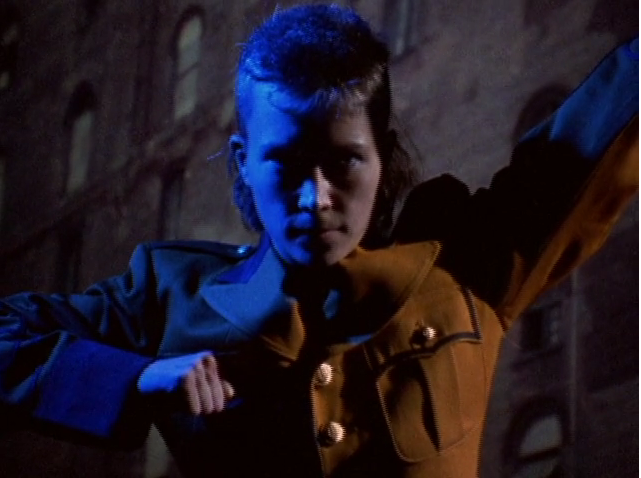
Henry Hills and Sally Silvers: 'Little Lieutenant,' 1994

PennSound has been very happy to host work by filmmaker Henry Hills since our launch. Today we're focusing on one particularly interesting work from his complete filmography: Little Lieutenant, a 1994 collaboration with choreographer and co-director Sally Silvers. 

Here is how Hills summarizes the film on his website:
Little Lieutenant is a look back at the late Weimar era with its struggles and celebrations leading up to world war, a period piece. Scored to John Zorn's arrangement of the Kurt Weill song, "Little Lieutenant of the Loving God", and drawing its imagery both from the original song and its somewhat idiosyncratic rearrangement, the film presents an internal reading of Silvers' solo scored to the same musical piece, "Along the Skid Mark of Recorded History". 
Closely following the Zorn arrangement, the film was storyboarded in 30 scenes (the arrangement changes approximately every 4 measures) and principally shot in a small studio employing rear screen projection, with foreground movement choreographed to interact with the projected imagery which reflects themes apparent in the song and its arrangement (Weimar cabaret scenes, labor footage, empty industrial landscapes, water, slides of moody photographs by James Casebere, a kinescope of Silvers' performance of the solo at the Joyce Theatre, battle newsreels, Walther Ruttmann's film Berlin: Symphony of a Great City, and a restructured animation, The Youth Machine). Scenes range through a Citizen Kane-esque pan up a forboding structure, idyllic lovers in both pastoral and industrial settings, labor marches, a lonely walk down a deserted alley, a bar brawl, a Motown-ish girl group, a dream sequence, and a giddy animation, up to the terrors of war and a bittersweet conclusion: an elaborate music video.

Silvers and Cydney Wilkes portray dual aspects of the Salvation Army Lieutenant who sang the song in the Brecht/Weill play “Happy End”, with Kumiko Kimoto and Leonard Cruz as the lovers and Pilar Alamo and Toby Vann filling out the group. The film was conceived by Zorn, Silvers, and Hills, co-directed by Silvers and Hills, choreographed by Silvers, shot and edited by Hills, and funded by a grant from the NEA Dance Program, with assistance from the Segue Foundation and the loan of a rear screen by Ken Jacobs.  

On that same page you can also see Zorn's score and read "Catalysts: Little Lieutenant," a scene-by-scene explication of the film. To watch this film, and many more Hills works from throughout his career, visit PennSound's Henry Hills author page.

Wednesday, November 2, 2022

PoemTalk #177: Two by Maggie O'Sullivan

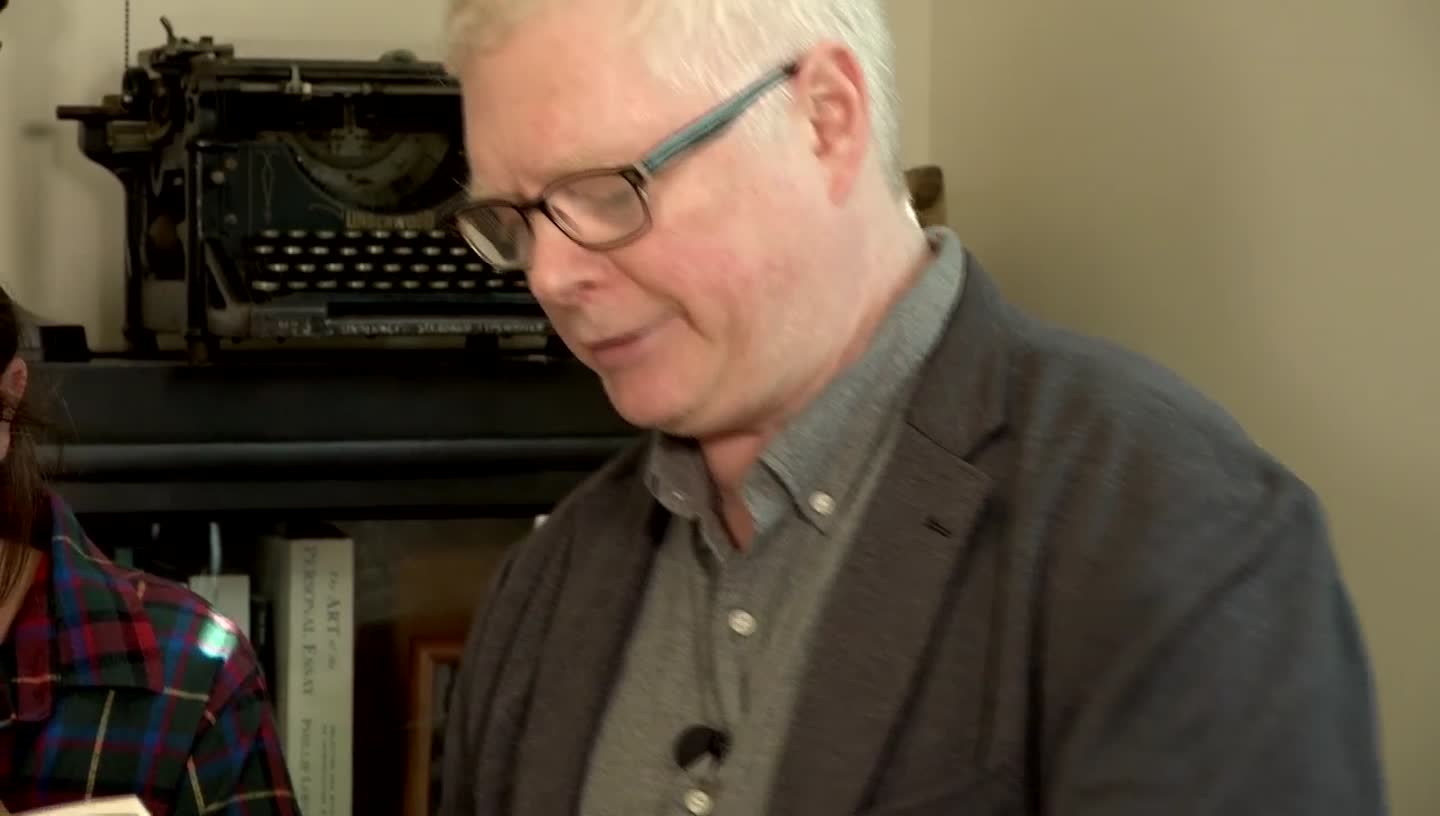
On Monday we launched episode #177 in the PoemTalk Podcast series, which focuses on two poems from Maggie O'Sullivan's 1993 Reality Street collection, In the House of the Shaman: "To our Own Day" (from the section "Kinship with Animals") and "Hill Figures" (from "Prisms & Hearers"). For this show, host Al Filreis was joined by a panel consisting of (from left to right) Julia Bloch, Charles Bernstein, and Eric Falci. 

"Both poems, the group concurred, create soundings — and readings, to be sure," Filreis writes in his Jacket2 blog post announcing the new episode, "but aural qualities foremost — that enact and continue O’Sullivan’s resistance to the English of the UK south." He continues: "The hill figures, if they are personages (beings on the landscape), seem in part to form up that resistance through a certain located noise: “Crow-Shade / plumb, true / hemispheres / (dwell-juggling).” What does their “rolled-a-run / lettering” stand against poetically?" "Whatever originary sound is being made, or called for," he concludes, "it is aided by instruments accompanying the human voice."

You can listen to this latest program and read more about the show here. PoemTalk is a joint production of PennSound and the Poetry Foundation, aided by the generous support of Nathan and Elizabeth Leight. Browse the full PoemTalk archives, spanning more than a decade, by clicking here.