Thursday, February 29, 2024

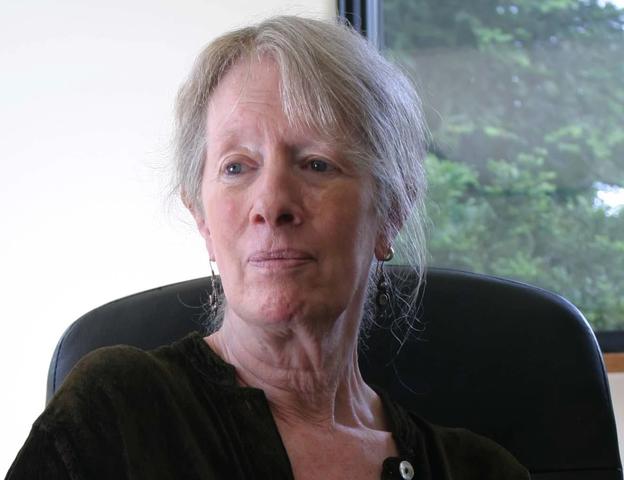
Lyn Hejinian Obituary by Lytle Shaw at Jacket2

Today at Jacket2 we published an obituary for the dearly-departed Lyn Hejinian penned by Lytle Shaw, her literary executor. Here's his opening paragraph:

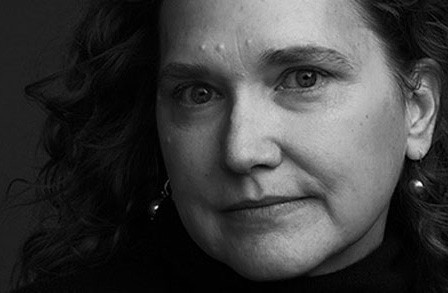
Lyn Hejinian, American poet and essayist, died on Saturday, February 24. Born Carolyn Frances Hall on May 17, 1941, and raised in Berkeley and later Cambridge, Massachusetts, she graduated from Harvard University in 1963. Her children, Paull and Anna, were born while she was married to the physician John Hejinian. After her divorce, Hejinian eventually partnered up with the jazz saxophonist Larry Ochs, living from 1972 to 1977 nine miles north of Willits, California, on eighty acres of rural property that she referred to as "the land." There in 1976 she acquired a Vandercook letterpress, taught herself typesetting, and began editing Tuumba Press, which, especially after her return to Berkeley in 1977, put her in touch with her peers in the poetry world. The Tuumba series included books by poets that, like Hejinian herself, would come to be associated with Language writing, including Carla Harryman, Rae Armantrout, Bruce Andrews, Charles Bernstein, Kit Robinson, Ron Silliman, and Barrett Watten. Hejinian's own poetry also began to appear at this time: A Thought is the Bride of What Thinking (Tuumba, 1976), A Mask of Motion (Burning Deck, 1977), Gesualdo (Tuumba, 1978), and Writing is an Aid to Memory (The Figures, 1978). But her work gained attention in particular with the two editions of My Life (Burning Deck, 1980, and Sun and Moon, 1987), a book that at once exploded many of the conventions of the genre of autobiography and developed an innovative poetics of everyday life. The 1980 version of My Life, written when Hejinian was thirty-seven years old, included thirty-seven sections, each comprised of thirty-seven sentences; the 1987 version added eight sections and also eight sentences to each of the previous sections. 

You can read Shaw's complete obituary here. Visit Monday's PennSound Daily remembrance for a statement from our own Al Filreis and a guide to Hejinian resources at both PennSound and Jacket2.


Wednesday, February 28, 2024

In Memoriam: Elizabeth Arnold (1958–2024)

Today, we share the sad news that poet Elizabeth Arnold passed away on February 24th after a long illness. The news was announced by her publisher, Flood Editions, who note that:
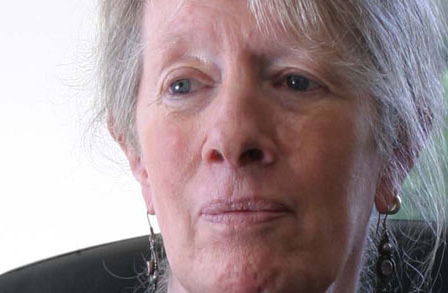
She was a dear person — a restless traveler as well as an intrepid thinker, devoted to her dogs, friends, and students — and a remarkable poet. She published six books of poetry, which to a rare degree, constitute a coherent body of work: Wave House (2023), Skeleton Coast (2017), Life (2014), Effacement (2010), Civilization (2006), and The Reef (1999). Arnold earned her PhD in English at the University of Chicago, where she worked for Chicago Review. Researching the poet Mina Loy for her dissertation, she discovered the poet’s lost novel, Insel, which she edited for Black Sparrow Press in 1991. Arnold taught in the MFA program at the University of Maryland before retiring and moving to Frostburg, Maryland, where she found a community of friends.

We at Flood Editions were honored to work with her for nearly twenty years. She will be greatly missed. 

Arnold was a guest of host Leonard Schwartz on episode #124 of his KAOS-FM program, Cross Cultural Poetics. Arnold's segment takes up the majority of the January 7, 2007 program, entitled "Civilization" after the collection she read from and discussed. Click here to listen to the show.


Monday, February 26, 2024

In Memoriam: Lyn Hejinian (1941–2024)

We start this week off with unwelcome news that resonates widely: Lyn Hejinian has passed away suddenly at the age of 82. Our own Al Filreis shared the following message this morning, reflecting the feelings of many of us at KWH, PennSound, and Jacket2:

The loss of the wonderful, talented, groundbreaking, generous poet and literary citizen Lyn Hejinian has rocked the poetry world. Those who knew her personally — as many of us at the Writers House did — and those who have read and discussed her work (e.g. the experimental coming-of-age book-length prose poem, My Life), are already feeling the impact of the loss: we won’t be able to read new poems and new books by Lyn. It remains for us to read and re-read the astonishing writings she left us.

As a close friend of our overlapping projects, it's no surprise that Hejinian is well-represented on both PennSound and Jacket2. Her encyclopedic PennSound author page presents approximately 150 individual files (complete readings and individual tracks) spanning 1977 to the present, which amply represent her diverse lives as poet, critic, publisher, and translator. Those recordings include germinal talks given as part of series organized by Bob Perelman and Charles Bernstein, readings (with My Life well represented) from every corner of the US, and Hejinian as both interviewee and interviewer (on her series of In the American Tree programs co-hosted with Kit Robinson on KPFA-FM). Hejinian's "constant change figures" was the subject of PoemTalk #15 in 2009.
Over at Jacket2, pieces with Hejinian as author or co-author include the essay "Continuing Against Closure," a furthering of her foundational essay "The Rejection of Closure" (which appeared in Jacket #14 in 2001); "I Am Suddenly Aware That Phrases Happen," the transcription of a 2005 talk with Filreis; "We Might Say Poetry," Hejinian's contribution to a 2005 feature in tribute to Ken Irby; and a transcription of Ted Berrigan's 1978 appearance on In the American Tree. You'll also find reviews of recent books by B.K. Fischer and Tim Wood, and articles referencing Hejinian by Miriam Atkin ("'to be a boundless reflection': On Critical Composition in Hejinian and Scalapino's 'Sight' and 'Hearing'"), Hillary Gravendyk ("Uses of the Useless"), and Raymond de Borja ("Lineated Time: Some Thoughts on the Line in Poetry").

Like many others in the poetry world, we are still reeling from the news, and join our community in grieving the loss of a poet of such tremendous influence.


Friday, February 23, 2024

Ginsberg, Fiedler, Layton, DeLoach, Orlovsky Read in Buffalo, 1978

Here's a rather interesting gathering of authors gathered in one room thanks to the influence of the one and only Robert Creeley, whose reel to reel tape archives provided the recording. This nearly two-hour event, taking place at the Allentown Community Center in Buffalo, NY on October 6, 1978, featured a lineup of literary critic Leslie Fiedler, Canadian/Romanian poet Irving Layton, author and editor Allen DeLoach, and Allen Ginsberg, who's joined by Peter Orlovsky in song.

Amongst a diverse set of voices — conscious of being "mischpokhe" (Yiddish for all part of the same family) as Ginsberg acknowledges — one of the more noteworthy is Fiedler, not typically thought of as a poet, who reads a handful of poems including "No Ghost Is True" (from Thou Shalt Truly Die), his very first publication from Poetry in 1947, along with "Song for Buffalo" and "To Chookie."

Ginsberg's set draws largely from his then-latest collection, Mind Breaths (1977), beginning with a powerful reading of "Don't Grow Old," his elegy to his father, Louis Ginsberg (who's also mentioned fondly in Fiedler's between-poem comments), complete with a harmonium-accompanied rendition of "Father Death Blues." In his introductory comments, Ginsberg indicates that he's written new additions to this poem while in Buffalo, and indeed, here the poem later published as "'Don't Grow Old,'" in Plutonian Ode — its first two parts written two days prior in Amherst, MA, while its conclusion was written the day before — is here treated as a continuation of the former poem, with its three sections numbered as parts eight, nine, and ten. He concludes his first set in a very different mode with the raucous "Punk Rock Your My Big Crybaby." For his second set he's joined by Orlovsky to perform "two compositions dealing with wrath": William Blake's "The Tyger," and "Plutonian Ode," written the previous summer, which is given a lavish introduction here, spelling out its influences and intentions. For serious Ginsberg scholars and more casual fans, this is certainly a historic performance worth checking out.

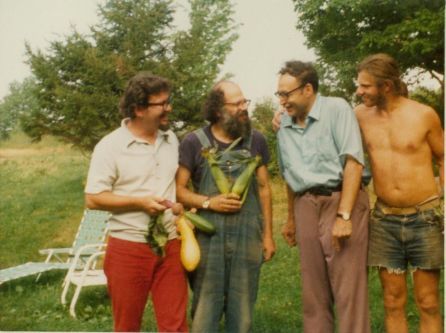
(photo above: Allen DeLoach, Allen Ginsberg, Carl Solomon, and Peter Orlovsky, August 1973)

Wednesday, February 21, 2024

Douglas Kearney on PennSound

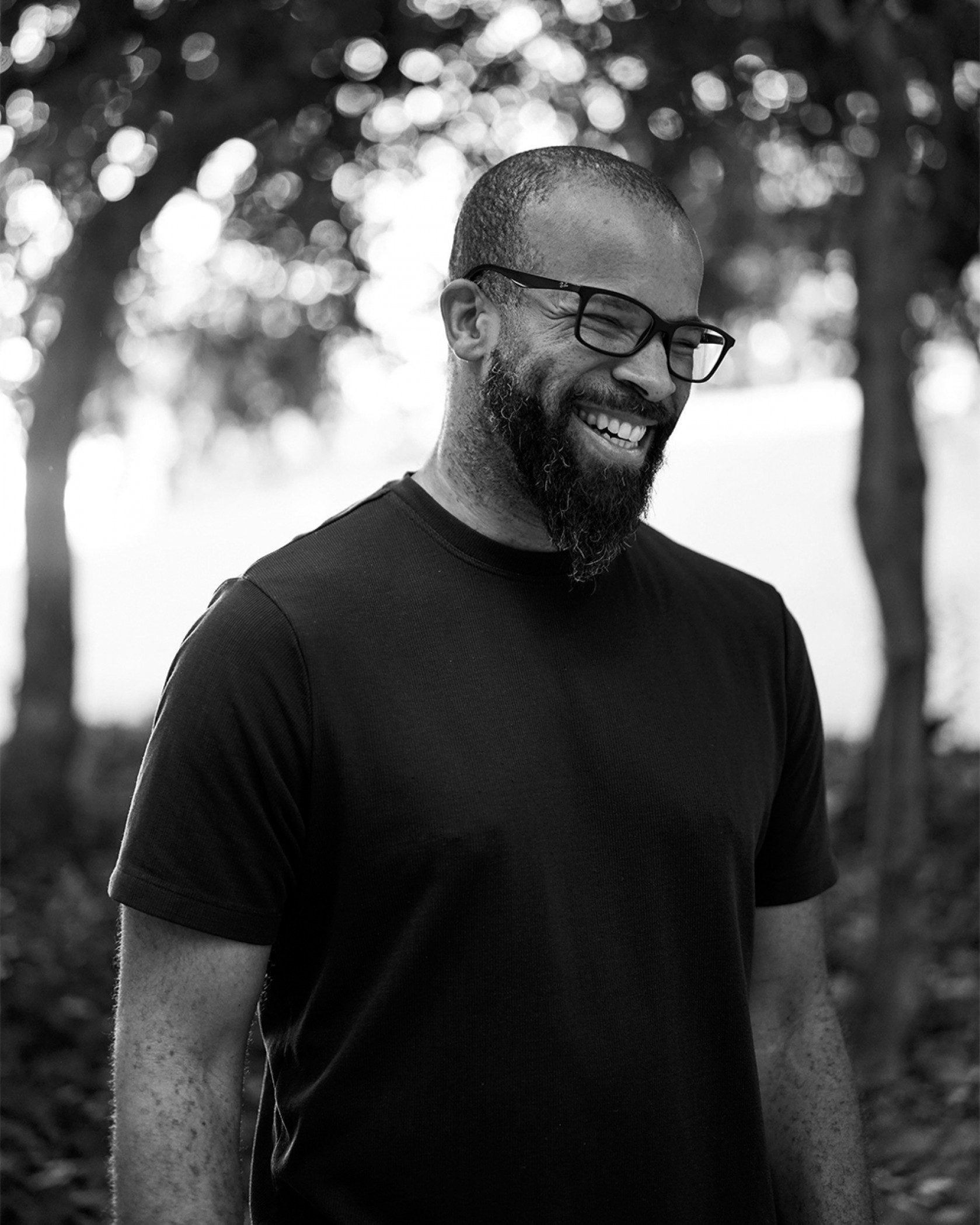
Today we are shining the spotlight on our author page is for poet, performer, and librettist Douglas Kearney, whose 2022 Griffin Poetry Prize win we celebrated here on PennSound Daily.

The majority of the recordings you'll find there come from Kearney's fall 2018 visit to our own Kelly Writers House, which included a two-part Close Listening reading and conversation with Charles Bernstein recorded on October 22nd, along with an appearance alongside Brian Goldstein for a "City Planning Poetics" event. This sixth installment in the series, organized by Davy Knittle, was titled "Urban Revitalization" and took place the following day.

In addition to these recordings, which are available in MP3 format or streaming video, we also have video from a trio of recent readings, including a September 2017 reading at the Poetry Center at the San Francisco State University, and a pair of undated recordings from Los Angeles' Museum of Contemporary Art and Harvard University's Vocarium Reading Series. A 2005 appearance on LA-Lit is our earliest recording, while a set of home recordings made this October for a future episode of PoemTalk rounds out the collection.

You can check out all of the aforementioned recordings on our Douglas Kearney author page. Click here to start listening.

Monday, February 19, 2024

Six Poets Each Teach One Short Poem to High-School Students

Here's a blast from the Kelly Writers House's past that's emblematic of its spirit of outreach to diverse audiences and an interesting precursor, of sorts, to ModPo. "Six Poets Each Teach One Short Poem to High-School Students," was a special event first held in May 2009 that brought together students from Liza Ewen's poetry course at Friends Central School and a half-dozen poets from the Philadelphia community, who discussed favorite poems "that would somehow convey something significant about themselves as a poet." It was such a great success that a second event was organized by Al Filreis and Ewen in May 2010.

In a blog post not long after the 2010 event, Filreis gave this rundown of the participants and their choices:
Rivka Fogel taught "This Room" by John Ashbery, a beautiful indirect memorial to Pierre Martory and non-narrative meditation on absence as presence. Sarah Dowling then came in and taught a section of "A Frame of the Book" by Erin Moure. Jessica Lowenthal then taught Harryette Mullen's "Trimmings." Randall Couch taught a very early poem by John Keats before revealing that it was Keats. John Timpane taught an Yvor Winters poem about the emotional complication of saying farewell to an adult child at an airport; Wintersean restraint and emotional distance abound here and strike one (strike me, at least) as a refreshing sort of illiberalism in an age of gobs of conventionally sentimental parent-child verse. Tom Devaney may have taken the pedagogical prize on this day, presenting William Carlos Williams' "The Last Words of My English Grandmother" — a seemingly easy poem for h.s. students to grasp. Yet it also does everything a modern poem does, and makes a remarkably good scene of instruction.
Video and audio of both events can be found here, along with PDF copies of the poems under discussion. You'll find much more programming like this, from KWH and elsewhere, on PennSound's Anthologies / Collections / Group Readings page.


Saturday, February 17, 2024

PoemTalk #193: on "To the Reader" by Ariana Reines

Yesterday we announced the latest episode in the PoemTalk Podcast series, which addresses Ariana Reines' poem "To the Reader," from her 2019 Tin House collection, A Sand House. For this program,  host Al Filreis was joined at the Kelly Writers House by a panel that included (from left to right) Pattie McCarthy, Eric Shoemaker, and Michelle Taransky.

Filreis offers this encapsulation of the discussion's evolution in his write-up of this new episode on Jacket2, noting, "The group began with an improvised list of topics this poem urges us to confront." "One topic (taken up toward the end of the discussion)," he continues, "is the trope of the unsayable. The speaker has 'seen things no one can explain' — has had an experience but the poem will defer or show itself incapable of describing it. Then there's the problem of conscious and unconscious literariness: that which isn't explainable ... is a knowledge 'for which no lineage / Credentialed me.'" "Such arising from nowhere frees her to pass in and out of the living world," Filreis concludes.

You can listen to this latest program and learn more about the show here. PoemTalk is a joint production of PennSound and the Poetry Foundation, aided by the generous support of Nathan and Elizabeth Leight. Browse the full PoemTalk archives, spanning more than a decade, by clicking here.

Wednesday, February 14, 2024

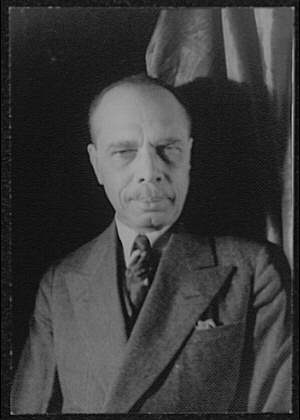
James Weldon Johnson on PennSound

PennSound's author page for James Weldon Johnson — a key figure in the Harlem Renaissance and former leader of the NAACP — is edited by Chris Mustazza, building upon his archival research. Here's his description of the project:

These recordings of James Weldon Johnson were made on December 24, 1935 at Columbia University and are part of a larger collection of recordings known as The Contemporary Poets Series. Johnson is the only African American poet in the series, which ran from 1931 through the 1940s. The addition of the Johnson recordings to PennSound is crucial for a number of reasons, one of them being the function of Johnson's poetry as an ethnographic preservation of culture through the transduction of the sounds of language.

The first two recordings in the collection, "The Creation" and "Go Down Death," both from Johnson's 1927 collection God's Trombones, seek to preserve the sounds of African American folk sermons of the early 20th century. Johnson's poetics in the introduction to God's Trombones speaks extensively about how these poems are a visual representation of the sounds of the preachers of the sermons, a kind of musical score and libretto. He works to represent the cadences of these dynamic sermons through punctuation and lineation, with em-dashes representing a pause longer than a comma, and line breaks an even longer pause. In this regard, Johnson's work serves as a kind of proto-Projective Verse: he scores these poems for sonic representation. As such, the addition of the recordings to PennSound allows us to hear firsthand the poems as Johnson heard them when he composed them. And, in doing so, Johnson's vision of preserving the sounds and cultural significance of these sermons for posterity is realized.

The poems from Johnson's 1917 collection of poems, Fifty Years and Other Poems, are also sonic representations and cultural preservations. For example, Johnson's use of dialect poetry in some of the poems is a representation of speech sounds. By the time of these recordings, Johnson had spent a significant amount of time thinking about the aesthetic effects of writing dialect poetry, during which time he renounced the practice, and here returns to it (perhaps after being convinced of the the value of dialect poetry by Sterling A. Browns's 1932 collection of poetry, Southern Road). Johnson deftly uses dialect to great aesthetic effect, especially in "Sence You Went Away," a poem that creates a slippage between the dialect for "since" and the sound of "sense" (i.e. which could be read as "Sense, you went away"). Here, too, Johnson's poetry and poetics prefigure aesthetic movements of the later 20th century.

This very important collection is publicly available here in PennSound for the first time ever. For this, we thank Jill Rosenberg Jones and the James Weldon Johnson estate for their permission to distribute the recordings, as well as the staff at the Columbia University Rare Book and Manuscript Library for their assistance in digitizing these materials. Thanks, too, to the Penn Digital Humanities Forum for supporting a project that made these digitizations possible. I hope you will enjoy listening to these recordings.

Monday, February 12, 2024

Short Films by Ted Roeder feat. Fagin, Foster, Godfrey, Patton, Szymaszek, Waldman

We've got a really exciting series of short poetry films made circa 2013 to start off this new week. They come to us courtesy of Ted Roeder, and it's possible you might have already enjoyed his two videos starring Julie Patton, which we initially announced in the fall of 2020 (but also regrettably misidentified the director as Ted Roemer). In addition to those films we've added ten new ones, which I'll detail below.

First up is a trio of films featuring Larry Fagin. In the first he speaks about writing while the second and third featuring his poetry: several new poems in the second and an excerpt from Ecology in the third. Tonya Foster (shown above) is next, reading from New Orleans Bibliography, then John Godfrey, who discusses writing in his first film and reads new work in the second. Julie Patton's two films come next, followed by Stacy Syzmaszek, who reads from Hart Island. Finally, Anne Waldman brings things to a close with three films of her reading various works. Shot in intimate settings and with glorious silvery black and white cinematography these films are as much a delight to watch as they are to listen to.

You can view all of the aforementioned films on the individual authors' pages or by clicking here for our Ted Roeder collection homepage.


Saturday, February 10, 2024

"E" no. 3 (2020), featuring McCaffery, Mac Low, Weiner, et al.

E was a magazine of experimental and performance writing with a particular interest in visual, concrete, and sound poetry, edited by poet/performer Marshall Reese and composer Eugene Carl. Like many upstart journals, it got off to an enthusiastic start with two issues published in 1976, with a note on the back cover of the second issue promising "next issue will be cassette or lp." Well, the editors have proven true to their word, though it took a little longer than expected, with the material initially gathered for E's third issue finally being released on red vinyl by the esteemed label Slowscan in 2020 in a limited edition of 250 copies (available via Granary Books). Reese was kind enough to contact PennSound about hosting a free digital copy of the issue and we were grateful for the opportunity, especially given how well this exciting compilation sits alongside similar works within our archives.

In his liner notes, Reese discusses the influences shaping the direction E would take, most notably his experience of the Toronto Sound Poetry Festival of 1978. He writes, "this record documents those forces and influences affecting me in the 70's, early 80's. My generation was the the forefront of an expansion of literacy combining indigenous poetries, graphics, still and moving images, recorded words, music and sound, an oral/aural culture experiencing poetry and music as synesthesia."

E no. 3 features nine tracks in total from eight artists, starting with Steve McCaffery's "Cappuccino: A Suffix Story for Henri Poincaré." Next up is CoAccident (a Baltimore-based "sound poetry music performance group" featuring Kirby Malone, Chris Mason, Ellen Carter, Alec Bernstein, Mitch Pressman, and Reese) with "When What Whole Wheat Means Meant That" and Greta Monach with two excerpts from Fonergon, before Jackson Mac Low closes out side A with "The First Sharon Belle Matla Vocabulary Gatha." Side B starts with two untitled pieces by Vladan Radovanovic, followed by Irrepressible Bastards (a.k.a. cris cheek and Lawrence Upton), followed by an excerpt from Hannah Weiner's Clairvoyant Journal (taken from her 1978 New Wilderness Audiographics cassette release), with Gene Carl wrapping up the record with "Words and Music by Gene Carl." Click here to start exploring.


Wednesday, February 7, 2024

George Quasha Reads 'crossroads angelics,' 2023

Today we bring you the final 2023 session from Chris Funkhouser and George Quasha. If you're a regular PennSound Daily reader you know that Funkhouser has been periodically recording the complete poetic works of his friend and neighbor Quasha since at least 2017 to the benefit of listeners worldwide. The pair already completed Quasha's multipart waking from myself last year, as well as gnostalgia for the present, a collaborative work featuring photographs by the poet's wife Susan. Today's ninety-minute session, recorded on December 30th, is comprised of the 34 poem sequence, crossroads angelics, which is dedicated to Funkhouser. You can read the first three poems in this series in the Spring 2020 issue of Marsh Hawk Review.

You'll find these and many more recordings on PennSound's George Quasha author page, along with lengthy selections from many of his books including Not Even Rabbits Go Down This Hole, Dowsing Axis, Hearing Other, The Ghost In Between, Verbal Paradise, Glossodelia Attract: Preverbs, The Daimon of Moment: Preverbs, Scorned Beauty Comes Up Behind: Preverbs, Things Done for Themselves: Preverbs, and Polypoikilos: Matrix in Variance: Preverbs, among others. Click here to start listening.

Monday, February 5, 2024

Ted Greenwald, "Voice Truck" (1972)

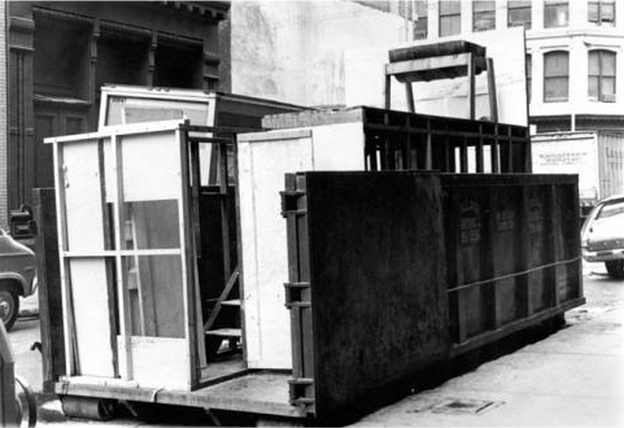
Here's a fascinating recording from the late Ted Greenwald that we added to the site in January 2015. "Voice Truck" was assembled as part of Gordon Matta-Clark's installation Open Space (a similar contemporary work is shown at right). Our own Charles Bernstein announced the new addition in a Jacket2 commentary post, which includes this description of the recordings:

In May 1972, the artist Gordon Matta-Clark installed a dumpster in front of 98 Greene Street in Soho (Manhattan). The work was called both Open Space and Dumpster. The Dumpster was filled with construction debris and other material, formed into three corridors. For Ted Greenwald's contribution to the installation, he created a special audio work. Greenwald installed a tape recorder on the delivery truck for the Village Voice, his long-time day job. Six reels were recorded. One of the tapes, featuring the most dramatic action of the day, was stolen from the cab of the truck: in the middle of Times Square, mounted police galloped up to a subway entrance, tied their horses to the entrance, and ran down into the subway. The other five reels survived and are being made available by PennSound for the first time (one of those cassettes is listed below in two parts)."

You can listen, read more about the work, and find a link for further discussion of Open Space as well as a short video on Matta-Clark on Bernstein's J2 commentary. The recordings are also linked on our Ted Greenwald author page, where, among many other recordings, you can also listen to a March 1971 reading by Greenwald with Matta-Clark. Click here to start listening.

Friday, February 2, 2024

Hilda Morley on PennSound

Our author page for Black Mountain-associated poet Hilda Morley (1916–1998) is admittedly a scant archive, containing just one three minute recording — the poem "Provence" from a March 15, 1992 reading at New York's Alice Tully Hall — but as PennSound co-director Charles Bernstein notes, "it is the only recording of Morley now available."

In her New York Times obituary, Wolfgang Saxon observed that "Ms. Morley published five books of poetry in which she articulated emotions and feelings in free verse, but a type of verse as measured as dance or music. She was a 'master of that ability,' Robert Creeley, a fellow poet, said." He continues: "She wrote that her poetry was shaped by the visions of Abstract Expressionism, which can create metamorphoses. Artists like Klee and Picasso, she said, gave her the means to create word canvases depicting the world around her."

We're grateful to be able to share this document of Morley's life, no matter how brief, and thank Patrick Beurard-Valdoye and Austin Clarkson for their assistance in making this recording available.