Friday, August 30, 2024

On Bill Berkson's 85th

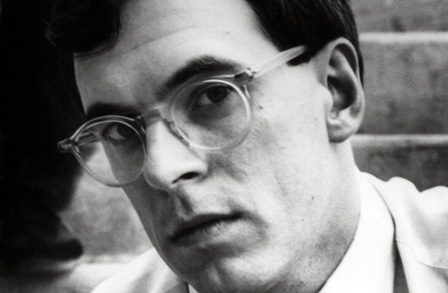
Today would have been the 85th birthday of the one and only Bill Berkson, a legendary poet, editor, critic, curator, and teacher, who passed away in June 2016. While we're lucky to have had more time with Berkson than we might have initially expected — he lived for roughly a decade after a risky and rare double lung transplant in the mid-oughts, producing some of his very best work during that period — that doesn't mean that his loss is not still dearly felt in the poetry community.

Our Bill Berkson author page is an impressive tribute to both the longevity of his creative life and his diverse talents. Our holdings there start in 1969 with a joint reading in New York City with Kenward Elmslie and continues with dozens of readings and talks — at the St. Mark's Poetry Project, San Francisco's Intersection for the Arts, the Grand Piano, 90 Langton Street, Bolinas, The Kootenay School of Writing, the Bowery Poetry Club, Paris' Double Change Reading Series, our own Kelly Writers House, the CUE Art Foundation, Berkeley's Moe's Books, Slaughterhousespace, Maison de la Poésie in Paris, and Dia Art Foundation — along with a handful of wonderful radio appearances. There's also a 2015 Close Listening program with Charles Bernstein, and two marvelous recent films: Mitch Temple's The Air You Breathe from 2017 (on Berkson's collaborations with his painter friends) and Citizen Film's Bill Berkson, School of Poets from 2016. You can explore the numerous wonderful recordings mentioned above, and many more, by clicking here.

Wednesday, August 28, 2024

PoemTalk #199: on Two by Edwin Denby

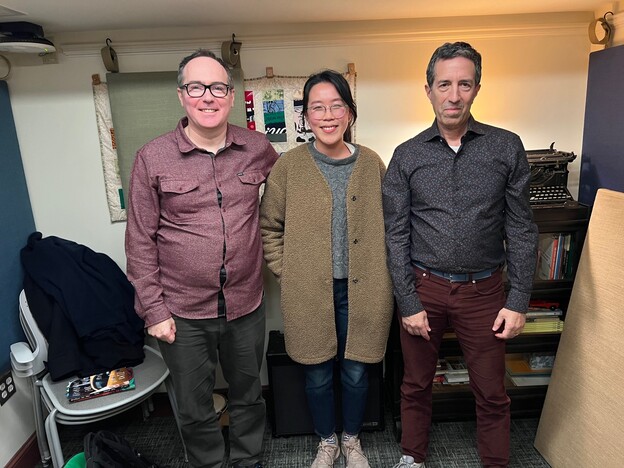
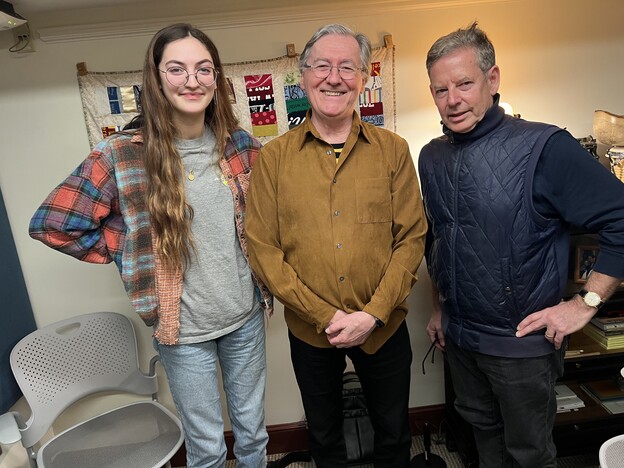
Today we released the newest episode in the PoemTalk Podcast series, its 199th in total. For this program, which explores a pair of poems by Edwin Denby — "The Subway" and "Ciampino: Envoi" —  host Al Filreis was joined by a panel that included (from left to right) Thomas Devaney, JS Wu, and Vincent Katz.

Filreis' brief write-up of the new episode notes that both poems can be found in Random House's Edwin Denby: the Complete Poems (edited by Ron Padgett), and offers the provenance of the tracks under consideration, which "were recorded and edited by Jacob Burckhardt between the years 1976 and 1983, on a CD originally issued on disc in 2004." He also points out that "'Ciampino: Envoi' in fact recalls Jacob as a young child in Rome and New York."

You can listen to this latest program, read the poems discussed, and learn more about the show here. PoemTalk is a joint production of PennSound and the Poetry Foundation, aided by the generous support of Nathan and Elizabeth Leight. Browse the full PoemTalk archives, spanning more than a decade, by clicking here.

Monday, August 26, 2024

'Hanuman Presents!' dir. Vivien Bittencourt and Vincent Katz

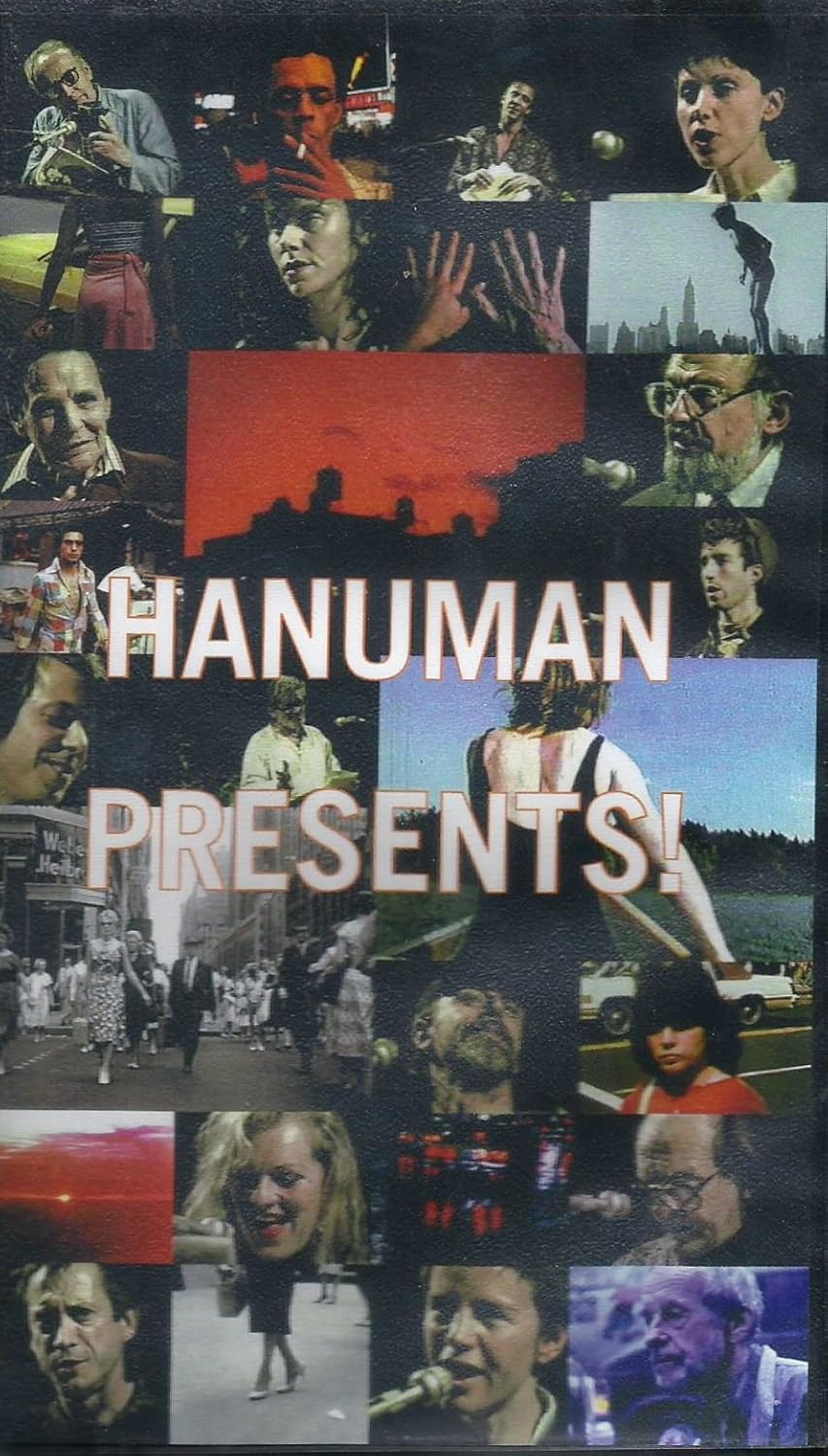
Today we are checking out Hanuman Presents!, a filmic tribute to Raymond Foye and Francesco Clemente's influential press of the same name, directed and produced by Vivien Bittencourt and Vincent Katz. The performances that form the heart of this film took place at the St. Mark's Poetry Project that took place on May 18, 1989. 

Introduced by Foye, the film was edited by by David Dawkins and Henry Hills, and features an impressive line-up of poets spanning two generations — Gregory CorsoElaine Equi, Bob Flanagan, Amy Gerstler, Allen GinsbergRichard Hell, Herbert Huncke, Katz, Taylor Mead, Cookie Mueller, Eileen Myles, Rene Ricard, David Trinidad, John Wieners — reading from their work. As Foye notes in his opening comments, all of Hanuman's living authors are included in the event. While the poets and the poems are wonderful enough on their own, the performances are cleverly accompanied by abstract images from the films of Rudy Burckhardt

Running just shy of forty-three minutes, Bittencourt and Katz's film is both a stunning time capsule and testimony to the power of Foye and Clemente's innovative press. You can start watching by clicking here. Be sure you don't miss Bittencourt and Katz's tribute to Jack Kerouac's Mexico City Blues, filmed at the Knitting Factory in 1988, which is also available on the same page.

Friday, August 23, 2024

Messerli to Be Honored at Beyond Baroque Gala

We wrap up this week with congratulations to Douglas Messerli, poet and founder of the influential presses Sun and Moon and Green Integer, who will be honored by legendary bookstore Beyond Baroque at this year's Beyond Gala. Messerli will receive the Distinguished Service award alongside Ashaki M. Jackson, cofounder of the organization Women Who Submit and publisher of The Offing. They'll join George Drury Smith Award winner Sesshu Foster and Exene Cervenka and John Doe of the band X, who'll receive a special recognition at the November 2nd event.

On PennSound's Douglas Messerli author page you'll find a wide array of recordings — of readings, interviews, podcasts, panel discussions, and more — spanning five decades, including forty years of Segue Series events from its original home, the Ear Inn. A great starting point for listeners is Charles Bernstein's three-part 2008 Close Listening program with Messerli, which includes more than thirty individual poems, along with an extensive interview. A great many electronic copies of Sun and Moon publications can also be found on various author pages at our sister-site, the Electronic Poetry Center, thanks to Messerli's generosity.

We applaud Messerli once more for this well-deserved honor.

Tuesday, August 20, 2024

In Memoriam: Russell Atkins (1926–2024)

Today we share the sad news that beloved Cleveland poet, playwright, and composer Russell Atkins passed away at the age of 98 on August 15th. Kevin Prufer — editor of both the 2012 essay collection Russell Atkins: On the Life & Work of an American Master and 2019's World'd Too Much: Selected Poetry by Russell Atkins — shared the news and posted a tribute this weekend.

Prufer notes Atkins' centrality and commitment to Cleveland's poetry scene, serving as "a playful and wry presence, a figure of kindness and piercing intelligence, a questioner of the status quo and a rigorous intellectual force," before noting some of the honors that his hometown had bestowed upon him, including "an honorary doctorate from Cleveland State University as well as the Cleveland Arts Prize for Lifetime Achievement," as well as the dedication of "Russell Atkins Way" in 2017.

"He was a poet of enormous significance," he writes, "often complexly at odds with the Black Arts Movement of his time, a figure who embraced playful typography, complex musicality, and often sinister and gothic content, a writer in love with the sonic and visual complexities of language," attesting that "No history of the intersection of African American poetry and the avant garde can be written without careful attention to Russell Atkins' work." He concludes by noting:
Russell's friends, students and admirers in Cleveland will remember him as a person of boundless intelligence, playfulness, and wit, and a figure central to Cleveland's literary and African American cultural scene.  Beyond his friends and admirers, Russell will be remembered as one of America's most distinctive poets, a true literary genius able to see not just the world, but language, anew.
While we do not have a PennSound author page for Atkins, there are a few related video recordings in our archives, which our own Charles Bernstein details in this Jacket2 commentary post. They include footage of the poet reading "Night and a Distant Church," "Train Yard at Night," and "It’s Here in The" for TV20 Cleveland in 2017, and Julie Patton performing Atkins' work with accompaniment by guitarist Paul Van Curen as part of a 2019 Cleveland Book Week tribute to the poet. You'll find both of those clips, along with links to numerous Atkins books at Eclipse by clicking here.

Monday, August 19, 2024

PennSound Italiana

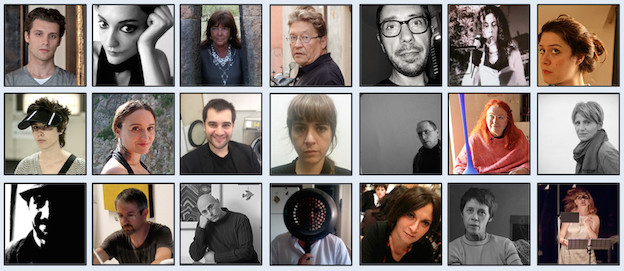
Today we shine the spotlight on our PennSound Italiana anthology page, lovingly edited by Jennifer Scappettone, which offers our listeners a stellar survey of contemporary Italian poetry. When we launched the page many years ago, Scappettone offered an introduction to the collection in an essay published at Jacket2. Here's how she starts off:
We seek over the course of this ongoing project to offer a broad sense of the field, filling in the substantive gaps in global access to Italian poetry (as both written and sonic text — even within Italian borders), and expanding awareness of its range of practitioners, with an emphasis on marginalized and experimental voices of the twentieth and twenty-first centuries. It is an effort — a unique one, in our reckoning — to "liberate" the spectrum of Italian poetry for as broad a public as possible through audio and video recordings, given that the publishing industry and the translation market are endangered and/or blinkered enough to condemn a significant swath of both historical and contemporary innovation to oblivion. As such, this live archive extends the task of PennSound writ large. 
Regular updates have been made to the page over the intervening years and we're always eager to have more work from Scappettone to share with our listeners. At present, the page has recordings from Gian Maria Annovi, Mariasole Ariot, Maria Attanasio, Luigi Ballerini, Gherardo Bortolotti, Franco Buffoni, Maria Grazia Calandrone, Alessandra Cava, Laura Cingolani, Corrado Costa, Elisa Davoglio, Milo De Angelis, Alessandro De Francesco, Antonella Doria, Giovanna Frene, Florinda Fusco, Samir Galal Mohamed, Marco Giovenale, Milli Graffi, Mariangela Guatteri, Giulio Marzaioli, Andrea Inglese, Eva Macali, Enzo Minarelli, Tommaso Ottonieri, Angela Passarello, Jonida Prifti / Stefano Di Trapani (a.k.a. Acchiappashpirt), Laura Pugno, Andrea Raos, Marilena Renda, Lidia Riviello, Amelia Rosselli, Rosaria Lo Russo, and Andrea Zanzotto. Click here to start browsing PennSound Italiana, and don't forget that Scappettone's Jacket2 intro includes some of her highlights from the collection, including background information on the historical nature of each recording.

Friday, August 16, 2024

Happy Birthday to Lew Welch

This August 16 would have been the 98th birthday of San Francisco Beat pioneer Lew Welch, who sadly disappeared into the California wilderness in 1971, never to be found. We first launched our Welch author page in the spring of 2009, with two key recordings representing some of the most notable work of his tragically brief career.

The centerpiece of our Lew Welch page is an April 1967 reading at Santa Barbara's Magic Lantern — a luxuriously long performance in which the poet reads practically all of his major works (save, perhaps, his "Taxi Suite"), including "Chicago Poem," "A Round of English," "Winter," "Graffiti," and "Maitreya Poem," as well as the entire sequence of Hermit Poems and most of its complementary volume The Way Back. Many of the poems are preceded by lengthy introductions (often longer than the poems themselves) in which Welch gives background information on his works and discusses topics as varied as politics, linguistics and popular music (some listeners might be familiar with Welch's stepson Hugh Cregg, whose stage name, "Huey Lewis," honors the father figure who took him to his first rock concerts).

Welch's musical interests — he was a former music major, and loved everything from Charlie Parker to James Brown to the Quicksilver Messenger Service with equal fervor — are on full display here, in pieces performed a cappella like "Graffiti" and "Supermarket Song," as well as sung portions of poems such as "A Round of English," which are marked off by musical notes (♪) in the printed texts. In one section of that poem, a somewhat unremarkable passage:


Shakespeare Milton
Shakespeare Milton

Shelley as well
Shelley as well

Sarah something Teasdale

Edith M. Bell
Edith M. Bell


yields a breathtaking performance when Welch sings it to the tune of "Frère Jacques," going so far as to emulate the effect of multiple voices singing the lines in a round: "Shakespeare Milton / Shakespeare Milton / Shelley as Milton / Shelley as Milton / Shelley as Well / Sarah something Shelley as / Sarah something Shelley as / Sarah something Teasdale / Sarah something Teasdale / Edith M. Bell / Edith M. Bell." For Welch, poetic language was purely a spoken vernacular full of idiosyncratic American rhythms and melodies. He tells us: "A poet has his material absolutely free. It's coming out of the mouth of every American in the world. All he has to do is clean his ear out, listen to it, and put down what he has on his mind out of that material, because there is no other material."

Also included in the Magic Lantern set is Welch's epic "Din Poem," an ambitious pastiche of poetry, prose and song which most completely achieves his poetic goals, ventriloquizing numerous parallel discourses — the language of business and patriotism, of faith and lust, of marriages in disrepair and psychological breakdowns, along with virulent hate-speech — which are eventually woven together into a thunderous wave of American noise, against which he sets a parable of hope and escape. In this raw and uncompromising masterpiece, we see a complex portrait of America at numerous societal crossroads, as well as the personal hells Welch eventually sought to escape.

Our other recording at launch was made at San Francisco's Renaissance Corner in the spring of 1969. In that set in which Welch reads his collection, Courses, in its entirety. This suite of micro-poems, each named after a different academic subject, showcases both the poet's wit as well as his propensity for potent and memorable phrasing, honed during his years working in the advertising industry. Both of these recordings came to us through the reel-to-reel collection of Robert Creeley. We also recently added a third recording of Welch, which comes from the Mad Mammoth Monster Poetry Reading organized by Auerhahn Press that took place on August 29, 1963. At this event Welch also read excerpts from his Hermit Poems series.

Inspired by the optimism of poet Tom Mandel, I'd like to think that Welch is still out there in the wilderness, living on locusts and wild honey and "wear[ing his] hair / as long as [he] can / as long as [he] can." As a New American Poet that embodied the spirit of San Francisco poetics, had one foot in the Beat era and the other squarely set in the Summer of Love, and looked forward to the advances of Language poetry, Welch is endlessly fascinating. Click here to start listening to his work.

Wednesday, August 14, 2024

Bergvall Named 2024 Henry Moore Fellow

Today we celebrate a great honor for Caroline Bergvall, who was recently named a 2024 fellow of the Henry Moore Institute. Her fellowship project, entitled "The Book as Transitory Shelter," seeks
to ask how a book can and does function in relation to notions of transit, of temporary shelter, in a material, textual and artistic way, and also symbolically. How it can provide a safe yet critical space. How it can live and work in and also out of time, and create between artist and reader a space of material connection, critical complicity, discovery and urgency.
"All this sits hand in hand with Bergvall's deep interest in fugitive forms and materials, and mutating linguistic forms," the description continues, and speaks to our contemporary moment "when loss of refuge, shelter and protection, literally and culturally, are so virulent." In this context, the book "carves out its own space like a moveable zone, a protected area for inner travelling and interconnective imagination that can equip us to rethink or meet again the worlds that we are each a part of and contribute to."

You can read more about "The Book as Transitory Shelter" here, and be sure to check out PennSound's Caroline Bergvall author page, where you'll find many fascinating recordings documenting the poet's most recent trilogy of Meddle English, Drift, and Alisoun Sings, along with earlier works including Fig and Goan Atom. Click here to start exploring.

Monday, August 12, 2024

Melvin B. Tolson on PennSound

Today we are taking a survey of all the recordings you'll find on PennSound's Melvin B. Tolson author page.

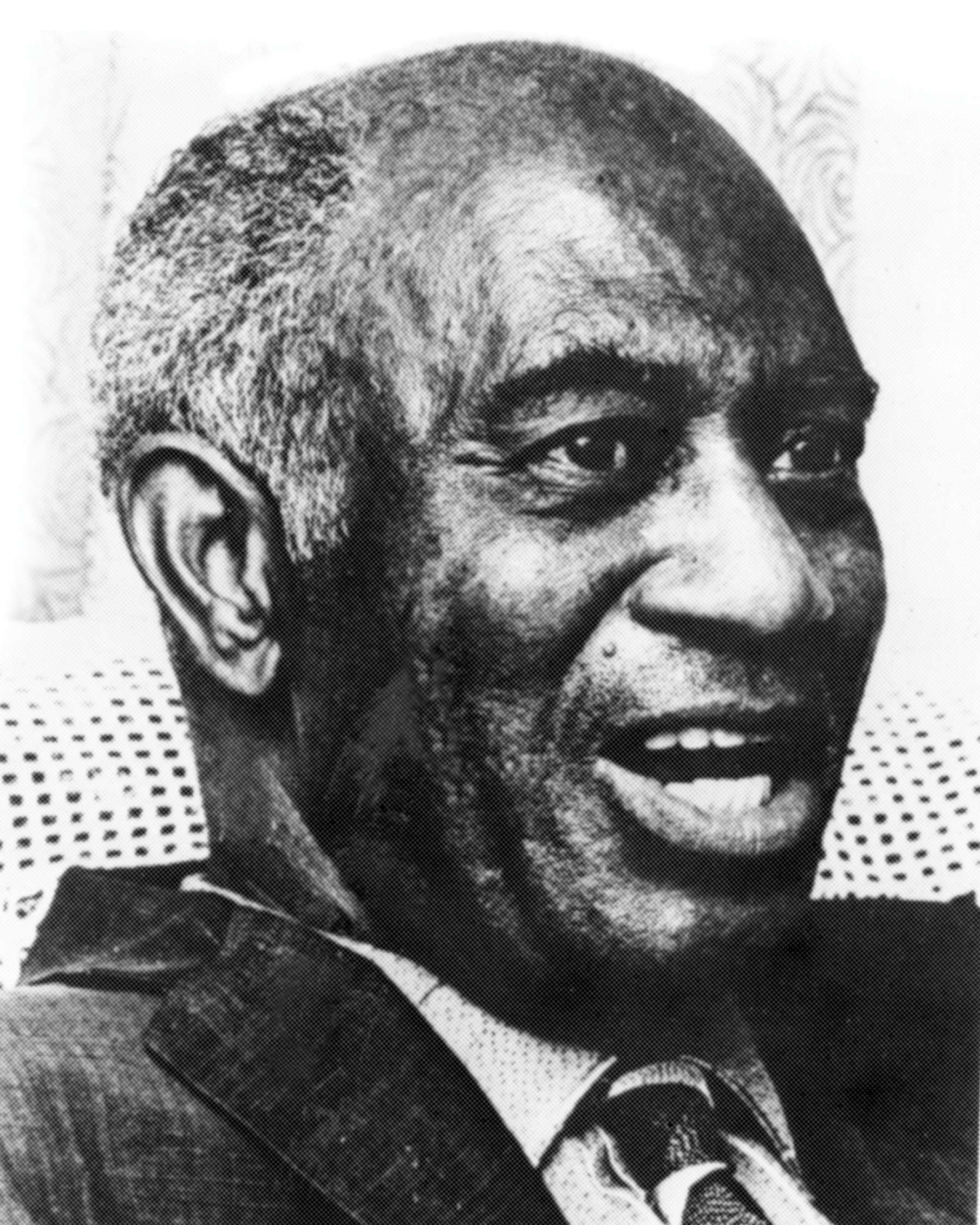
The heart of this collection is a two-part career-spanning reading at Washington, D.C.'s Coolidge Auditorium, on October 18, 1965 — an event held in coordination with the Library of Congress — which serves as a fitting tribute to the influential poet, politician, and pedagogue, who'd pass away less than one year later. After a lavish introduction, Tolson starts with his debut collection, Rendezvous with America and hits many of the high points of his prestigious career, including his magnum opusDark Symphony, and Libretto for the Republic of Liberia, written during his time as that nation's poet laureate. Running just short of eighty minutes, Tolson's reading includes the poems "Sometimes," "The Gallows," "If You Should Lie to Me," "The Primer for Today," "The Dictionary of the Wolf," "Harlem Gallery," "The Birth of John Henry," "Ballad on Old Satchmo," and "The Sea Turtle and the Shark," among others, with commentary provided along the way.

This retrospective performance is nicely complemented by a second recording of excerpts from Dark Symphony, for which, unfortunately, we have no information regarding its recording date and location. Nevertheless we're grateful to be Tolson's estate and the Library of Congress for the opportunity to present these materials to our listeners. Click here to visit PennSound's Melvin B. Tolson author page.

Friday, August 9, 2024

Lee Harwood on PennSound

We close out this week by revisiting our PennSound author page for British poet and translator Lee Harwood, whose work crossed the Atlantic to find affinities with the poets of the New York School.

When Harwood passed away in the summer of 2015, he was remembered by The Argus for his dedication to both poetry and politics, serving "as a union official and as a member of the Labour Party during its most radical years." John Harvey offered up a recollection of his long friendship with Harwood, including the memory of an event in the last year of the poet's life when they both read their work with jazz accompaniment, conjuring up memories of Harwood's formative experiences in New York during the 1960s. Finally, Enitharmon Press, publishers of Harwood's most recent collection, The Orchid Boat hailed him as "not only a highly gifted and skilled poet, but a man of immense kindness and thoughtfulness."

The heart of our Lee Harwood author page is his career-spanning Rockdrill  album The Chart Table: Poems 1965-2002, which showcases twenty titles from across his career, including "As Your Eyes Are Blue," "Linen," "Animal Days," "Summer Solstice," "African Violets" and "Gorgeous." Another highlight is "Chanson Tzara," a twenty-seven minute audio composition that serves as an ambitious and fully-dimensional tribute to both Tzara and the chaotic spirit of Dada made contemporary, starting with a hectic sound collage of found samples, ring modulated radio noise, music, and text-to-speech voice generation, which eventually gives way to a touching and elegiac voiceover by Harwood that weaves together memories, translations, and the young poet's conversation with Tzara. Finally, we have Harwood's half hour set from the Shearsman Reading Series at London's Swedenborg Hall in June 2008. You can listen to all of the aforementioned recordings by clicking here.

Wednesday, August 7, 2024

PoemTalk #198: on Three Poems from Larry Price's '1/0'

This week saw the release of the latest episode in the PoemTalk Podcast series, which focuses on "three prose-poem sections or pages" from Larry Price's newest book, 1/0. This program breaks somewhat with PoemTalk convention in that the author is part of the discussion, alongside host Al Filreis, William Fuller (who chose the poems that were considered), and Sophia DuRose.

Filreis' brief write-up of the new episode notes that "Larry's PennSound page at the time of our conversation did not yet include recordings of this new writing, so we asked Larry to perform these poems toward the start of the episode. Earlier on the day of the session Larry spent time in the Wexler Studio at the Kelly Writers House recording more poems from 1/0 and other selections from his previous books." He also gives a preview of the next program's subject and guests, but we won't spoil that here.

You can listen to this latest program, read the poems discussed, and learn more about the show here. PoemTalk is a joint production of PennSound and the Poetry Foundation, aided by the generous support of Nathan and Elizabeth Leight. Browse the full PoemTalk archives, spanning more than a decade, by clicking here.

Monday, August 5, 2024

Happy Birthday, Tim Dlugos

Today we celebrate the life of Tim Dlugos, born this day in 1950. Dlugos is justifiably celebrated for his bravery and candor in documenting his struggles with HIV/AIDS in iconic poems like "G-9" — named for the Roosevelt Hospital ward where he'd been an inpatient on several occasions— from which Dlugos read excerpts on ABC's Good Morning America just weeks before his final admission. Nevertheless, this is but one facet of Dlugos' poetics, where we also find charming pop sensibilities, tender expressions of love, unflinching dispatches from queer culture, an eye for formal experimentations, and a wicked sense of humor.

PennSound's Tim Dlugos author page has been greatly augmented by the generosity of Christopher Wiss and David Trinidad, who've shared a number of key recordings with us. The earliest of these recordings is a 1974 from Mass Transit Bookstore in Washington, D.C., where he read alongside John Ashbery (Trinidad notes that you can hear Ashbery in the background reacting to Dlugos' poems). Dlugos notes that he's only going to read one poem "from the book" (High There, his debut chapbook published by Some of Us Press in 1973) in this nearly forty-minute set, which includes a number of early favorites like "American Baseball" and "Gilligan's Island," along with "Great Art," "So Far," "Flaming Angel," "Poem for Jeanne," "Dream Series," "President Truman," and "As It Is." This recording also includes a number of unpublished early poems ("Sexual Postures," "Gypsy," and "The Eyes of Our Hearts") as well as a shorter draft version of "Stanzas for Martina" (written for Tina Darragh) than what was eventually published.

An undated home recording made by Dlugos in D.C. appears to be from not long thereafter. Running twenty-six minutes, this set begins with a bold proclamation, "from high above DuPont Circle in Washington, D.C. to your machines, this is Tim Dlugos . . . and this is 'John Tongue,'" before launching into the poem of the same name. He also reads "Poppers," "Great Books of the 1950s," and "Some," along with some titles from the previous recording ("As It Is," "American Baseball," "Stanzas for Martina"). This tape also includes a few unpublished pieces: "Dream With You In It," excerpts from a January 1975 dream journal similar to "Dream Series," and a piece from the series Music (for Maurice Sendak) based on Rachmaninoff's second symphony.

Last, but certainly not least, we have Dlugos' 1984 reading with Dennis Cooper at Venice, CA's beloved Beyond Baroque. This forty-minute set consists of ten poems in total, starting with "Pretty Convincing," and moving on to "Close," "Sonnet ["Stevie Nicks walks into the Parisian weather"]," "The Nineteenth Century is 183 Years Old," "Octavian," "Not Stravinsky," "Green Acres," "Summer, South Brooklyn," and "The Morning," before concluding with the long poem "Cape and Islands." When sending the recordings along, Trinidad reminisced, "I was there; it was a spectacular reading," and I agree with him wholeheartedly. You will too.

These three recordings join those already in the PennSound archives, including his 1977 appearance on Public Access Poetry and a segmented 1978 Segue Series reading from the Ear Inn where Dlugos reads "Sonnet for Eileen Myles," "Je Suis Ein Americano," and "A Day for Don and Vladimir," along with several of the perennial favorites listed above.  

Once more, we thank Christopher Wiss for his kindness in letting us share these recordings, and David Trinidad for sharing them with us. You can listen to all of the aforementioned recordings by clicking here.

Friday, August 2, 2024

Six Poems by Giovanni Fontana

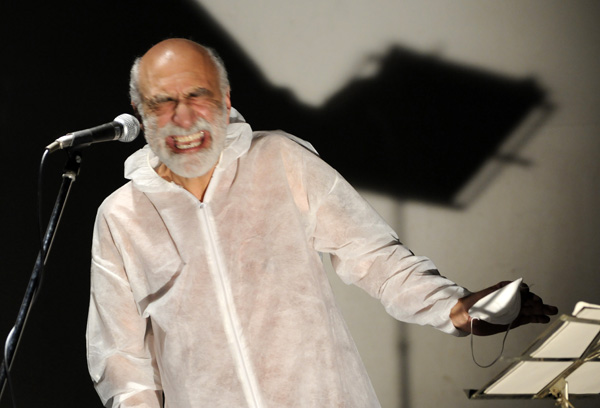
We wrap up this week by highlighting a recent addition from Italian multimodal poet and performance artist Giovanni Fontana: a sampler of six recordings from his prodigious career. Titles include "Per Segrete Stanze," "Sento Dunque Suono," "Pressing," "Vesunna," "Di Bocca in Bocca," and "Le Tombeau D'Amadeus."

"In Fontana's work, the voice becomes inexhaustibly sound, word, phrase, speech, and it does so in its own rhythmic continuity. Poetry is not only with the voice and in the voice, but behind the voice, within one's body, where are also chants and sighs, and everything else beyond the saying word is a sign of inexpressible, primordial conscience of the existence," Paul Zumthor writes. "Fontana refers to the human body as a primitive and final reality, where the voice emanating from the whole body, confirm (our) corpus and spiritus as one only thing, that is a sort of primitive cry, a sonority destined to end with the last breath, identified by a gesture of the body, by the most simplest and radical gesture: that of living." 

Sean McCann offers a similar appraisal, noting that "In one light, Fontana's voice erects a brutal and guttural effigy of man, primitive and hermetic. Yet, stepping to the side, one can see the thin strands of support bolstering such combustibles." McCann expands his focus to Fontana's full spate of creative endeavors, concluding, "The interconnection between Giovanni's visual and audio artwork is significant. Words twist and dissolve; blotted with ink, soaring across an empty score." This reinforces Fontana's own assertion that "Usually in art, the signifier is much more important than meaning. Because in art it is important not what is said, but how it is said."

You can listen to these six recordings on PennSound new Giovanni Fontana author page.