Friday, December 31, 2021
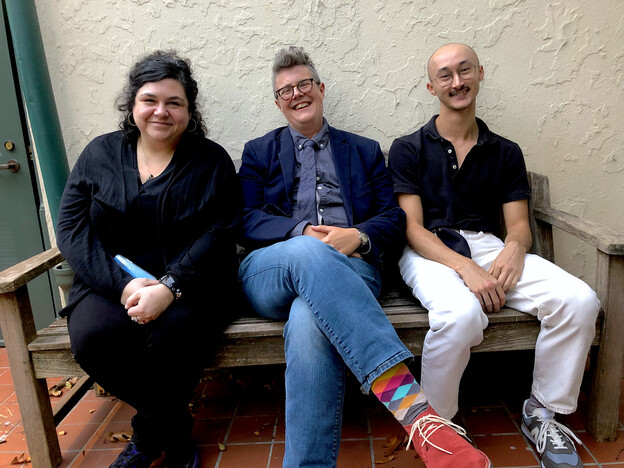
PoemTalk #167: on Myung Mi Kim's "And Sing We"
Wednesday, December 29, 2021
Yusef Komunyakaa on PennSound
Monday, December 27, 2021
Haroldo de Campos on PennSound
Thursday, December 23, 2021
John Richetti reads "A Visit from St. Nicholas"
More frequently known by its opening phrase, "'Twas the night before Christmas ...," "A Visit from St. Nicholas" was first published in Troy, New York's Sentinel on this day in 1823 with no attribution. It became wildly popular, reprinted far and wide, and its author — a professor of literature and divinity at New York City's General Theological Seminary of the Episcopal Church, who initially sought to downplay his connection to the poem — would finally be credited in 1837, with Moore including it in a collection of his verse in 1844.
Click here to listen to Richetti's performance of the poem. You can read along on the Poetry Foundation's copy of the poem here. Many more recordings made by Richetti form the backbone of our PennSound Classics page, which is organized by author name. To start browsing, click here.
Tuesday, December 21, 2021
Welcoming Winter with Bernadette Mayer
Friday, December 17, 2021
"Poetry Is for Breathing," 2019
Wednesday, December 15, 2021
Congrats to MLA Scaglione Translation Prize Winners, incl. Nakayasu
But Jack Jung, Sawako Nakayasu, Don Mee Choi, and Joyelle McSweeney — themselves experienced practitioners of experimental poetry — took the job to heart and have recreated in English Yi Sang's terse, polyglot, self-undermining, dreamlike parables and essays, first published in Korean and Japanese and then subjected to the hazards of war and neglect. With its evocation of alien typographies, its professed decadence, and its indifference to hierarchy, Yi Sang's writing fits on neither side of the colonial relationship that defined Korea and Japan. The elegant format and plural translating voices make this book a suitable monument to this intriguing figure.
Monday, December 13, 2021
Ted Enslin: 2000 Recording Newly Segmented
Friday, December 10, 2021
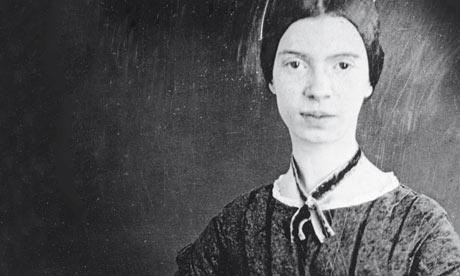
Happy Birthday to Emily Dickinson
Wednesday, December 8, 2021
Remembering Jackson Mac Low
Monday, December 6, 2021
Join Us for a Live PoemTalk Taping on Wednesday 12/8
Friday, December 3, 2021
John Richetti Reads Love Poems, 2021
Love has always been a recurring theme in poetic expression over the centuries. The speaker is almost always a man addressing a woman to praise her beauty or to declare his desire for her or even to berate her for refusing his advances, and often enough warning her that her beauty won’t last. Love, of course, is a vague notion. The word can signify sexual desire or something less intense such as fondness and fellow-feeling for friends and relatives or indeed for the rest of the world, fellow humans and animals. I have been browsing lately in an anthology, A Book of Love Poetry, edited by Jon Stallworthy (Oxford University Press, 1973), and I have encountered many familiar poems and also many I did not know, including about a dozen by women. So here in this section I have chosen to record a number of love poems, including many that most readers like me will not be familiar with. As Stallworthy remarks in his introduction, “there are almost as many definitions of love as there are poets,” and in “a high proportion of cases, what they have to say is said better, more freshly, than anything on any other subject.”
Richetti's selections are generous, to say the least, with a whopping seventy tracks spanning several centuries. Iconic names like Tennyson, Marvell, Rossetti, Marlowe, Poe, Pound, Donne, Berryman, Swift, Byron, Neruda, Frost, Shakespeare, Auden, Whitman, and Yeats, among many others. Particularly as the semester is winding down for many of us, it's a great time to relax and immerse ourselves in some classic literature. Click here to start browsing this new, impressive body of material.
Wednesday, December 1, 2021
Tomorrow at KWH: A Celebration of Al Filreis' '1960'
We invite you to join us tomorrow night, December 2nd, at 6:00 PM EST for a live-streamed celebration of our own Al Filreis' newest book, 1960: When Art and Literature Confronted the Memory of World War II and Remade the Modern. This special event will be co-hosted by Charles Bernstein and Laynie Browne and can be watched here. Here's the full announcement:
We're delighted to invite you to join us Thursday, December 2, at 6:00 PM (ET), to celebrate the release of the newest book by Kelly Writers House Faculty Director Al Filreis, 1960: When Art and Literature Confronted the Memory of World War II and Remade the Modern. In his latest work, Filreis recasts 1960 as a turning point to offer a groundbreaking account of postwar culture. He examines an eclectic group of artistic, literary, and intellectual figures who strove to create a new language to reckon with the trauma of World War II and to imagine a new world. Laynie Browne and Charles Bernstein will lead a conversation with Filreis on his writing and process. We hope to see you there! Registration is required to attend this event in person. Please fill out the PennOpen Pass daily symptom checker the day of the event and be ready to display your Green Pass.
In addition, here is a sampling of some advance praise that 1960 has garnered:
Tightly focused on work done within the year of its title, 1960 offers a compelling account of how artists processing the memory of mass trauma in World War II turned to innovation and reinvention as a means of recovery. Al Filreis has managed a rare accomplishment―writing a profound work of historical analysis that has deep implications for ideas shaping our lives today. — Johanna Drucker, author of Iliazd: Meta-Biography of a Modernist
1960 offers a provocative and vivid intellectual history from a literary perspective. Reading works as diverse as John Coltrane’s My Favorite Things and Jackson Mac Low’s aleatory poetry as part of the belated processing of World War II traumas, it asks us to reconsider the origins, references, and trajectories of the postwar avant-gardes. — Craig Dworkin, author of Dictionary Poetics: Toward a Radical Lexicography
This brilliantly syncretic book confronts the repression of World War II in American culture, circa 1960. Filreis thinks through a constellation of songs, literature, poetry, and films, each pierced by the war. His linked essays show how great art is not only ethically necessary but also a source of endless pleasure. 1960 is a tour de force of critical intelligence. — Charles Bernstein, author of Pitch of Poetry
We hope you'll join us for this very special event.