Tuesday, April 16, 2019

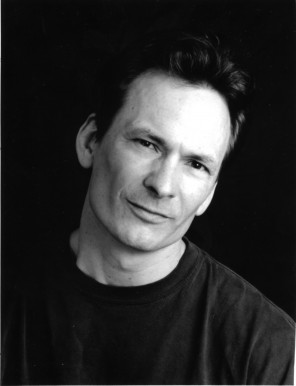
Congratulations to Pulitzer Prize-Winning Poet Forrest Gander

Monday afternoon was a bright one for this year's crop of journalists, authors, artists, and composers who've been awarded Pulitzer Prizes for 2019. Among them is Forrest Gander, who won the prize for poetry for his 2018 New Directions book, Be With.  In their citation, the Pulitzer judges hailed the book as "a collection of elegies that grapple with sudden loss, and the difficulties of expressing grief and yearning for the departed."

The publisher's details the volume's contents as follows: "Drawing from his experience as a translator, Forrest Gander includes in the first, powerfully elegiac section a version of a poem by the Spanish mystical poet St. John of the Cross. He continues with a long multilingual poem examining the syncretic geological and cultural history of the U.S. border with Mexico. The poems of the third section — a moving transcription of Gander's efforts to address his mother dying of Alzheimer's — rise from the page like hymns, transforming slowly from reverence to revelation." They continue, "Gander has been called one of our most formally restless poets, and these new poems express a characteristically tensile energy and, as one critic noted, 'the most eclectic diction since Hart Crane.'"

Our Forrest Gander author page is home to eleven full-length recordings, including readings from 1992 to 2011 at The Ear Inn, the New Coast Festival, San Francisco State University, the Key West Literary Seminar, Yale's Beinecke Rare Book and Manuscript Library, Boise State MFA Reading Series, and our own Kelly Writers House, along with two appearances on Leonard Schwartz's Cross Cultural Poetics program.  You can browse those holdings by clicking here. We send our congratulations to Gander and his many fans, and hope to be able to showcase more recent recordings of his work soon.




Monday, April 15, 2019

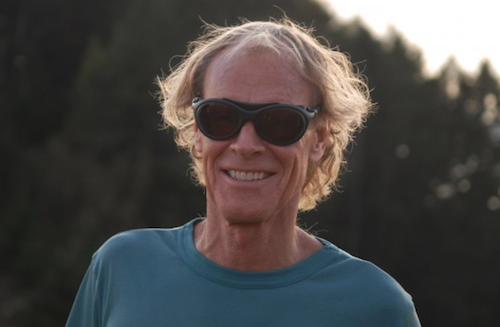
M.C. Richards on PennSound

We're starting this week off by highlighting our author page for the late M.C. Richards, a poet, potter and translator whose astounding life included a stint teaching at the fabled Black Mountain College (where she also participated in the first happening), an early experiment in communal living at "the Land," in Stony Point, NY (along with John Cage, David Tudor and others), and friendships with Jackson Mac Low, Charles Olson, Paul Williams, Robert Rauschenberg and Franz Kline. She devoted her later years to working with the developmentally disabled at the Camphill Village in Kimberton, PA.

Our Richards author page is anchored by a 1997 recording made at Indre Studios in Philadelphia and comes to us courtesy of a close friend, Jasper Brinton, who provided us with a little background to the session. "She made this tape essentially under some strain: she did not live to see it published to any degree; but understood its importance for her legacy," he notes. "The quality of the recording is excellent. Her voice strong. Earlier in 1991 Station Hill Press published Imagine Inventing Yellow: New and Collected Poems of M.C. Richards. The tape includes a few of these poems but also later work she saw fit to preserve."

We're very glad to be a part of that preservation process. You can listen to the seventy-five minute recording, consisting of nearly two dozen poems — including "March," "Strawberry," "Imagine Inventing Yellow," "Morning Prayer," "How to Rake Water," "Sweet Corn," and "For John Cage on His 75th Birthday" — along with plentiful fascinating asides and remarks by the author, by clicking here.

Friday, April 12, 2019

Tango with Cows: Book Art of the Russian Avant Garde, 1910-1917

We're taking a trip deep into the PennSound archives to close out this week, with a new addition to the site from ten years ago this month. "Tango with Cows: Book Art of the Russian Avant Garde, 1910-1917" was a groundbreaking exhibition that ran through the spring of 2009 at Los Angeles' Getty Center.

PennSound Senior Editor Danny Snelson was responsible for seeing this remarkable multimedia resource through to fruition, and so we thought it fitting to have him provide our listeners with an introduction. Here's what he had to say:
PennSound has been working in collaboration with the Getty Research Institute to present this remarkable collection of historical and contemporary transrational poetry, centered on an exhibition of Russian Futurist book art held at the Getty earlier this year. The exhibition's title — "Tango with Cows" — taken from a poem by Vasily Kamensky, points to the sense of hilarity and irreverence you'll hear in these startlingly original 'beyonsense' poems. Our page of recordings compliments the extensive media collected online at the Getty's website. There, you can find programs, essays, video footage, full scans of the Futurist books, and even a fully interactive slideshow of key books from the exhibition! 
Our archive of sound recordings comes in two parts: first, Tango with Cows features Oleg Minin's bilingual readings of essential poems found in book art projects from poets such as Alexei Kruchenykh, Velimir Khlebnikov, and Pavel Filonov. By reading from the Russian before the accompanying English translation, Minin offers listeners the pleasure of sound before recognition — an ideal situation for the revolutionary poetics on display here.

However, the real highlight of this great resource sounds from the second half: we're pleased to present high quality recordings of Explodity: An Evening of Transrational Sound Poetry held on February 4th, 2009. This blockbuster reading casts the zaum' poetries of Khlebnikov and Kruchenykh in the parallel light of historic and contemporary sound poetry, as presented by Christian Bok and Steve McCaffery. After virtuoso performances of English translations of historical Russian poems, Bok and McCaffery present personal selections from the history of sound poetry alongside their own original compositions. On the short list are works by Aristophanes, Raoul Hausmann, F.T. Marinetti, Hugo Ball, Kurt Schwitters, and R. Murray Schafer, just to mention a few.

You can hear more work in this vein on PennSound pages for Christian Bok, Steve McCaffery, Jaap Blonk, Tomomi Adachi, and The Four Horsemen. Additionally, we'd like to suggest our historic pages for F.T. Marinetti and Vladimir Mayakovsky. Our partner UbuWeb offers a huge index of this exciting brach of poetry; we suggest in particular that you visit a companion set of Russian Futurist recordings from the GLM Collection.

Special thanks to Nancy Perloff and everyone at the Getty Research Institute for making this resource possible. We hope these recordings lend the same vision of language that mystified Benedikt Livshits in 1911 (from Nancy Perloff, Curator's Essay): "I saw language come alive with my very own eyes. The breath of the primordial word wafted into my face."
You can start browsing our PennSound page for this event by clicking here.


Wednesday, April 10, 2019

Stephen Ratcliffe: Two Recent Readings

Today we're highlighting two recent readings by Stephen Ratcliffe that were just added to our site.

In the first, recorded at San Francisco's Alley Cat Books on October 28, 2018, Ratcliffe reads from his latest, vast observational project, w i n d o w. Then, from January 7th of this year, we have a reading from Vanne Bistro in Berkeley, where Ratcliffe reads from both w i n d o w and sound of wave in channel. Each set runs about twenty-five minutes, which is is positively microcosmic when you consider that each of these book-length projects is one thousand pages long! Both can be streamed or downloaded on our Stephen Ratcliffe author page, where you'll find many other readings from Ratcliffe's previous book projects, including c o n t i n u u m, CLOUD / RIDGE, HUMAN / NATURE, Remarks on Color/Sound, and Selected Days.

Ratcliffe discussed sound of wave in channel with Jonathan Skinner in a 2011 interview published by Jacket2. Here's how he describes the dynamics of language and observation at play in the work:
The scene is like a static — the scene is this ongoing, recurrent, apparently repeating … but it’s not really. For several reasons. One, every day is a new day. Every time the sound of the wave is heard, the next day it’s not the same thing. It’s this ongoing investigation of space and time, of course. Of place, space/place. But over a period of ongoing time, one day after another after another. So it’s never the same sound, although the words are the same. There’s this kind of failure of language to enact those things. The words point to things that are occurring, which the words have in some way to do with, but those things have nothing to do with the words. And the words don’t discriminate between this sound and that, or between this color green and that color green. It’s using the same words over and over again, to point toward things that are constantly shifting and are not really being grasped by that language.
You can read the complete interview here, and sound of wave in channel is available to read in its entirety via Eclipse.

Monday, April 8, 2019

Andrei Codrescu Reads at the Strand, 2019

Here's a treat to start off the new week: a recent recording of Andrei Codrescu — multi-genre author, Exquisite Corpse editor, and National Public Radio commentator — reading at the New York's legendary Strand Bookstore.

Recorded on March 26th of this year, this mobile video starts in medias res, quickly treating us to a unique urban fantasy of "a super crane operated by Hart Crane in the Manhattan fantasy of drafting her skyline to whose credit, and to Hart's, allows for better places for jumping from its heights." "How thoughtful," he observes, "suicide must be given beautiful places to be conducted from." Some of the poems read for an appreciative audience in this brief set include "Shoelaces," "How Time Deals with the Heart's Annoying Presence," "Apology" and "Return of the Repressed in the Age of the Avant-Garde Robots."

Oddly enough, this is the first recording of Codrescu to grace our site. You can watch it now by clicking here to visit our PennSound Singles page.


Wednesday, April 3, 2019

Newly Segmented: Amiri and Amina Baraka Read in Buffalo 1985

We recently segmented this very exciting 1985 recording of husband and wife duo Amiri and Amina Baraka reading at the Allentown Community Center in Buffalo, NY. 

Recorded on June 14th of that year, the event began with a twenty-five minute set by Amina, who read "Soweto Song," "I Wanna Make Freedom," "Oh Say Can You See," "Dirge for the Lynched," and "For the Lady in Color," among other titles. Amiri then took the state for a forty-five minute set that draws largely from his 1995 collection, Wise, Why's, Y's, including "Wise" parts 1–10, "1929: Y you ask?," "Ya Gotta Have Freedom," "Reflections (for Thelonious Monk)," and "How to Beat Reagan," among many other titles.

These two sets, consisting of thirty-two segmented tracks in total, can be found here. As we mentioned last week, when highlighting Baraka's 2005 recording of "Funk Lore," our Amiri Baraka author page, is home to a broad array of recordings going as far back as 1964.


Monday, April 1, 2019

PigeonSound at 10

This April Fool's Day marks ten years since our PennSound Daily announcement of our PigeonSound ™ service, which sadly never got off the ground given — among other things — the widespread rejection of pigeon post in the United States. Turntables still continue to sell healthily, flip phones are coming back, and every hipster has a vintage typewriter they paid too much money for, but the same enthusiasm could not be rekindled for avian poetry delivery, and so our fleet coos in waiting for more genteel and discerning times.

Here's our original announcement, which, in true April Fool's Day fashion, came a month early, alongside the unveiling of our Twitter account:

It's been less than 24 hours since we launched our PennSound Twitter page, and already we have 50 followers. Sign up to follow our feed to get micro-updates — from co-directors Al Filreis and Charles Bernstein, and managing editor Michael S. Hennessey — highlighting changes to the site, new additions and favorite recordings from our archives. Recent tweets have featured Bernadette Mayer & Lee Ann Brown, Tracie Morris, the PennSound Podcast series and our video page

Are you getting the most out of your PennSound experience? Aside from Twitter, don't forget all of the other ways in which you can keep up to date with the site through the web or your cell phone: first, there's the PennSound Daily newsfeed, which automatically delivers entries like this one to your iGoogle page, Google Reader, or favorite feed reader.PennSound is also on FaceBook, along with pages for our sister sites, including the Kelly Writers House and the Electronic Poetry Center. One additional option is the Kelly Writers House's Dial-a-Poem service: just dial 215-746-POEM (7636), and aside from news on upcoming KWH events, you can also hear a recording from a past reading, courtesy of the PennSound archives.

Finally, for those of you who feel overwhelmed by all this new technology, and liked the world a lot more before it Twittered, Tumblred and Bloggered, we're currently beta-testing yet another, more traditional means of transmission. Utilizing homing pigeons equipped with state-of-the-art (well, state-of-the-art circa WWI) wire recording technology, PigeonSound ™ (see prototype at right) will be able to deliver three minutes of telephone-quality audio up to several hundred miles from our home base at UPenn's Center for Programs in Contemporary Writing (our apologies to the rest of the world). Though there have been numerous unfortunate setbacks to date, we hope to have the program up and running by the first of next month with our inaugural offering: The Selected Poems of Ern Malley (read by the author himself). From sites that tweet to birds that tweet, we have all of your poetry options covered at PennSound.