Monday, February 15, 2021

Two Launch Events for Ariel Resnikoff's "Unnatural Bird Migrator"

We recently added not one, but two recordings of launch events for Ariel Resnikoff's debut poetry collection, Unnatural Bird Migrator, which took place over the last few months. 

Both video and audio recordings are available for the earlier of the two events, which took place over Zoom on December 20th of last year. For this event, hosted by Elæ — founder and creative director for The Operating System, the book's publisher — Resnikoff was joined by poets erica kaufman and Tyrone Williams, who offered up brief sets to start off the reading. 

The latter launch reading, hosted by Stephen Ross of Concordia University's Center for Expanded Poetics, was introduced and moderated by Charles Bernstein with an opening performance by Adeena Karasick. Audio from this ninety-minute event, which took place this January 12th, is available in MP3 format. You can listen to both recordings, along with a wide array of readings, podcasts, interviews, and more from 2015 to the present on PennSound's Ariel Resnikoff author page. You can learn more about Unnatural Bird Migrator, and read its back-cover blurbs (including appraisals from kaufman, Williams, Bernstein, and Karasick) by clicking here.


Friday, February 12, 2021

Don't Miss Kelly Writers House Fellow Erica Hunt on Feb. 22–23

There are just ten days left before this year's Kelly Writers House Fellows program starts with a two-day program featuring poet Erica Hunt. You can RSVP for one or all of this year's events by dropping us a line at whfellow@writing.upenn.edu.

Hunt is a poet, essayist, and author of Local HistoryArcadePiece LogicTime Flies Right Before the EyesA Day and Its Approximates, Veronica: A Suite in X Parts, and her newest work Jump The Clock: New and Selected Poems out with Nightboat Books in October 2020. Her poems and non-fiction have appeared in BOMBBoundary 2The Brooklyn RailConjunctionsThe Los Angeles Review of BooksPoetics JournalTripwireFENCEHambone, and In The American Tree, among other publications. Essays on poetics, feminism and politics have been collected in Moving BordersThree Decades of Innovative Writing by Women and The Politics of Poetic FormThe World, and other anthologies. With poet and scholar Dawn Lundy Martin, Hunt is co-editor of the anthology Letters to the Future, Black Women/Radical Writing from Kore Press.

Hunt graduated with a B.A. in English from San Francisco State University in 1980 and an M.F.A. from Bennington College in 2013. She has received awards from the Foundation for Contemporary Arts, the Fund for Poetry, the Blue Mountain Center, and the Djerassi Foundation, and is a past fellow of Duke University/the University of Capetown Program in Public Policy and a past Fellow at the Center for Programs in Contemporary Writing in Poetics and Poetic Practice here at Penn. Currently, Hunt is Bonderman Visiting Professor at Brown University and a Poet in Residence at Temple University.

Funded by a grant from Paul Kelly, the Kelly Writers House Fellows program enables us to realize two unusual goals. We want to make it possible for the youngest writers and writer-critics to have sustained contact with authors of great accomplishment in an informal atmosphere. We also want to resist the time-honored distinction — more honored in practice than in theory — between working with eminent writers on the one hand and studying literature on the other.

You can read more about the program and browse through past Fellows going back to the program's start in 1999 by clicking here.

Wednesday, February 10, 2021

"E" no. 3 (2020), featuring McCaffery, Mac Low, Weiner, et al.

E was a magazine of experimental and performance writing with a particular interest in visual, concrete, and sound poetry, edited by poet/performer Marshall Reese and composer Eugene Carl. Like many upstart journals, it got off to an enthusiastic start with two issues published in 1976, with a note on the back cover of the second issue promising "next issue will be cassette or lp." Well, the editors have proven true to their word, though it took a little longer than expected, with the material initially gathered for E's third issue finally being released on red vinyl by the esteemed label Slowscan in 2020 in a limited edition of 250 copies (available via Granary Books). Reese was kind enough to contact PennSound about hosting a free digital copy of the issue and we were grateful for the opportunity, especially given how well this exciting compilation sits alongside similar works within our archives.

In his liner notes, Reese discusses the influences shaping the direction E would take, most notably his experience of the Toronto Sound Poetry Festival of 1978. He writes, "this record documents those forces and influences affecting me in the 70's, early 80's. My generation was the the forefront of an expansion of literacy combining indigenous poetries, graphics, still and moving images, recorded words, music and sound, an oral/aural culture experiencing poetry and music as synesthesia."

E no. 3 features nine tracks in total from eight artists, starting with Steve McCaffery's "Cappuccino: A Suffix Story for Henri Poincaré." Next up is CoAccident (a Baltimore-based "sound poetry music performance group" featuring Kirby Malone, Chris Mason, Ellen Carter, Alec Bernstein, Mitch Pressman, and Reese) with "When What Whole Wheat Means Meant That" and Greta Monach with two excerpts from Fonergon, before Jackson Mac Low closes out side A with "The First Sharon Belle Matla Vocabulary Gatha." Side B starts with two untitled pieces by Vladan Radovanovic, followed by Irrepressible Bastards (a.k.a. cris cheek and Lawrence Upton), followed by an excerpt from Hannah Weiner's Clairvoyant Journal (taken from her 1978 New Wilderness Audiographics cassette release), with Gene Carl wrapping up the record with "Words and Music by Gene Carl." Click here to start exploring.


Monday, February 8, 2021

Congratulations to C.D. Wright Award for Poetry Winner Marcella Durand

We send our heartiest congratulations to Marcella Durand, who was recently announced as the 2021 winner of the C.D. Wright Award for Poetry, which is administered by the Foundation for Contemporary Arts. Durand joins LaTasha N. Nevada Diggs, Amy Gerstler, and Lisa Robertson, who've previously won this endowed annual award, which "was established in 2017 with a gift from Ellsworth Kelly and Jack Shear in memory of the poet, who died in 2016 at the age of 67." Here's a small excerpt from the judges' citation, offering both a general appraisal of Durand's work, as well as a deeper dive into several recent books:

Marcella Durand is a poet, essayist, and translator whose work explores the potential intersections between ecology, science, art, and poetry. Through her work she provides a means to examine human impact on ecosystems, and she advocates for responsible and thoughtful stewardship of our world.

Her book The Prospect (Delete Press, 2020) is a multi-genre piece that explores humanity's prospects as a species subject to capitalism's changes to our ecosystem. Durand contemplates this through the lens of nineteenth-century poet John Clare's question, "How fare you now at home?" posed as Clare mourned the changing role of the countryside. In her work To Husband Is to Tender (Black Square Editions, 2021), she explores the potential relations of tenderness and obligation. Rays of the Shadow (Tent Editions, 2017), is a self-imposed challenge of alexandrines, poetic verses where each line has a metrical structure of twelve syllables. Through this format, Durand highlights the geometries that exist in daily life.

You can read more here about the prize, along with Durand's artist statement, which begins with her affinity for "dwell[ing], as Emily Dickinson put it, in the twilight areas of language and experience." "In these overlooked and in-between spaces," she notes, "I enjoy exploring the possibilities for new forms of composition and ways of saying 'things.'" You'll also want to be sure to check out Durand's PennSound author page — which is home to a diverse array of readings, talks, interviews, podcasts, and tribute events from the late 90s to the present — along with her PennSound Featured Resources selections from 2011.


Friday, February 5, 2021

Derek Beaulieu: New Author Page

We close this week out with our newest PennSound author page, which is for Canadian poet and publisher Derek Beaulieu, founder of both housepress and no press, who currently serves as the Director of Literary Arts at the Banff Centre for Arts and Creativity.

You'll currently find three recordings on Beaulieu's page: the most recent, dating from November 11, 2020, was a virtual reading at our own Kelly Writers House, hosted and introduced by our own Al Filreis. That's joined by a 2012 Segue Series reading at the Bowery Poetry Club, and another Kelly Writers House recording from March 31, 2011 as part of the Writers Without Borders series.

You can listen to or view the aforementioned readings by clicking here, and with any luck we'll be adding even more exciting recordings to PennSound's Derek Beaulieu author page in the near future.

Wednesday, February 3, 2021

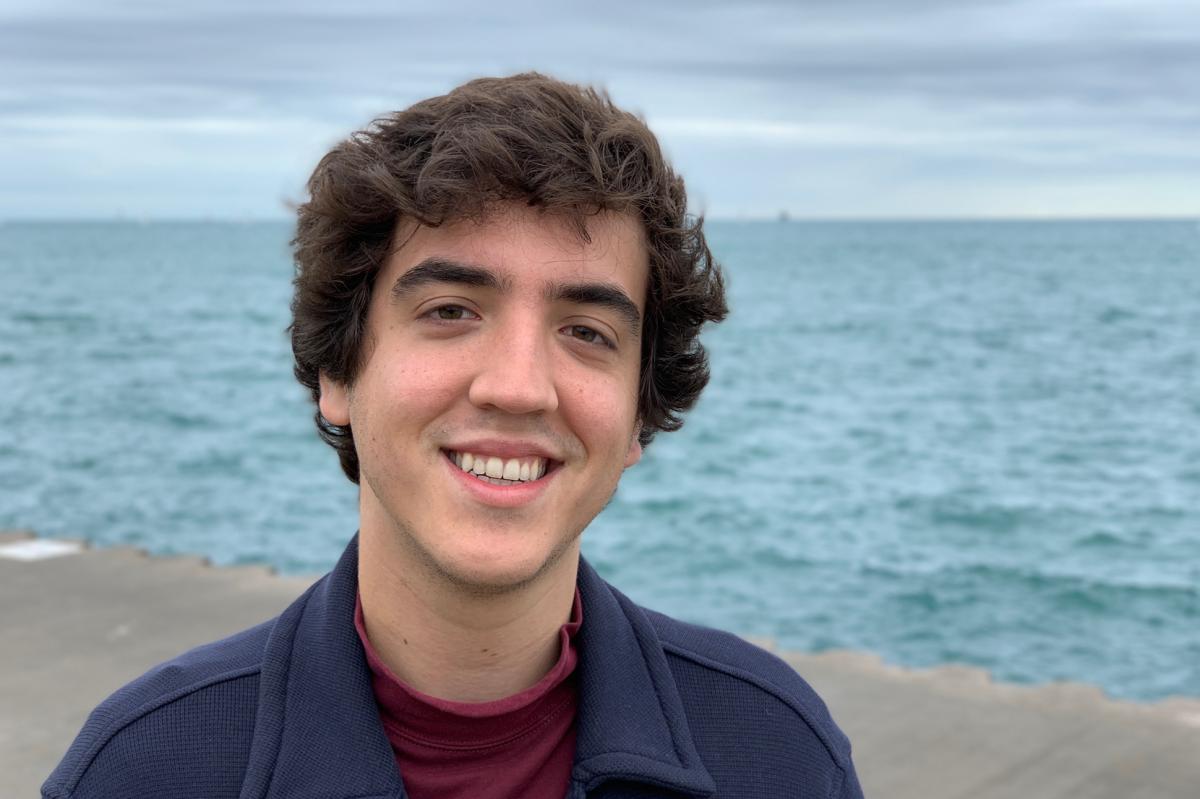
Gabriel Ojeda-Sagué Reads "Losing Miami," 2020

We're starting to add recordings from the Kelly Writers House's Fall 2020 programming to the site, including this very exciting reading by a beloved member of our campus community, Gabriel Ojeda-Sagué, which took place virtually on October 7, 2020.

After an opening exchange with Al Filreis, Ojeda-Sagué started with his poem "Tell-All" as an amuse-bouche of sorts before introducing himself and explaining what the audience would hear him read. That starts with Losing Miami (The Accomplices, 2019) which was nominated for the Lambda Literary Award in Gay Poetry. "It's a book that tries to answer the question of what it would mean to grieve for the loss of Miami to rising sea levels," he explains to the audience. "So it's a book about grief, but grief in a future tense," that is, "something that's kind of happening now but is also pending at the same time."

"To answer that question I ended up talking a lot about Miami's condition of being made by people who have already left from somewhere else," he concludes. "So Miami's kind of a city of exiles." Ojeda-Sagué then read short excerpts from four of the book's sections before moving on to selections from Madness (forthcoming from Nightboat in 2022), which takes the form of "a fictional selected poems." "What I mean by that is it takes the form of a selected poems, a selection of poems across a poet's career," he explains, "but I make up the poet, I make up his career, I make up his books, I make up his poems, I make up his biography. So it's a narrative book — it's not a novel, it's a collection of poems — but it has this kind of conceit and this life to it . . . life inside of it." That's followed by a lengthy Q&A session.

You can watch this reading on PennSound's Gabriel Ojeda-Sagué author page, along with a number of PoemTalk episodes he's taken part in and several readings celebrating his earlier book, Oil and Candle. We also recently added Ojeda-Sagué's contribution to the Poetry Project's 2021 New Year's Day marathon reading.


Monday, February 1, 2021

In Memoriam: Clayton Eshleman (1935–2021)

News broke this weekend that Clayton Eshleman — noted poet, translator, and editor — has passed away at the age of 85. Known for a larger-than-life personality and ornery demeanor, Eshleman approached all three of those realms in an uncompromising fashion: as a poet, he published dozens of books from the early 60s to the present and earned countless accolades, including the National Book Award, a Guggenheim Fellowship, and the Academy of American Poets' Landon Translation Prize; his numerous translations of César Vallejo, Aimé Césaire, and Antonin Artaud were treasured by generations of readers; and he edited two influential and long-running journals, Caterpillar (started in 1967) and Sulfur: A Literary Tri-Quarterly of the Whole Art (which ran from 1981–2000).

PennSound co-founder Charles Bernstein shared his memories of Eshleman in a Facebook post, recalling, "The first time I ever sent a poem to Sulfur, and I can’t remember what the poem was, but this must have been around 1982, Clayton Eshleman wrote me back a letter not only rejecting the poem but also characterizing the work as akin to throwing rancid popcorn at the reader. I found the characterization not only interesting but an acute way of describing what I (sometimes) try to do. I wrote back to Clayton saying — would you prefer I throw fresh popcorn at the reader? — and besides I would think, given your own poetics (of the grotesque) you would appreciate the rancid in a poem, especially the pop made rancid." "With that," he continues, "we began an exchange that resulted in my becoming a 'correspondent' for Sulfur in 1985 and in publishing many poems and essays in the magazine. Clayton and I also became friends." Bernstein also pointed readers in the direction of the Centre for Expanded Poetics' digital archives of both Caterpillar and Sulfur, as well as PennSound's Clayton Eshleman author page.

A great place to start there is Bernstein's 2005 Close Listening program with Eshleman, which includes poems from two readings during the poet's visit to UPenn as well as questions from Bernstein's students.  Many of our other recordings concern Eshleman's work as a translator, with several complete readings of his work on Vallejo, Césaire, and Artaud going back as the early 90s, along with a few additional events from the same time span. You can start browsing our holdings by clicking here.