Friday, November 5, 2021

Short Films by Ken Jacobs on PennSound

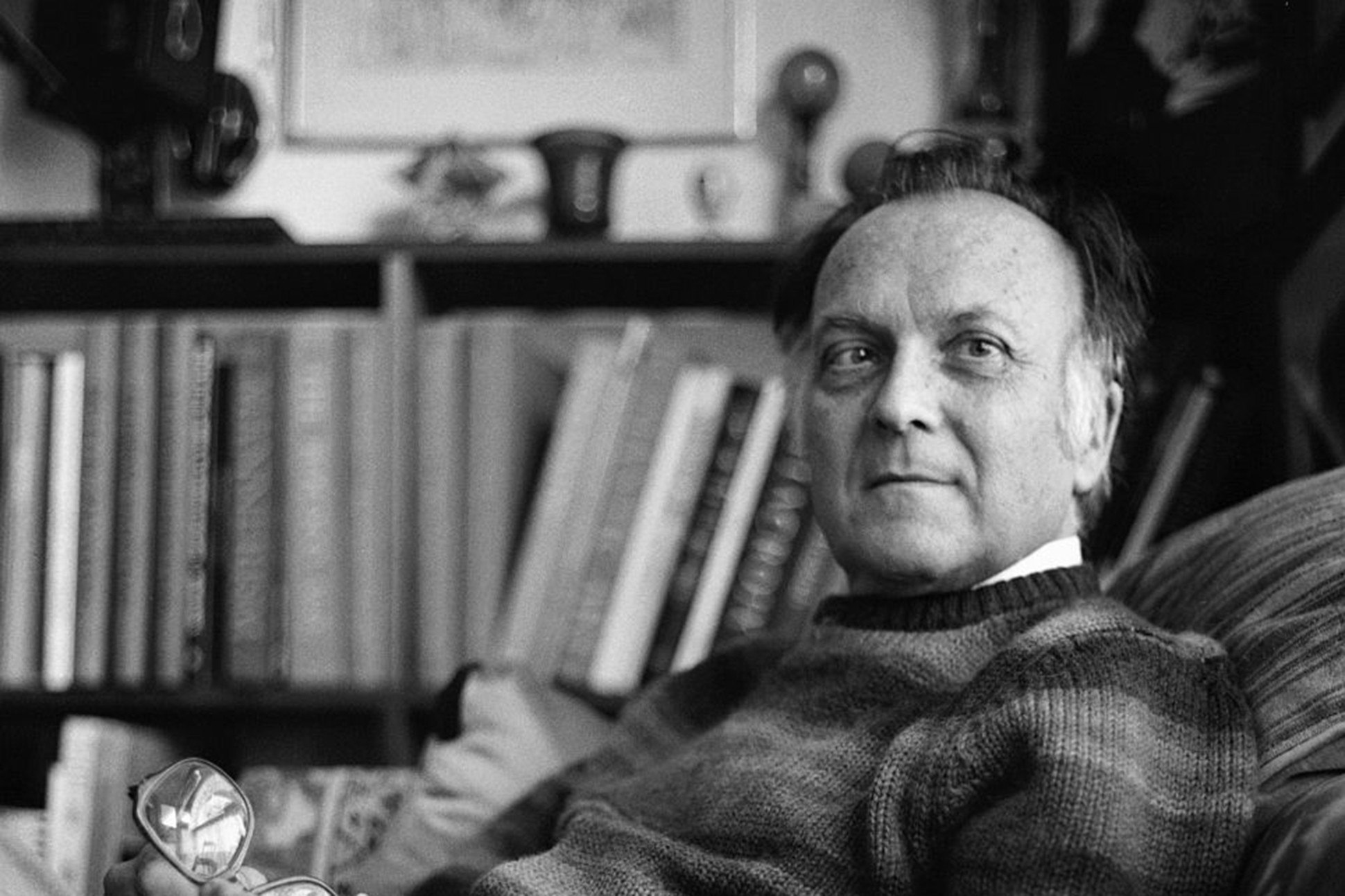
We're closing out this week by highlighting a number of stunning short films by Ken Jacobs that we're proud to include as part of our PennSound Cinema collection. They include a half-dozen silent micro-films, each the length of a television commercial, created in 2016: Writhing Cities, Central Park, Snow in Headlights I, Window Cleaner, Dead Leaves, and Deader Leaves. These silent meditations serve as an amuse-bouche to unfamiliar viewers, introducing them to Jacob's use of the Pulfrich effect — an early film theory based on the notion that a projected image reaches each eye at a slightly different time (those interested in learning more can read a wonderfully-detailed explanation by Miriam Ruth Ross here) — built upon looped images that rapidly alternate from positive to negative. The resulting films effect a visual equivalent to the Shepard scale, seeming simultaneously static and in-motion, and creating a lush, immersive three-dimensional image.

This is probably a good point to warn readers that due to this intense flickering effect we recommend that those with epilepsy and similar conditions triggered by light avoid watching these films. They can be challenging even for those without seizure disorders: I started to get a headache after about a half hour with the films, but it was a worthwhile tradeoff for the viewing experience.

After the super-brief clips, we have a trio of longer films: Capitalism: Child Labor (2006), Another Occupation (2011), and Seeking the Monkey King (2012). On the small scale, these films operate much like the aforementioned shorts in terms of their flickering using the Pulfrich effect, however the images are further embellished with color washes, inset details, and other distortions, and evolve over time rather than fixating on one image. They're also scored, with Rick Reed providing music for the first two — which showcase tremoloed drones that shift from peaceful bell-tones to harsh metallic squeals — while J.G. Thirwell's soundbed for the last blends dramatic blockbuster pomp with calmer passages. In Capitalism we meditate on a haunting Lewis Hine-like image of young textile workers, while Another Occupation recycles and degrades found footage of Bangkok, and in Seeking the Monkey King we explore dazzling jewel-like landscapes of crumpled tinfoil while pondering occasional intertitles that rail against the titular monarch.

You can view all of these films, and listen to a three-part 2009 Close Listening program with the filmmaker on our Ken Jacobs author page.

Wednesday, November 3, 2021

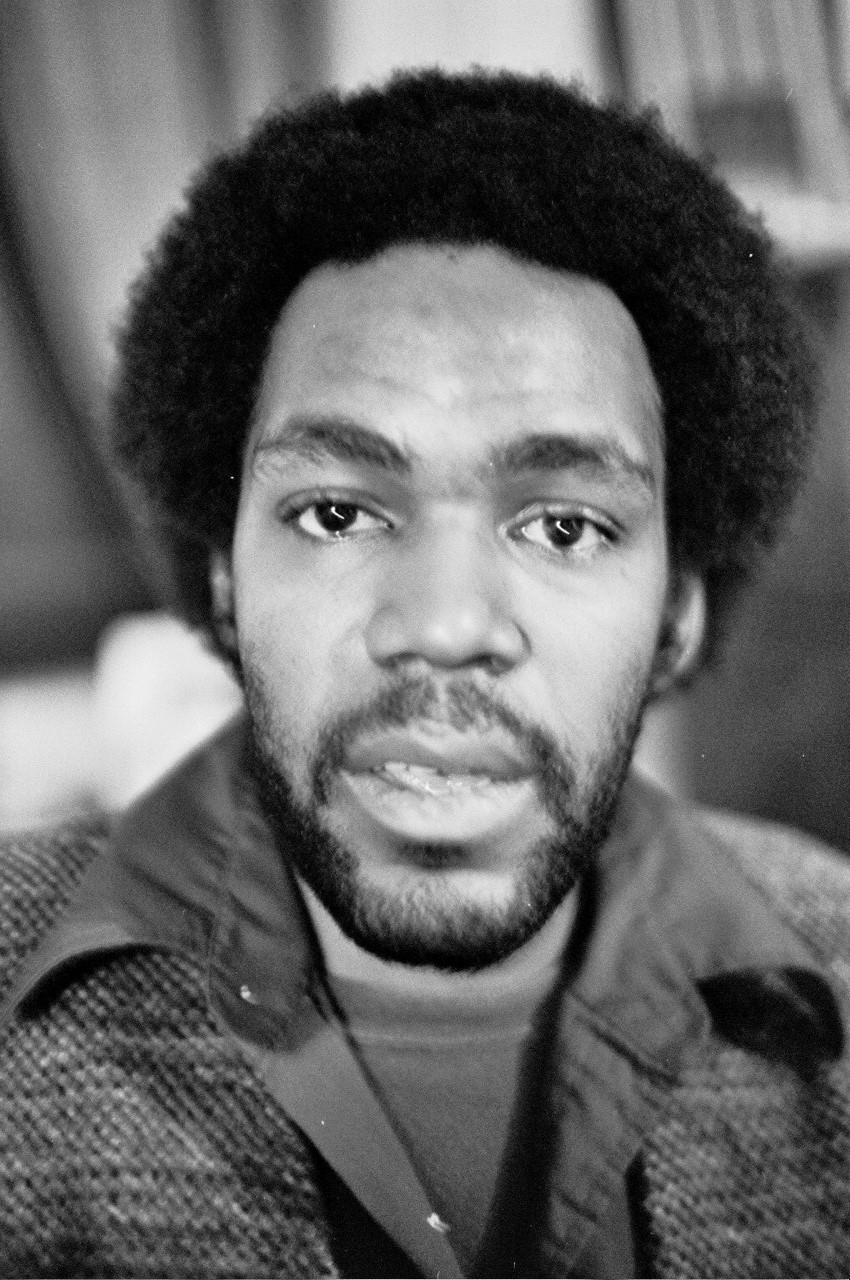
Happy Birthday to Tom Weatherly

November 3rd was the birthday of poet Tom Weatherly, which makes it an excellent opportunity to revisit David Grundy's mindblowing Jacket2 feature, "A Short History of Tom Weatherly."  Here's a brief excerpt from his introductory note:
We're familiar by now with the designation of neglected writers as "poets' poets" — essentially, an excuse for their continuing neglect. And we are, or should be, even more familiar with the neglect heaped on African American innovative writers, especially those who refuse to be easily pigeonholed into secure ideological or formal categories. Thomas Elias Weatherly (1942–2014) fits both categories. Since his death, on July 15, 2014, his work has continued to occupy the cracks, lost in the shadows, just another one of the ghosts of American poetry. It shouldn't be this way. Born in Scottsboro, Alabama, in 1942, Weatherly turned to poetry at the age of eight after seeing a vision of Homer, who instructed him to become a "wekwom teks," or "weaver of words." This experience inspired his first poem: "It did seem / That he said / Sing until dead." Weatherly would heed this call throughout his life. 
What follows an unstinting, encyclopedic justification of his estimation of Weatherly's importance. Grundy has gathered, very nearly, everything written about or by Weatherly over his thirty-five year writing life. That includes the complete text of his long out-of-print books Maumau American Cantos (Corinth Books, 1970) and Thumbprint (Telegraph Books, 1971), along with his joint publication with Ken Bluford, Climate/Stream  (Middle Earth Books, 1972), selections from the still in-print Short History of the Saxophone (Groundwater Press, 2006), and a lavish selection of uncollected poetry from his earliest mature poems to what's likely the last poem written before his death in 2014. A selection of critical writings is included as well, most notably his introduction to Natural Process (Hill and Wang, 1970) — an important anthology of African American poetry co-edited with Ted Wilentz — and "Black Oral Poetry in America: An Open Letter," published in Alcheringa in 1971. In fact, our Jacket2 Reissues copy of that issue of Alcheringa was missing one page, naturally in the midst of Weatherly's essay, and Grundy was able to get us a scan to complete our archive.

All of the aforementioned materials would be, in and of themselves, would be more than a worthy tribute to Weatherly's talents and a delight for readers. They are, however, merely one part of the overall feature. Once again, I'll let Grundy explain:
Forming a companion to this work by Weatherly is a series of longer critical essays and shorter tributes. Burt Kimmelman's essay on Weatherly, "The Blues, Tom Weatherly, and the American Canon," shows Weatherly as a blues poet par excellence, carefully tracing his emergence in the New York poetry scene, the importance of his Southern background, and the technical innovations of his work. Ken Bluford's "Essay with Tom Weatherly in It," first published alongside Weatherly's work in Lip magazine in 1970, further points out how Weatherly's use of Southern vernacular traditions both sets him alongside and contrasts him to better-known poets of the Black Arts Movement. My own essay focuses on Weatherly's first book, the Maumau American Cantos, concentrating on Weatherly's writing of the American South and his figurations of sexuality. The piece by Evelyn Hoard Roberts reprinted from the Dictionary of Literary Biography provides a detailed and invaluable biographical overview of Weatherly's early career. 
The shorter tributes he mentions are part of a third sub-section containing all sorts of fascinating ephemera: " fond reminiscences, poems, and obituaries from Akua Lezli Hope, Eugene Richie, Janet Rosen, Aram Saroyan, M. G. Stephens, Rosanne Wasserman, and the late John Ashbery," along with contemporaneous reviews of his work, examples of the poets own "illuminated manuscripts," and a whole slew of audio-visual materials. That includes a newly-unearthed 1968 reading at the St. Mark's Poetry Project that, along with a 1971 reading in Grand Valley, Michigan, can be found on PennSound's Tom Weatherly author page. When we first added the 1971 recording, not long after Weatherly's death, Charles Bernstein offered this summation of its contents: "Weatherly reads the complete serial poem 'Mau Mau American Cantos' for the first ten minutes of the reading ... after that he reads various poems, including 'Lady Fox' from Thumprint but nothing else from that book or Mau Mau." He also hailed Weatherly's work as "powerful, brilliant, often volatile (and distressingly unacknowledged)." Well, now you certainly have the opportunity to evaluate his judgment. 

Monday, November 1, 2021

Eugene Ostashevsky: Scalapino-Hejinian Lecture in Innovative Poetics, 2021

We kick off this new week with video footage of Eugene Ostashevsky delivering his Scalapino-Hejinian Lecture in Innovative Poetics, "Translingualism: A Poetics between Cultures, Nations, and Languages." Originally scheduled for March 17, 2020, Ostashevsky's talk was an early victim of the Covid-19 pandemic, rescheduled until this past September of this year, where it was delivered via Zoom.

This excerpt from the original announcement for the canceled 2020 event seems especially pertinent to the topic of Ostashevsky's talk:

Writing in LARB, Boris Dralyuk calls The Pirate a "raucous modern-day Anatomy of Melancholy, a seriocomic linguistic performance the likes of which we rarely see, in any tongue. It is a beautiful song, broadcast by an outcast whose language is all his own." The Italian newspaper Il Manifesto speaks of The Pirate's "poetics of immigration." The German edition of the book, translated by Uljana Wolf and Monika Rinck, was awarded the International Poetry Prize from the City of Münster, with the jury praising the original's "polyphonic and polyglot verbal acrobatics" and linguistic multiplicity. For the Süddeutsche Zeitung, Ostashevsky's work "argues that one must have distance from language, and also an awareness that no language is only 'mine'; it is rather many languages of different times and speakers that collide or coalesce under the name 'English.' Every language is, in a sense, a parrot language." For another German reviewer, The Pirate "deconstructs the strategies of linguistic exclusion concealed by such concepts as 'indigenous,' 'refugee,' and 'native language.'" 

Originally the Scalapino Lecture in Innovative Poetics, the Scalapino-Hejinian Lectures in Innovative Poetics started in 2011, the year after Leslie Scalapino's death. As amorphous as its namesake's poetry, the series has had events at a variety of locations over the past decade, including the Pratt Institute, Small Press Traffic, Naropa University, and UC Berkeley. You can browse our complete archive of recordings from the series here; Ostashevsky's lecture can be found here.


Friday, October 29, 2021

Halloween Poems: A Brief Playlist

With Halloween coming up this weekend we've put together this brief list of poems celebrating the spookier side of life. With a mix of poets both old and new you're bound to find something to set your nerves on edge.

Lewis Warsh, "Halloween" MP3

Kimberly Lyons, "Halloween Parade" MP3

Aaron Kramer, "Halloween" MP3

Robert Grenier, "Measure's Halloween" MP3

Cecilia Corrigan, "Christmas Halloween is in a body bag..." MP3

Elizabeth Willis, "The Witch" MP3

John Giorno, "The Wisdom of Witches" MP3

Lee Ann Brown, "Witch Alphabet, Mistranslation of Mayakovsky, Pledge & Love" MP3

Robert Duncan, "Witch's Song" MP3

Edgar Allan Poe (read by John Richetti), "Annabel Lee" MP3

Edgar Allan Poe (read by Jerome McGann), "The Raven" MP3

Yuri Andrukhovych, "Werewolf Sutra" MP3

Matthew Rohrer, "Werewolves" MP3

Adrienne Rich, "What Ghosts Can Say" MP3

Michael McClure, "Ghost Tantra #49" MP3

Bernadette Mayer, "Spooky Action from a Distance" MP3

Bob Kaufman (read by Chuck Perrin), "All Hallows, Jack O'Lantern Weather, North of Time" MP3


Wednesday, October 27, 2021

Robert Duncan Reads "Passages" at the Berkeley Poetry Conference, 1965

Today we're highlighting a newly-added recording of Robert Duncan reading at the historic Berkeley Poetry Conference. Recorded on July 16, 1965, this is ostensibly Duncan's reading from that day, introduced by Thomas Parkinson, and the one hour and forty minute set includes sections 1–25 of "Passages," Duncan's series that stretched across Bending the Bow (1968) Ground Work (1984), and Ground Work II (1987).

This new addition complements another recording of Duncan at the Berkeley Poetry Conference, presumable from during his seminar held July 12–16, which includes the titles"Often I am Permitted to Return to a Meadow," "Structure of Rime" numbers 9–11, "Apprehensions," "Osiris and Set (from Roots and Branches)," "A Poem Beginning with a Line by Pindar," "The Continent," and "The Multiversity." Taken together they present a fuller portrait of Duncan's influential presence at this landmark conference, though sadly we still do not have a recording of his July 13th lecture "Psyche-Myth and the Moment of Truth." Listen to both Berkeley recordings by clicking here

On PennSound's Robert Duncan author page you'll find a wide array of readings, talks, films, and more from 1951–1986, along with a 1990 memorial reading. Click here to start browsing.

Monday, October 25, 2021

Bern Porter on PennSound

Today we're highlighting our holdings from the influential author, artist, and publisher Bern Porter, perhaps best known for his pioneering work in the field of Found Poetry.

Our earliest recording is parts one and two of "For Our Friends in Germany," recorded by Mark Melnicove in 1979 at the Eternal Poetry Festival in South Harpswell, Maine. Then there's "Aspects of Modern Poetry," a 1982 WBAI program with Bob Holman that was broadcast live. It's presented in two parts that are roughly a half-hour each.

Next, we have the New Wilderness Audiographics cassette release, Found Sounds, whose two sides consist of two separate sessions, the first made on December 2, 1978 with Dick Higgins and Charlie Morrow; the second from May 9, 1981 and featuring Patricia Burgess (tenor saxophone), Glen Velez (bodhrán, cymbal, tambourine), and Morrow (brass, ocarina, and voice). 

Jumping forward to December 1989, we have a recording from "Williamson Street Night" at the Avant Garde, Museum of Temporary Art in Madison, Wisconsin with contributions by Malok, Elizabeth Was & mIEKAL aND, and our final recording is an interview with Higgins and aND from Woodland Pattern Book Center on March 16, 1990. You can browse all of the aforementioned recordings by visiting our Bern Porter author page.

Thursday, October 21, 2021

Remembering Kerouac on the 52nd Anniversary of His Death

This October 21st marks 52 years since the passing of legendary Beat Generation author Jack Kerouac (1922–1969). While we don't have permission from the Kerouac estate to share recordings of the poet's work — multiple albums, including collaborations with Al Cohn and Zoot Sims, along with polymath Steve Allen, are widely available — we do have a few noteworthy recordings of others reading him within our archives.

Of course, you'll recall that we only recently announced Vivien Bittencourt and Vincent Katz's short film documenting a 1988 tribute reading of Kerouac's Mexico City Blues, which took place at the Knitting Factory. This stunning half-hour video includes live performances by Barbara Barg, Charles Bernstein, Lee Ann Brown, Maggie Dubris, Allen Ginsberg, Richard Hell, Bob Holman, Lita Hornick, Vicki Hudspith, Vincent Katz, Rochelle Kraut, Gerard Malanga, Judith Malina, Eileen Myles, Simon Pettet, Hanon Reznikov, Bob Rosenthal, Jerome Rothenberg, Tom Savage, Elio Schneeman, Michael Scholnick, Carl Solomon, Steven Taylor, David Trinidad, Lewis Warsh, Hal Willner, and Nina Zivancevic, while Mark Ettinger, Dennis Mitcheltree, Charlie Morrow, and Samir Safwat, among others, providing live, improvised accompaniment. Lawrence Ferlinghetti and Michael McClure also appear in brief interview segments. You can watch here.

Then we have another old favorite from the archives: Clark Coolidge and Michael Gizzi reading Kerouac's iconic spontaneous prose piece, "Old Angel Midnight," taken from a 1994 recording session at the West Stockbridge, MA home studio of Steve Schwartz. Coolidge is, of course, well-known for, as Al FilreisAl Filreis phrases it, "his advocacy for Kerouac as properly belonging to the field of experimental poetry and poetics." Here's how he lays out his sense of what he refers to as Kerouac's "babble flow":
[S]ound is movement. It interests me that the words "momentary" and "moments" come from the same Latin: "moveo, to move. Every statement exists in time and vanishes in time, like in alto saxophonist Eric Dolphy's famous statement about music: "When you hear music, after it's over it's gone in the air, you can never capture it again." That has gradually become more of a positive value to me, because one of the great things about the moment is that if you were there in that moment, you received that moment and there's an intensity to a moment that can never be gone back to that is somehow more memorable. Like they used to say, "Was you there, Charlie?" 
Kerouac said, "Nothing is muddy that runs in time and to laws of time." And I can’t resist putting next to that my favorite statement by Maurice Blanchot: "One can only write if one arrives at the instant towards which one can only move through space opened up by the movement of writing." And that’s not a paradox.
Here's how Kerouac himself described the project (which famously appeared in the premier issue of Big Table, along with excerpts from William S. Burroughs' Naked Lunch — content liberated from the suppressed Winter 1958 issue of The Chicago Review): 
"Old Angel Midnight" is only the beginning of a lifelong work in multilingual sound, representing the haddalada-babra of babbling world tongues coming in thru my window at midnight no matter where I live or what I'm doing, in Mexico, Morocco, New York, India or Pakistan, in Spanish, French, Aztec, Gaelic, Keltic, Kurd or Dravidian, the sounds of people yakking and of myself yakking among, ending finally in great intuitions of the sounds of tongues throughout the entire universe in all directions in and out forever. And it is the only book I've ever written in which I allow myself the right to say anything I want, absolutely and positively anything, since that's what you hear coming in that window... God in his Infinity wouldn't have had a world otherwise — Amen."
You can listen to Coolidge and Gizzi's rendition of this classic here, and might also want to check out PoemTalk #124, wherein Coolidge and Filreis, along with J.C. Cloutier and Michelle Taransky, discuss their recording of the poem.