
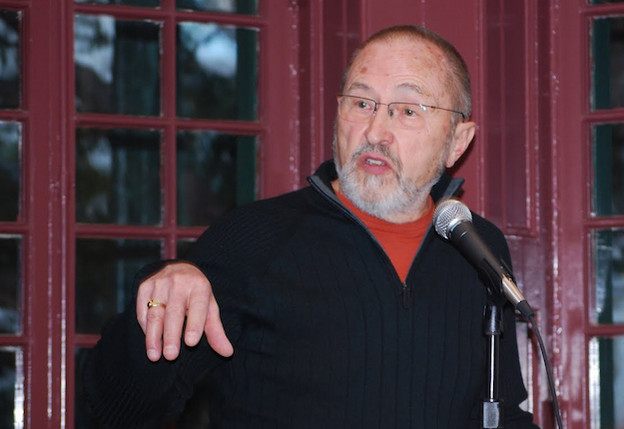
Wah begins by discussing his own ethnic identity and his grandfather's emigration from China to Canada followed by "the cultural inability to write about race in the late 1950s–early 1960s after he (himself) arrived at the University of British Columbia." From there he addresses "the introduction of bilingualism and biculturalism in Canada in the 1970s," via Joy Kogawa's novel Obasan (set in Japanese-Canadian internment camps), which "allowed for conversations about race to begin in English departments in Canada," as well as "the chronology of national racial conversations and redress (for internment)." Wah shares that he was pleasantly surprised "about race suddenly becoming discussable in English literary spaces in comparison to the conversations he had been having with white colleagues (mostly on class)," then goes on discuss several highlights in that growing discourse from the 70s, 80s, and 90s, including the work of the Vancouver-based Chinese-Canadian Writers Workshop (later the Asian-Canadian Writers Workshop), Sky Lee's Disappearing Moon Cafe, Jim Wong-Chu and Bennett Lee's anthology Many-Mouthed Birds: Contemporary Writing by Chinese Canadians, and Rita Wong's Monkey Puzzle, along with contemporaneous cultural developments.
As he nears the end of his talk, Wah explains its metaphoric title through a poem from his Diamond Grill reflecting upon the importance of hybridity to his poetics: "If I stand in the doorway and don’t go through, I can see both rooms.” Thus the hyphen, representative of his hybrid identity, serves a similar purpose, allowing multiple perspectives. He shares more of his poetry and answers questions about his writing process along with culture and memories. You can listen (or watch) this fascinating talk by clicking here.
