
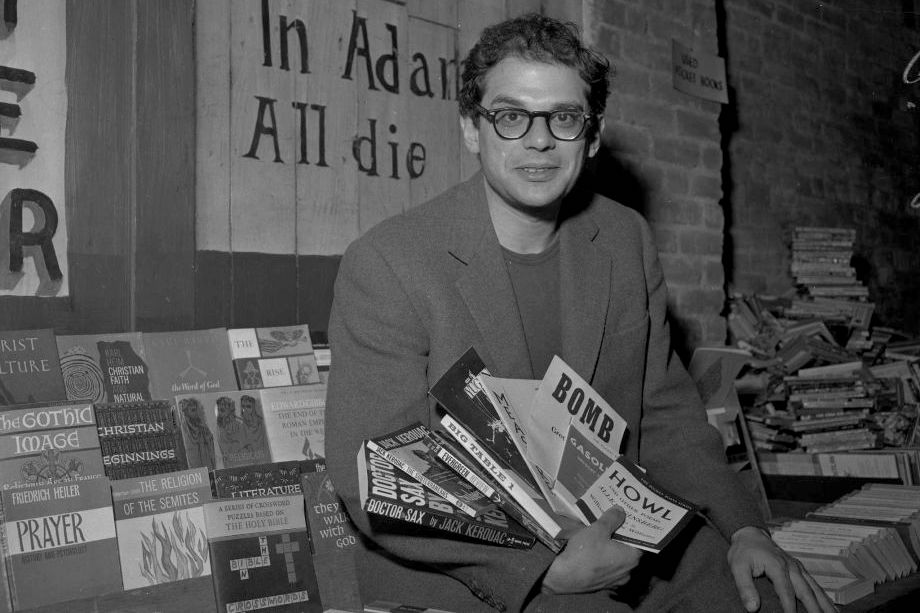
From the civil rights movement to queer liberation, nuclear disarmament to environmentalism, censorship to anti-imperialism, Ginsberg (who originally aspired to being a labor lawyer) tirelessly fought the good fight on behalf of the oppressed and challenged those in power to do better. We see it in his dream cabinet in "Death to Van Gogh's Ear," his demands for the Clinton presidency in "New Democracy Wish List," and hundreds more poems written over his fifty-year career. Moreover, a spirit of radical empathy guided both his work and his worldview: "I'm with you in Rockland," he pledges to Carl Solomon in the footnote to "Howl," his most iconic poem, and undoubtedly he would be with us in Minneapolis, in Ferguson, in Baltimore, in Cleveland, in Sanford, and every other battleground in our long and ongoing struggle for justice.
We are honored to be able to share a startling array of recordings — readings, songs, interviews, talks, and more — on PennSound's Allen Ginsberg author page, which spans more or less the entirety of his writing career, from a few 1956 sessions all the way up to his legendary residency at the Knitting Factory in 1995, during which he gave authoritative readings of his three finest long-form pieces: "Howl," "Kaddish," and "Wichita Vortex Sutra." You'll find the majority of Ginsberg's most iconic poems — aside from the aforementioned titles, "A Supermarket in California," "America," "Sunflower Sutra," "The Lion for Real," "Don't Grow Old," "Plutonian Ode," "Gospel Noble Truths," "Do the Meditation Rock," "Hum Bom," and "After Lalon" are all there — but the real treat for diehard fans are the more obscure titles, the telling asides between poems, and the pieces shared with audiences in their earliest drafts. To hear Ginsberg read "Autumn Leaves" or "Manhattan Mayday Midnight" or "Tears" or "To Aunt Rose" or "Transcription of Organ Music" or "After the Big Parade" is as much a delight as encountering them for the very first time. You can start exploring by clicking here.
