
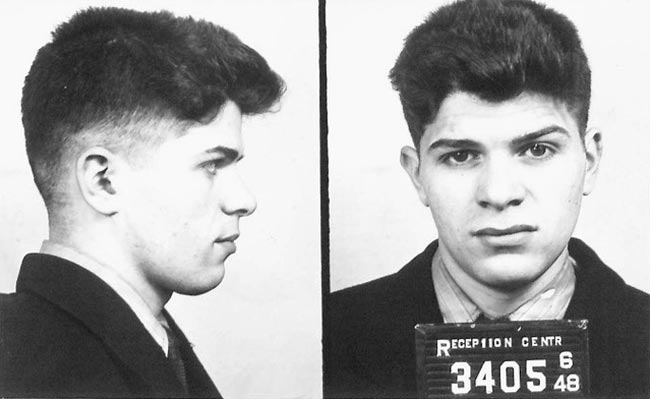
We launched our Gregory Corso author page in June 2017, with assistance from Raymond Foye. There, you'll find five full readings plus one individual poem recorded between the 1970s and 1990s. The earliest recording is a April 1971 reading at Duke University, which is followed by an August 1985 appearance at the San Francisco Art Institute as part of their "Art of Poetry" series. Jumping forward to the 90s, there's a March 1991 Brooklyn College reading notable for the appearance of Corso's iconic late poem "The Whole Mess ... Almost" and for the half-hour candid conversation recorded in the car on the way home. From December 1992, there's a stellar reading in New York City also featuring Herbert Huncke, John Wieners, and Allen Ginsberg, and finally, from March 1993, we have a half-hour reading from Rutgers University including "I Met This Guy Who Died," "Earliest Memory," "Youthful Religious Experiences," and "How Not to Die," among other poems. Our most recent addition is a 1969 recording session at Fantasy Records' San Francisco studios on Natoma Street showcasing "In the Fleeting Hand of Time," "Vision of Rotterdam," "The Last Warmth of Arnold," "Mexican Impressions," "Botticelli Spring," "Sun — A Spontaneous Poem," "Ode to Coit Tower," and "I Am 25," among others.
Ginsberg famously offered high praise for his dear friend, calling him "a poet's Poet, his verse pure velvet, close to John Keats for our time, exquisitely delicate in manners of the Muse," who "has been and always will be a popular poet, awakener of youth, puzzlement & pleasure for sophisticated elder bibliophiles." He continues, judging Corso as "'Immortal' as immortal is, Captain Poetry exampling revolution of Spirit, his 'poetry the opposite of hypocrisy,' a loner, laughably unlaurelled by native prizes, divine Poet Maudit, rascal poet Villonesque and Rimbaudian whose wild fame's extended for decades around the world from France to China, World poet." Click here to start listening.
